

Maddy summaryHB 1153 prohibits health insurers, nonprofit health service plans, HMOs, and managed care organizations in Maryland from unilaterally lowering medical claim payments (downcoding) without clinical justification. The bill requires these entities to notify providers within 30 days if they intend to downcode, including specific reasons, references to clinical guidelines, and the original vs. revised codes. It bans practices like downcoding based solely on diagnosis codes, using AI without reviewing medical records, or targeting providers treating complex conditions, and mandates emergency claims be downcoded based on documented symptoms - not final diagnoses. A downcoding decision resulting in nonpayment is treated as a coverage denial, allowing providers to appeal under existing law.
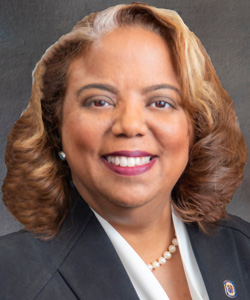
Del. Deni Taveras
Sponsored bills
Maddy summaryHB 1134 prohibits pharmaceutical and medical device sellers from giving healthcare professionals gifts exceeding $50 in total retail value per calendar year. It directly affects drug/device manufacturers and healthcare professionals who prescribe or recommend products, including their organizations and employees. The bill defines "gifts" broadly to include payments, food, travel, and entertainment (excluding peer-reviewed medical literature) and sets a clear annual $50 limit. Violations are punishable as misdemeanors with fines up to $5,000 or six months in jail. The law takes effect October 1, 2026.
Maddy summaryHB 1065 establishes a grant program for Maryland manufacturers of cement, concrete, or construction materials that use coal ash waste (like fly ash or bottom ash) as feedstock. It requires the Department of the Environment to award grants to eligible manufacturers meeting specific criteria, including using Maryland-sourced coal by-products, creating jobs in communities affected by coal waste, and demonstrating measurable greenhouse gas reductions compared to conventional materials. The bill also mandates that all state government agencies give procurement preference to bids that incorporate these coal by-products. This directly affects cement/concrete manufacturers, state purchasing decisions, and communities near coal waste generation sites. The policy change focuses on repurposing existing coal waste for construction materials through financial incentives and procurement rules.
Maddy summaryHB 807 requires all Maryland teacher preparation programs to integrate specific training in teaching English language learners (ELLs) into their curricula. This includes adding dedicated instruction on ELL competencies - such as language development, equitable literacy opportunities, and working with linguistically diverse students - starting in the 2028-2029 academic year, along with a mandatory three-credit course focused on ELL teaching methods. The bill directly affects all undergraduate and graduate teacher preparation programs in Maryland, mandating they incorporate these competencies throughout their coursework, not just in a single course. It aims to ensure future teachers gain practical skills to support ELL students in classrooms across the state.
Maddy summaryHB 1066 authorizes Maryland municipalities to conduct local elections using secure electronic voting systems that meet strict security standards. The bill defines a "qualified electronic transmission system" as one with end-to-end encryption, verifiability, biometric ID verification, and paper record backup. Municipalities may use these systems for elections but are prohibited from using voter data collected through them for any purpose beyond election administration or voter participation statistics. This bill directly affects local governments in Maryland planning to adopt electronic voting methods for municipal elections, effective July 1, 2026.
Maddy summaryHB 704 establishes Maryland's Community Eligibility Provision Expansion Program within the State Department of Education. It provides state funding to cover the difference between federal reimbursement rates for free and paid school meals, directly supporting Maryland schools with high poverty rates (25%+ students qualifying for free meals) that participate in the federal child nutrition program. The state will appropriate $10 million annually starting in fiscal year 2028 to complement federal funds, with funds distributed based on school poverty concentration and geographic diversity. Schools must report on program outcomes, meal debt resolution, and reasons for opting out of federal eligibility, with annual reports published online.
Maddy summaryHB 928 modifies Maryland's requirements for constructing transmission lines over 69,000 volts. It expands the types of transmission lines needing a "certificate of public convenience and necessity" (replacing the previous focus on overhead lines), and requires the Public Service Commission to consider ratepayer costs and environmental impacts when deciding whether to waive this requirement for certain projects. The bill also removes a prior rule that automatically waived certificate requirements for specific overhead lines. This directly affects electric companies, transmission developers, and the Public Service Commission in their approval processes for new or upgraded power lines.
Maddy summaryHB 897 (the "Lower Bills and Local Power Act of 2026") requires electric companies operating high-voltage transmission lines (>69,000 volts) in Maryland to join regional transmission organizations. It mandates new application details for certain utility projects, creates a Solar and Energy Storage Market Stabilization Program within the Maryland Energy Administration, and redirects funds from the Maryland Strategic Energy Investment Fund to provide refunds or credits to residential electricity customers. The bill also requires studies on siting transmission lines and battery storage systems within existing rights-of-way and sets deadlines for the Public Service Commission to review project certificates. These provisions directly affect electric utilities, the Public Service Commission, and residential electricity customers through cost adjustments.
Maddy summaryHB 853 creates a State Board of Common Ownership Community Managers within Maryland’s Department of Labor to license and regulate professionals managing residential communities. It directly affects condominiums, cooperatives, and homeowners associations (excluding timeshares) by requiring community managers to hold licenses, mandating community registration under certain conditions, and requiring contracts to include fidelity bonds or theft insurance. Key provisions include setting licensing standards, specifying required contract terms for management services, and establishing a dedicated fund to cover board operations. The bill aims to standardize oversight for community management services across Maryland’s residential communities.
Maddy summaryHB 350, the "Voting Rights Act of 2026," applies to local elections in Maryland counties and cities, protecting the voting rights of racial, ethnic, and language minority groups. It prohibits election methods that weaken the voting power of these groups, preventing them from electing preferred candidates or influencing election outcomes. Courts will determine violations by examining past election patterns and federal voting rights standards, rather than requiring proof of discriminatory intent. If a violation is found, courts can order remedies like changing election systems, but must respect existing statewide election practices.