

Maddy summaryHB 781, the "Accessible and Expedited Voting Act of Maryland," requires the State Board of Elections to create guidelines for local election boards to accommodate elderly voters (65+) and voters with disabilities at all early voting centers and polling places. Key provisions include establishing dedicated expedited voting lines, clear signage, priority seating, and specific plans for high-traffic locations. Local boards must implement these guidelines, collect real-time feedback from affected voters during elections, and make immediate process adjustments. The law takes effect for the 2026 statewide primary election, with annual reports to the legislature on implementation effectiveness and voter feedback.
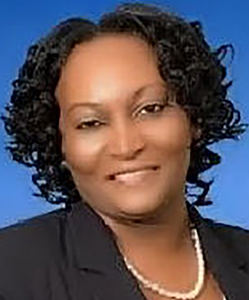
Del. Diana Fennell
Sponsored bills
Maddy summaryHB 610 expands expungement eligibility in Maryland by allowing certain criminal charges to be cleared from records when dismissed without a conviction. Specifically, it adds that charges may be expunged if the court issued a "no finding" or terminated the case without a finding - rather than resulting in a conviction. This applies to charges already listed as eligible under current law (such as specific misdemeanors and felonies), without changing the list of offenses. The bill does not alter existing eligibility criteria but broadens the circumstances under which expungement is possible for dismissed cases.
Maddy summaryHB 830 requires Maryland health insurers, nonprofit health plans, and health maintenance organizations to cover genetic testing for individuals with a personal or family history of cancer, as recommended by healthcare providers and aligned with medical guidelines. It also mandates coverage for follow-up cancer imaging (like mammograms or colonoscopies) if genetic testing indicates increased cancer risk, with no copayments, coinsurance, or deductibles for these specific services. The law applies to all health plans issued, delivered, or renewed in Maryland starting January 1, 2026, directly affecting patients with cancer risk factors and their insurers.
Maddy summaryHB 493 designates November 14 each year as "Ruby Bridges Walk to School Day" in Maryland public schools to commemorate Ruby Bridges' 1960 integration of an all-white New Orleans elementary school. It requires each county board of education to create annual educational programs for this day, including symbolic walks, civil rights history lessons, and discussions on racial equality. The State Department of Education must also develop model educational resources, like lesson plans and discussion guides, to support schools in implementing these programs. The bill takes effect July 1, 2025, and directly affects all Maryland public schools and their students.
Maddy summaryHB 609 modifies Maryland's legislative scholarship programs to exempt students planning to complete the Real Property Appraiser Qualification Criteria program from standard exam requirements. It specifically allows senatorial and delegate scholarships to cover costs for the Practical Applications of Real Estate Appraisal Program (administered by the Appraisal Foundation). This change directly affects students pursuing real estate appraisal licensure who would otherwise need to meet typical scholarship exam rules. The bill amends Sections 18-402(4) and 18-405(b)(3) of the Maryland Annotated Code to include this program under eligible scholarship uses.
Maddy summaryHB 1394, the "Not On Our Dime Act," prohibits Maryland-registered nonprofit organizations (specifically those exempt under IRS 501(c)(3)/(4)) from knowingly providing unauthorized support to Israeli government or citizen activities in occupied territories that violate the Geneva Conventions. It bans actions like transferring Israeli civilians into occupied areas, violence against protected persons (including Palestinians), property destruction, or forced evictions. The bill allows the Maryland Attorney General or harmed individuals to sue violators for at least $1 million in damages, and requires the Secretary of State to remove offending nonprofits from charitable solicitation registries after a legal judgment. The law applies to nonprofits operating in Maryland and takes effect October 1, 2025.
Maddy summaryHB 1030 requires ride-hailing companies (like Uber or Lyft) to create clear written policies for suspending or removing drivers, with specific reasons and a formal appeal process. Companies can only suspend drivers for "egregious misconduct," defined as immediate safety threats (e.g., violence) or intentional economic harm to passengers or the company. Drivers must receive written notice of suspension and details about their appeal rights before being removed from the platform. This law standardizes how companies handle driver deactivations, ensuring consistency with existing definitions of serious violations.
Maddy summaryThis House Joint Resolution (HJ 4) is a non-binding ceremonial measure affirming Maryland's support for Diversity, Equity, and Inclusion (DEI) as foundational to the American Dream. It does not create new laws or policies but formally encourages state, local, and federal entities to uphold DEI principles. The resolution directs certified copies to federal leaders including the President, Vice President, and congressional leadership, citing DEI's historical role in civil rights advancements. As a procedural resolution, it has no direct policy impact on constituents or funding mechanisms.
Maddy summaryHB 1150 prohibits intentionally sharing personal identifying information or images of individuals under age 25 on public internet sites or forums without their permission and with the intent to intimidate or harm. It directly affects anyone who posts such details online about people under 25, including names, addresses, phone numbers, biometric data, school addresses, or financial information. The bill defines "disseminate" broadly to cover public online sharing and sets misdemeanor penalties of up to one year in jail or a $5,000 fine for violations. It explicitly states the law won't override free speech protections under U.S. or Maryland constitutions.
Maddy summaryThis House Joint Resolution (HJ 6) is a symbolic statement by Maryland's General Assembly expressing support for nuclear disarmament efforts. It formally joins 73 other jurisdictions (including seven states and over 75 counties/municipalities) that have passed similar "Back from the Brink" resolutions. The resolution urges Maryland's U.S. Congressional delegation to cosponsor a federal resolution supporting the Treaty on the Prohibition of Nuclear Weapons and the five key policies of the Back from the Brink initiative (like ending hair-trigger alerts and ending first-use nuclear policies). It also calls on the U.S. President and Senate to endorse the international treaty banning nuclear weapons. As a resolution, it has no legal effect but serves as a formal position statement.