

Maddy summaryHB 1037 (Broadband Accountability and Affordability Act) gives Maryland's Public Service Commission authority to oversee broadband and internet-based phone service (VoIP), which it previously could not regulate. The bill requires Internet Service Providers (ISPs) to report on network reliability, outages, pricing, and emergency preparedness plans, and to maintain infrastructure meeting safety and reliability standards. The Commission can audit providers and order corrective actions if services are deemed unsafe, unreliable, or inadequate. ISPs must submit annual reports on progress, with the Commission reporting to the legislature each year starting in 2028 on improvements in service quality and network resilience.
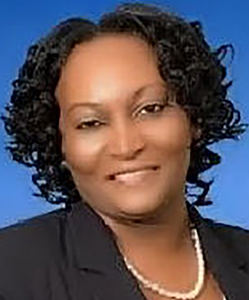
Del. Diana Fennell
Sponsored bills
Maddy summaryHB 1479 (Maryland Raise the Wage Act) increases Maryland's minimum wage for most employers to $15 per hour starting January 1, 2024, rising to $18 per hour beginning January 1, 2028, with future increases tied to the Washington-Arlington-Alexandria Consumer Price Index (CPI). Small businesses (with 49 or fewer employees) receive a phased transition: $15 per hour from January 2024 through December 2028, then $18 per hour starting January 2029. The law automatically adjusts the wage annually based on CPI growth (capped at 5% per year), preventing freezes during periods of no CPI increase. The bill takes effect October 1, 2026, directly affecting all Maryland employers and their hourly workers.
Maddy summaryHB 627 establishes the Commission on History, Culture, and Civics in Education to improve how Maryland public schools teach U.S. and Maryland history, culture, and civics. The commission, composed of 16 members representing diverse groups (including Indigenous tribes, LGBTQIA+ communities, disabled individuals, teachers, and racial/ethnic communities), must examine contributions of marginalized groups and make recommendations to the State Board of Education. Key provisions require the commission to examine topics like Native American contributions, LGBTQIA+ history, and disability community impacts, while ensuring recommendations promote equitable learning for all students. The commission must publicly share meeting materials, reports, and livestream sessions online, with members serving four-year terms without pay but receiving travel reimbursements. This bill directly affects Maryland public school curricula and student learning experiences through its recommendations.
Maddy summaryHB 386 modifies Maryland's funding for the Washington Metropolitan Area Transit Authority (WMATA) by requiring the Governor to withhold 35% of annual grants under specific conditions. It directly affects WMATA and Maryland's budget process, mandating that the Governor withhold funds if WMATA fails to submit required reports (like safety assessments and financial data) or if it doesn't develop a rail signaling workforce transition plan by July 2028. The bill also requires WMATA to provide detailed annual reports on safety, ridership, finances, and capital investments to trigger full funding. If WMATA receives a modified audit opinion without a corrective plan, or misses the workforce plan deadline, the Governor must withhold the funds until these conditions are met.
Maddy summaryHB 1272 requires Maryland child welfare agencies to consider a child’s feelings and preferences when selecting kinship caregivers for out-of-home placements. It expands the definition of "kinship caregiver" to include unrelated individuals identified by the child or their parent, alongside blood relatives or those with strong family bonds. Agencies must approve such caregivers if they meet specific criteria, including understanding the child’s circumstances, having prior protective involvement, and demonstrating current ability to safeguard the child. The law takes effect October 1, 2026.
Maddy summaryHB 952 requires operators of "companion chatbots" (AI systems designed to meet social needs through human-like interactions) to establish safety protocols, including preventing harmful content like self-harm discussions and sexually explicit material for minors. Operators must publish these protocols online, display clear warnings that chatbots are AI (not human), and provide crisis resource referrals for users expressing suicidal thoughts. The bill also mandates that operators of chatbots used by minors display mandatory break reminders after 3 hours of continuous use. It excludes business customer service bots, video game features, and basic voice assistants from these requirements.
Maddy summaryHB 1310 allows high school students in Maryland who experience the death of a parent due to reproductive cancer (breast, cervical, or uterine cancer) to request a standardized notation on their official transcript. This notation, which must use privacy-protective language like "Documented Compelling Personal Circumstance" or "Exceptional Hardship Acknowledgement," explains potential impacts on academic performance, achievement, or attendance. Schools must add the notation upon receiving a written request with proof of the parent’s death (via death certificate or healthcare provider letter), and counselors must inform eligible students and surviving parents about this option. The bill takes effect July 1, 2026, and does not require schools to disclose the specific nature of the loss.
Maddy summaryThis bill modifies Maryland's legislative scholarship programs to exempt certain applicants from competitive examination requirements and to allow scholarship funds to be used for real estate appraisal training. Specifically, it removes the exam requirement for students who have completed at least one year at an eligible institution, those who graduated high school five years prior, applicants to approved private career colleges, and community college students. Additionally, it authorizes senatorial and Delegate scholarships to cover expenses for completing the Real Property Appraiser Qualification Criteria program. The changes apply to both new scholarship applications and the existing scholarship programs, affecting current and future recipients who meet the specified eligibility criteria.
Maddy summaryHB 628 establishes a program providing $1,000 monthly payments for three years to young adults who were in out-of-home care (like foster care) on their 18th birthday, with birthdays on or after October 1, 2026. Payments cannot be counted as income for Medicaid, the Maryland Earned Income Tax Credit, or state/federal financial aid for education. The Department of Human Services must report annually on participants' income, location, employment, and housing status starting October 2027. The program will run from October 1, 2026, through September 30, 2031, with automatic termination after that date.
Maddy summaryHJ 8 is a symbolic resolution apologizing for Maryland's historical role in racial terror lynchings. It formally acknowledges the state's complicity in 38 documented lynchings between 1854-1933, including failures to protect Black citizens, colluding with local governments to conceal perpetrators, and failing to pass anti-lynching laws. The resolution commits Maryland to taking reparative actions as recommended by the Maryland Lynching Truth and Reconciliation Commission, though it does not establish new programs or allocate funds. It directly addresses the legacy of harm experienced by Black Marylanders and their descendants. This is a procedural resolution, not a law with enforceable provisions.