

Maddy summaryHB 1475 (Mixed Delivery Model Viability Act) requires Maryland's Office of Child Care Advisory Council to study the state's publicly funded prekindergarten system, which serves children through a mix of public and private providers. The analysis will assess policy differences between public/private providers, reimbursement methods, administrative processes, language accessibility, quality rating procedures, and opportunities for resource-sharing among private providers. The Council must submit an interim report by June 1, 2026, and a final report by December 31, 2027, to the State Board of Education and General Assembly. This bill does not change current law but directs a review to identify potential improvements in program efficiency and equity for providers and families.
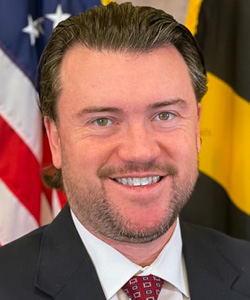
Del. Kevin Hornberger
Sponsored bills
Maddy summaryHB 1200 expands Maryland's existing property tax credit program to include judicial officers, who were previously excluded. The bill modifies the tax code to allow counties or municipalities to grant a property tax credit on a dwelling owned by a judicial officer who is disabled, a surviving spouse of a judicial officer who died in the line of duty, or a qualifying cohabitant. It defines "judicial officer" and "public safety officer" to explicitly include judicial roles, requires local governments to define these terms in their laws, and applies the credit retroactively to past years. This change directly affects judicial officers, their families, and cohabitants who meet the eligibility criteria for the tax credit.
Maddy summaryHB 502 establishes the Office of Disability Employment Advancement and Policy within Maryland's Department of Disabilities and creates the "Maryland as a Model Employer Initiative." The bill directly affects state government agencies and employees with disabilities by requiring them to improve hiring, retention, and career advancement opportunities for people with disabilities. Key provisions include collecting employment data from state agencies, providing training on disability-inclusive hiring practices, and reporting annual progress to the Governor and General Assembly starting December 1, 2026. The initiative aims to reduce barriers in state employment through outreach, assistive technology access, and evaluating agency policies. The Office will begin operations on July 1, 2026, with mandatory reporting on outcomes and recommendations for improvement.
Maddy summaryHB 503, the Housing Development Act, requires Maryland’s Department of Housing and Community Development and Department of Planning to calculate regional housing infrastructure gaps (such as water, sewer, and road capacity shortfalls) and assign these gaps to specific counties and cities. Local governments must then take steps to reduce these gaps and are required to expedite approvals for certain housing projects - particularly those addressing the gaps - without denying them without specific justifications. The bill directly affects all counties and incorporated municipalities in Maryland, especially those identified as having significant housing infrastructure deficits. It creates a new framework for streamlining housing development by shifting approval responsibilities to local jurisdictions based on regional needs.
Maddy summaryHB 1267 allows Maryland county school boards to choose whether to observe Veterans' Day as a public school holiday, rather than requiring schools to hold special activities on that day. The bill amends existing law (Section 7-103(c)(2)(II)) to explicitly permit counties to designate Veterans' Day as a holiday, similar to how they currently handle other holidays like Martin Luther King Jr. Day. If a county chooses not to make it a holiday, schools must still dedicate part of a day to Veterans' Day activities (as currently required under Section 7-103(c)(3)(iii)). The change takes effect July 1, 2025, and does not alter the current list of mandatory school holidays or require any county to adopt this change.
Maddy summaryHB 1127 requires all Maryland county school districts to develop age-appropriate water safety and swimming instructional content for public school students, integrating it into health and physical education by July 2026. It also mandates each county board to create a plan by December 2025 outlining strategies to increase student access to swimming pools and facilities through community partnerships, cost-effective transportation, and resource coordination. The plan must identify public/private partners and recommend policy changes if needed. Implementation of the curriculum begins in the 2026-2027 school year, while the access plan requirement expires June 30, 2026. This bill directly affects all public school students in Maryland counties and their local school districts.
Maddy summaryHB 1383 requires Maryland's State Board of Education to establish minimum technical standards for the state's online special education systems, specifically the Maryland Online Individualized Education Program (IEP) and Maryland Online Individualized Family Service Plan (IFSP). It directs the State Department of Education to study and report on security, real-time monitoring capabilities, document processing, and compliance with privacy laws by October 2025. The State Board must then report to the Governor and General Assembly by December 2025 on the study results and proposed regulations. This bill directly affects public schools, educators, and families using these online systems by mandating functional improvements to ensure reliable, accessible special education services. The policy change focuses on concrete technical requirements rather than program content.
Maddy summaryHB 1558 restricts fundraising activities for Maryland state elected officials during legislative sessions. It prohibits the Governor, Lieutenant Governor, Attorney General, Comptroller, Treasurer, and state legislators (or their staff acting on their behalf) from receiving contributions, hosting events, soliciting funds, or depositing money raised during the session - except for specific cases. Exceptions include activities solely for their own federal or local election campaigns, contributions made electronically before the session began, and gubernatorial campaign financing under the Public Financing Act. Violations result in civil penalties paid into the Fair Campaign Financing Fund.
Maddy summaryHB 188 prohibits Maryland state and local governments from contracting with entities owned, operated, or controlled by governments of countries subject to a federal arms embargo under the International Traffic in Arms Regulations. It requires the Board of Public Works to maintain a public list of such "scrutinized entities" and mandates that all bidders or contractors certify they are not on this list. The bill includes procedures for entities to contest inclusion on the list (with 90 days' notice and opportunity to provide evidence) and allows state agencies to report false certifications to the Attorney General for potential penalties. This applies to all state/local government procurement for goods or services, preempting conflicting local laws.
Maddy summaryHB 1314 prohibits health insurers, nonprofit health service plans, and health maintenance organizations (collectively "carriers") from using artificial intelligence to automatically deny prior authorizations for medical treatments. It also bans healthcare providers from charging patients or facilities fees to obtain prior authorizations from these carriers. The bill directly affects patients seeking medical care, healthcare providers (like doctors and hospitals), and insurance companies. Key provisions take effect January 1, 2026, for all new or renewed health benefit plans in Maryland. The law aims to reduce administrative barriers to care by eliminating both AI-driven denials and out-of-pocket fees for authorization requests.