

Maddy summaryHB 662 expands Maryland state agencies' ability to use "master contracting" for procurement. It allows more state units (beyond the current three designated departments) to adopt this streamlined method for qualifying vendors for recurring services, supplies, or commodities. Key provisions require agencies to solicit task orders from multiple master contractors (at least six for purchases under $100,000) and use objective criteria to evaluate bids. This bill directly affects state agencies conducting procurement and potential vendors seeking contracts under master agreements. The changes take effect October 1, 2025.
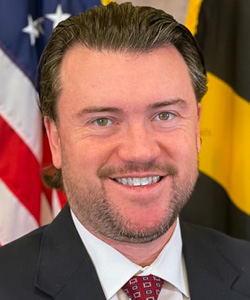
Del. Kevin Hornberger
Sponsored bills
Maddy summaryHB 1325 establishes a 5-year pilot program (2026-2030) to create regional pools of substitute child care providers for Maryland child care facilities. The program, administered by a state-selected nonprofit, will recruit and support qualified providers to fill temporary staffing gaps in licensed centers, family homes, or large family child care homes. Key mechanisms include organizing pools across rural, suburban, and urban regions; helping providers meet background checks, training, and credential requirements; and developing a digital matching platform to connect providers with facilities. The program requires annual $350,000 grants to the nonprofit and $375,000 in annual state budget appropriations, with final reporting due to the legislature in 2029.
Maddy summaryHB 1392 prohibits smoking, vaping, or consuming cannabis in the passenger area of a motor vehicle when a minor (under 18) is present. It directly affects drivers transporting minors, making it a misdemeanor offense punishable by up to one year in jail, a $1,000 fine, or both. The bill amends Maryland’s transportation code to add Section 21-903.1, explicitly defining the prohibited conduct and penalties. The law takes effect on October 1, 2025.
Maddy summaryHB 368 designates May as "Maryland Native Plant Month" by requiring the Governor to annually issue a proclamation recognizing the environmental benefits of native plants. The bill directs the Governor to urge educational organizations, environmental groups, and businesses to host events and activities during this month. It does not create new programs or funding but formally establishes this annual observance through a simple legislative change to Maryland state law. This commemorative measure affects the Governor’s annual actions and encourages voluntary participation from relevant organizations.
Maddy summaryHB 596 requires Maryland county superintendents to allow advance enrollment for dependent children of active-duty service members relocating due to military orders, using a remote registration process without fees or in-person requirements. It mandates school systems to coordinate with parents and the sending state to prevent delays in enrolling children with disabilities who receive special education services. The bill also requires the Secretary of Veterans and Military Families to publish clear information about enrollment procedures and available support services. This applies to all public schools and specifically benefits military-connected families facing frequent relocations.
Maddy summaryHB 1268 requires Maryland health insurers, nonprofit health plans, and health maintenance organizations to cover the full duration of long-term antibiotic treatment (over 4 weeks) for Lyme disease and related tick-borne illnesses (like Babesiosis or Ehrlichiosis) when ordered by a licensed physician for therapeutic purposes. It prohibits these entities from imposing quantity limits on such coverage or denying it solely because the treatment is labeled "unproven," "experimental," or "investigational." The law applies to all health insurance policies issued, delivered, or renewed in Maryland on or after January 1, 2026. This directly affects patients diagnosed with Lyme disease or related illnesses who require extended antibiotic therapy, ensuring insurers must cover medically necessary treatment without arbitrary restrictions.
Maddy summaryHB 1188 requires Maryland law enforcement agencies, agents, and local detention facilities to run a national criminal database search when taking custody of an individual. If the search reveals someone not lawfully present in the U.S. has an outstanding criminal warrant, the agency must notify federal immigration authorities and may hold the person for up to 48 hours to facilitate transfer. The bill prohibits local governments or agencies from adopting policies that limit cooperation with federal immigration authorities in these cases. It directly affects police departments, sheriffs' offices, and jail facilities across Maryland, effective October 1, 2025.
Maddy summaryHB 1374 expands eligibility for publicly funded prekindergarten to include 3-year-olds in certain private providers. It modifies the definition of "Tier I child" to include 3-year-olds whose families meet income requirements (≤300% federal poverty level) or are homeless, live in counties where private providers have opted to enroll them, and choose full-day programs. Eligible private providers (licensed, charging tuition ≤ "cost of quality," meeting quality standards) must sign a memorandum of understanding with the State Department of Education and county boards to enroll these children. The bill directly affects qualifying 3-year-olds, eligible private prekindergarten providers, and local departments responsible for notifying families about enrollment options.
Maddy summaryHB 1403 changes how Maryland calculates state education funding for public schools by altering the definition of "full-time equivalent enrollment." It replaces the previous 3-year average enrollment method with an average of daily enrollment counts on specific dates (September 30, December 31, March 31, and the last day of the prior school year). The bill also excludes the 2020-2021 school year from calculations if it appears in the 3-year average, addressing pandemic-era enrollment disruptions. This directly affects all Maryland school districts receiving state education aid, as it will determine their funding amounts starting in fiscal year 2027.
Maddy summaryHB 1417 establishes a Clean Energy Procurement Program within Maryland's Department of General Services by January 1, 2026. The program requires the department to competitively solicit and potentially contract for biogas to replace fossil natural gas in state transportation and building operations, aiming to evaluate environmental and economic impacts. Key provisions mandate collecting natural gas usage data, conducting a lifecycle analysis of biogas (funded by the Power Plant Research Program), and analyzing costs/benefits of expanding biogas use. The program applies only if biogas is competitively priced, of sufficient quality, and available, and will terminate December 31, 2028. It directly affects state agencies managing transportation and facilities.