

Maddy summaryHB 761 modifies Maryland's income tax code to increase the tax break for military retirees. It removes the age requirement for the full tax deduction on military retirement income, raising the deduction from $12,500 (under 55) or $20,000 (55+) to $25,000 for 2026-2026 and $40,000 starting in 2027. This directly affects Maryland residents who receive military retirement income from active or reserve service, including death benefits. The bill amends Section 10-207(q) of Maryland’s tax code to apply the higher deduction regardless of the retiree’s age. The change takes effect July 1, 2026.
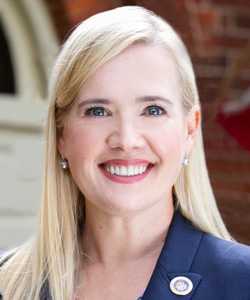
Del. Dana Jones
Sponsored bills
Maddy summaryThis Maryland bill allows taxpayers to subtract up to $1,000 from their state income tax when donating food or cash specifically designated for food purchases to qualified charitable organizations. The law defines eligible recipients as food banks, homeless shelters, domestic violence shelters, religious groups, and other registered charities that provide free food to people in need. To claim this benefit, taxpayers must list the recipient organization's name and provide proof of the donation's value on their income tax return. The Comptroller will create regulations to establish registration criteria for these organizations, and the bill includes a requirement for a report by January 1, 2029, on whether donations have increased since the law took effect. The provision applies to taxable years beginning after December 31, 2025, and automatically expires on June 30, 2029.
Maddy summaryHB 935 requires Maryland to establish a dedicated prerelease facility for female incarcerated individuals, directly affecting women eligible for prerelease programs at the Maryland Correctional Institution for Women. The bill mandates a separate facility meeting specific criteria: at least 3 acres, not within 1 mile of other prisons, and designed to house 1.25 times the 2024 prerelease-eligible population. It requires the Department of Public Safety and Correctional Services to provide comprehensive rehabilitative services (including gender-responsive programming) and report progress to legislative committees by a specified deadline. The facility must operate by June 1, 2023, with the Department of General Services directing procurement for its construction.
Maddy summaryHB 541 requires all Maryland public schools to provide free menstrual hygiene products (tampons or sanitary napkins) in women’s restrooms at no cost to students. Each county board of education must install dispensers in at least two women’s restrooms at middle/high schools by October 2022 (and all by August 2025) and in at least one restroom at elementary schools by October 2022. Schools must regularly restock these dispensers to ensure availability, with the state reimbursing counties for installation and product costs through a $500,000 fiscal year 2023 appropriation. The law applies directly to public school students and county education boards, taking effect July 1, 2026.
Maddy summaryHB 659 adds a new member position to Maryland's State Board of Education, requiring the Governor to appoint an early childhood development professional with extensive experience in child care operations and curriculum development. This member must be selected from a list of three candidates provided by the Office of Child Care Advisory Council. The bill directly affects the State Board's composition and ensures representation from early childhood education professionals, who will attend executive sessions but cannot vote on personnel appeals. The appointment process requires the Department to notify licensed child care providers of vacancies, and the position takes effect July 1, 2026.
Maddy summaryHB 488 establishes the geographic boundaries for Maryland's eight congressional districts for the 2026 elections. It specifies exact county and election district portions, using census tract data to define district lines where precincts are split, based on boundaries as they existed on January 13, 2026. This bill directly affects voters in Maryland's congressional districts by determining which communities are grouped together for electing U.S. Representatives. It replaces previous election law sections (8-702 through 8-709) and clarifies that certain districting rules apply only to state legislative districts, not congressional ones.
Maddy summaryHB 394 requires Maryland county school boards to annually identify areas where students live too far from school for bus transportation and list safe walking/biking routes (with sidewalks, crosswalks, or paths) for those students. County governments must then review these reports and construct necessary sidewalks and crosswalks to create these safe routes. The bill applies to all counties and mandates coordination with other entities if county-owned roads aren't sufficient. It directly affects public school students living beyond bus service distance and county governments responsible for infrastructure. The law takes effect July 1, 2026.
Maddy summaryHB 662 amends Maryland election law to allow public school students serving as election judges to simultaneously earn service-learning hours for graduation and receive standard election judge compensation. The bill specifically updates Section 10-205(d) to confirm students can qualify for both benefits - $250 per day (or $350 for returning judges) plus service hours under COMAR 13A.03.02.05 - without choosing between them. This change directly affects public school students in Maryland who serve in election roles, effective October 1, 2026. The law does not alter compensation rates but clarifies eligibility for dual benefits.
Maddy summaryHB 644 amends Maryland's property tax law to simplify the application process for surviving spouses of disabled veterans seeking a property tax exemption on their primary residence. The bill updates the required documentation, allowing surviving spouses to submit either a VA disability certification or a VA rating decision (including the effective date) instead of previous, more complex forms. This change directly affects unmarried surviving spouses of veterans who were honorably discharged with a 100% service-connected disability, ensuring they can more easily qualify for the exemption on their current home or a newly acquired home meeting specific conditions. The exemption remains tied to the property's use as a primary residence and the veteran's qualifying disability status.
Maddy summaryThis bill establishes a three-year pilot program to create a statewide network of free financial empowerment centers across Maryland, targeting residents seeking assistance with personal financial management. Each center will provide one-on-one counseling on increasing savings, reducing debt, accessing banking services, and improving credit scores, with materials available in English, Spanish, and other required languages. The Comptroller’s Office will administer the program, requiring counselors to complete training meeting established standards, and the state will fund it through budget appropriations for fiscal years 2028 and 2029. The program will run from October 1, 2026, through September 30, 2029, after which it will automatically end without further legislative action.