

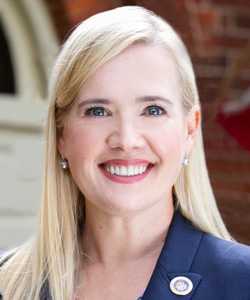
Photo of Dana Jones
D Maryland House of Delegates · District 30A On the 2026 ballot

Del. Dana Jones

Compare
Total votes
8,105
all sessions
Attendance
99%
111 missed
Near the chamber average
With party
99%
of cast votes
Near the chamber average
Bipartisan score
0%
crosses aisle rarely
Near the chamber average
Sponsored
328
bills & resolutions
Near the chamber average
Committees
2
assignments
328 bills and resolutions

Sponsored bills

Total
328
Primary
328
Co-sponsor
0
This page
328
matching current filters
Primary HB 653
Passed · Maryland House of Delegates · Lead sponsor
Income Tax - Subtraction Modification for Public Safety Retirement Income - Amount

Maddy summaryHB 653 increases Maryland's tax deduction for retirement income earned by retired public safety employees, including correctional officers, law enforcement officers, firefighters, and emergency medical personnel. It phases in a gradual increase in the deductible amount from $15,000 to $20,000 over five years, starting with $15,000 for 2025-2026 tax years and rising by $1,000 annually until reaching $20,000 by 2029-2030. This deduction reduces taxable income for eligible retirees aged 55+ who receive retirement income tied to their public safety service. The changes take effect July 1, 2026, as part of Maryland's income tax code.

Passed Apr 13, 2026 0 co-sponsors
Primary HB 1458
died · Maryland House of Delegates · Lead sponsor
State Supplemental Nutrition Assistance Program for Refugees and Asylees - Establishment

Maddy summaryHB 1458 establishes Maryland's State Supplemental Nutrition Assistance Program for Refugees and Asylees, providing food assistance to specific groups who lost federal SNAP eligibility after July 3, 2025. The program directly affects refugees, asylees, parolees (including Afghan and Ukrainian humanitarian parolees), and other noncitizens who met SNAP eligibility requirements under pre-2025 federal rules but became ineligible due to changes in federal law. It requires the Maryland Department of Human Services to administer the program using the same eligibility standards that were in effect on July 3, 2025, ensuring households with qualifying individuals receive benefits. The program takes effect July 1, 2026, restoring access to nutrition assistance for affected individuals.

died Apr 7, 2026 0 co-sponsors
Primary HB 1463
Passed · Maryland House of Delegates · Lead sponsor
Anne Arundel County Board of Education - Constituent Services Liaison - Establishment

Maddy summaryHB 1463 requires Anne Arundel County to hire a constituent services liaison for its school board by the start of the 2026-2027 school year. The position must have special education experience and will connect community members to school services, help access education resources, and partner with local organizations to support school goals. The county board president negotiates the liaison’s employment terms, salary (set by the board), and removal process. This directly affects Anne Arundel County Public Schools’ operations and community engagement efforts.

Passed Mar 26, 2026 0 co-sponsors
Primary HB 938
Passed · Maryland House of Delegates · Lead sponsor
Anne Arundel, Montgomery, and Prince George's Counties - Crosswalk Monitoring Systems

Maddy summaryHB 938 authorizes Anne Arundel County and the City of Annapolis to use crosswalk monitoring systems that record drivers failing to yield to pedestrians. If a driver is caught on camera not stopping for a pedestrian in a crosswalk, they may receive a citation and face a civil penalty. The bill specifies that fines for uncontested violations go directly to the local jurisdiction (county or city), while contested cases send fines to the District Court. It also prohibits contractors from being paid based on the number of citations issued. This bill directly affects drivers in those two jurisdictions who violate crosswalk yielding laws.

Passed Mar 25, 2026 0 co-sponsors
Primary HB 1272
Passed · Maryland House of Delegates · Lead sponsor
Family Law - Kinship Care

Maddy summaryHB 1272 requires Maryland child welfare agencies to consider a child’s feelings and preferences when selecting kinship caregivers for out-of-home placements. It expands the definition of "kinship caregiver" to include unrelated individuals identified by the child or their parent, alongside blood relatives or those with strong family bonds. Agencies must approve such caregivers if they meet specific criteria, including understanding the child’s circumstances, having prior protective involvement, and demonstrating current ability to safeguard the child. The law takes effect October 1, 2026.

Passed Mar 24, 2026 0 co-sponsors
Primary HB 1143
Passed · Maryland House of Delegates · Lead sponsor
Public Health - Office of the Chief Medical Examiner - Perinatal Autopsies (Lung Float Test Ban)

Maddy summaryHB 1143 bans the use of the "lung float test" (a hydrostatic lung test) during perinatal autopsies in Maryland. It directly affects the Chief Medical Examiner, deputy examiners, assistant examiners, and authorized pathologists when determining if a death was a stillbirth or occurred after a live birth. The bill prohibits this specific test method and allows parents, guardians, or legal representatives to file a civil lawsuit if the test is used unlawfully. Violations also become grounds for disciplinary action against medical examiners.

Passed Mar 23, 2026 0 co-sponsors
Primary HB 382
Passed · Maryland House of Delegates · Lead sponsor
Commercial Law - Broadband Access - Low-Income Consumer Programs (Maryland Broadband Opportunity and Fairness Act)

Maddy summaryHB 382 (Maryland Broadband Opportunity and Fairness Act) requires broadband providers serving 10,000+ Maryland customers to establish low-cost internet programs by December 1, 2026. These programs must offer minimum speeds of 100/20 Mbps (for households of two or fewer) or 200/20 Mbps (for larger households), at least 1.2 terabytes of data, and low latency for eligible low-income consumers. Eligibility includes households meeting federal poverty guidelines (350% of federal poverty level), qualifying for SNAP/food assistance, Medicaid, or low-income energy programs. Providers may raise prices by no more than 2% annually with 30 days’ notice, and cannot require automatic payment plans for program enrollment.

Passed Mar 23, 2026 0 co-sponsors
Primary HB 628
Passed · Maryland House of Delegates · Lead sponsor
Human Services - Foster Care Transition Grant Program - Establishment

Maddy summaryHB 628 establishes a program providing $1,000 monthly payments for three years to young adults who were in out-of-home care (like foster care) on their 18th birthday, with birthdays on or after October 1, 2026. Payments cannot be counted as income for Medicaid, the Maryland Earned Income Tax Credit, or state/federal financial aid for education. The Department of Human Services must report annually on participants' income, location, employment, and housing status starting October 2027. The program will run from October 1, 2026, through September 30, 2031, with automatic termination after that date.

Passed Mar 20, 2026 0 co-sponsors
Primary HB 1472
In committee · Maryland House of Delegates · Lead sponsor
Better Small Business Employee Benefit Act of 2026

Maddy summaryHB 1472, the Better Small Business Employee Benefit Act of 2026, exempts professional employer organizations (PEOs) from certain health benefit plan requirements when providing coverage to small employers in Maryland. The bill requires PEOs to provide written disclosure of specific plan details to small businesses before offering health benefits. This change modifies Maryland’s insurance laws to remove the requirement for PEOs to offer plans through the state’s health benefit exchange, while ensuring transparency for small employers. The bill directly affects small businesses that use PEOs for employee health benefits and the PEOs themselves.

In committee Mar 19, 2026 0 co-sponsors
Primary HB 543
Passed · Maryland House of Delegates · Lead sponsor
Real Property - Landlord and Tenant - Family Child Care Homes

Maddy summaryHB 543 allows landlords to charge up to two months' rent as a security deposit if a tenant operates a family child care home (defined as caring for up to eight children in a residence). It prohibits landlords from unreasonably restricting or banning such homes on single-family rental properties and shields landlords from civil liability related to the child care operation. Tenants must provide written notice 60 days before starting, share their child care registration, and supply insurance naming the landlord and property owners as additional insureds. The bill also requires tenants to notify landlords immediately if they stop operating the home and permits landlords to mandate $1 million liability insurance coverage.

Passed Mar 17, 2026 0 co-sponsors
Showing 31 to 40 of 328 bills
Previous 1 … 3 4 5 … 33 Next