

Maddy summaryHB 1056 designates October 1 as "Purple Lights Night" in Maryland, requiring the Governor to annually proclaim this day. The bill honors individuals in the state who are victims or survivors of domestic violence and expresses support for eliminating domestic violence. It adds this commemorative day to Maryland law through a procedural change in the Annotated Code (Section 7-417), without creating new programs or funding. The bill is purely ceremonial, focusing on symbolic recognition rather than policy implementation. It takes effect July 1, 2026.
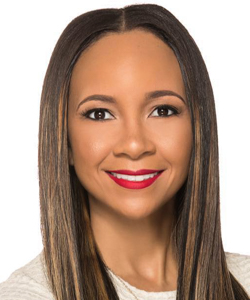
Del. Denise Roberts
Sponsored bills
Maddy summaryHB 1290 authorizes children involved in Maryland's Child in Need of Assistance (CINA) proceedings - where a child faces abuse, neglect, disability, or mental health issues requiring court intervention - to be present at their hearings. The bill requires courts to allow children’s presence unless the child’s attorney determines it’s not in the child’s best interest (with the child waiving their right) or the court makes that finding after considering alternatives. Before excluding a child, courts must explore less restrictive options like adjusting schedules, remote participation, trauma-informed support, or limiting courtroom time. This directly affects children in CINA cases handled by Maryland’s juvenile courts, modifying court procedures to prioritize their participation while ensuring safeguards.
Maddy summaryHB 1029 modifies Maryland's real estate laws to clarify how homebuyers can get their deposits back when canceling a home purchase under a contingency clause (e.g., for inspections or appraisals). It requires sellers to provide the escrow agent with a copy of a court complaint or mediation request within 10 days of a buyer’s termination notice. If no legal action is filed within that period, the escrow agent must return the deposit to the buyer within 5 days. This affects homebuyers, sellers, and escrow agents by creating a clearer, time-bound process for handling deposits during contract terminations. The bill takes effect October 1, 2026.
Maddy summaryHB 952 requires operators of "companion chatbots" (AI systems designed to meet social needs through human-like interactions) to establish safety protocols, including preventing harmful content like self-harm discussions and sexually explicit material for minors. Operators must publish these protocols online, display clear warnings that chatbots are AI (not human), and provide crisis resource referrals for users expressing suicidal thoughts. The bill also mandates that operators of chatbots used by minors display mandatory break reminders after 3 hours of continuous use. It excludes business customer service bots, video game features, and basic voice assistants from these requirements.
Maddy summaryThis bill modifies Maryland's legislative scholarship programs to exempt certain applicants from competitive examination requirements and to allow scholarship funds to be used for real estate appraisal training. Specifically, it removes the exam requirement for students who have completed at least one year at an eligible institution, those who graduated high school five years prior, applicants to approved private career colleges, and community college students. Additionally, it authorizes senatorial and Delegate scholarships to cover expenses for completing the Real Property Appraiser Qualification Criteria program. The changes apply to both new scholarship applications and the existing scholarship programs, affecting current and future recipients who meet the specified eligibility criteria.
Maddy summaryHB 1058 establishes Maryland's Youth Delinquency Prevention Fund to provide grants to community-based programs, including youth service bureaus, that offer preventive services like delinquency prevention, youth suicide prevention, substance use prevention, and youth development. The fund, administered by the state office, is funded through state budget appropriations and interest earnings, and it must be used exclusively for these preventive services without replacing existing funding. The bill requires annual reports detailing grant distribution, the number of children served (disaggregated by age, region, race, and ethnicity), and whether served youth later interacted with justice systems. The fund is non-lapsing, meaning money remains available year-to-year and cannot revert to the General Fund.
Maddy summaryHB 995 prohibits behavioral health care providers (like therapists and counselors) in Maryland from using artificial intelligence for direct patient care, including assessment, diagnosis, treatment, or therapeutic communication. The bill allows AI for administrative tasks such as scheduling appointments or managing records, but requires providers to: comply with confidentiality laws, sign vendor agreements preventing data misuse, and obtain written patient consent about AI risks. Providers must also independently verify AI-generated clinical data before use. The law takes effect October 1, 2026, and applies to all licensed behavioral health providers in Maryland.
Maddy summaryHJ 8 is a symbolic resolution apologizing for Maryland's historical role in racial terror lynchings. It formally acknowledges the state's complicity in 38 documented lynchings between 1854-1933, including failures to protect Black citizens, colluding with local governments to conceal perpetrators, and failing to pass anti-lynching laws. The resolution commits Maryland to taking reparative actions as recommended by the Maryland Lynching Truth and Reconciliation Commission, though it does not establish new programs or allocate funds. It directly addresses the legacy of harm experienced by Black Marylanders and their descendants. This is a procedural resolution, not a law with enforceable provisions.
Maddy summaryHB 1205 establishes a minimum wage of $25.00 per hour for non-certified, non-supervisory school support staff (such as aides, clerks, and cafeteria workers) beginning July 1, 2028. It requires all Maryland county school boards to pay these employees at least this rate, directly affecting over 20,000 education support professionals statewide. The bill also mandates the State Department of Education to submit a cost report by December 1, 2026, with detailed estimates broken down by school system to implement this wage change.
Maddy summaryHB 1509 requires mortgage servicers in Maryland to deposit insurance proceeds from damaged residential properties into a federally insured interest-bearing account with a minimum 2% annual rate. Borrowers must choose whether to have interest earnings credited back to the account or paid directly to them. Servicers must notify borrowers within 10 business days of receiving proceeds and disburse interest directly within 10 business days of the borrower’s election, with strict limits on fees for direct payments. The law applies to all mortgage servicers handling insurance claims for owner-occupied homes in Maryland, effective July 1, 2026, for existing claims.