

Maddy summaryHB 1457 replaces the existing annual surcharge ($100-$125) for zero-emission and plug-in electric vehicles with a new annual highway use fee for owners of alternative fuel vehicles (e.g., propane, natural gas), fuel-efficient vehicles (25+ MPG combined), and plug-in electric vehicles. The fee is calculated as 85% of the estimated motor fuel tax a comparable vehicle would pay annually, based on fuel efficiency and mileage. Owners may opt into a voluntary mileage-based user fee program administered by the Department of Transportation instead of paying the highway use fee. This bill directly affects owners of these specific vehicle types registered in Maryland, shifting the payment mechanism while maintaining revenue for the Transportation Trust Fund.
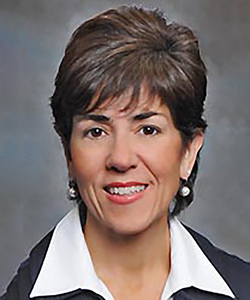
Del. Mary Lehman
Sponsored bills
Maddy summaryHB 941 requires the Governor to include at least $5 million annually in the state budget for the University of Maryland Eastern Shore (UMES) starting in fiscal year 2027, continuing until a total of $321,181,312 is appropriated. This addresses a historical funding disparity identified by the state legislature, where UMES (as Maryland’s 1890 land-grant institution) received less per-student state funding than UM College Park (the 1862 land-grant institution) from 1987-2020. Funds must be supplemental to existing appropriations and can be used for infrastructure, faculty, scholarships, or other institutional needs identified by UMES. The bill aims to fully remedy the $321 million shortfall over time through mandatory annual appropriations.
Maddy summaryHB 1431 restricts federal immigration enforcement agencies from accessing Maryland state and local government databases without a valid warrant. It requires state/local law enforcement agencies, DMV, and other government units to deny federal requests for personal information, photos, or facial recognition data unless accompanied by a federal or Maryland court warrant. The bill also mandates annual reporting to the legislature on all such federal requests received, including how many were denied or granted with warrants. This directly affects Maryland state agencies, local governments, and federal immigration officers seeking access to these databases.
Maddy summaryHB 464 requires Maryland local school systems to provide parents of children with disabilities with written information about secondary transition services during Individualized Education Program (IEP) meetings. Specifically, it mandates this information be given at least once yearly and beginning when a student turns 14 years old. The bill also requires that materials be provided in the parent's native language if English is not their primary language. This applies directly to parents of students with IEPs in Maryland public schools, ensuring they receive clear, accessible planning resources for their child's post-secondary goals. The law amends existing Maryland education code sections to formalize these requirements.
Maddy summaryHB 1342 restricts pesticide use on Maryland state-owned properties (like parks and government grounds) by requiring that only specific "listed" pesticides or registered pesticides for defined purposes (e.g., controlling invasive species, weed management, or public health threats) may be applied. It mandates state agencies managing such properties to adopt a model plan developed by the Department of Agriculture, which requires at least 20% of unencumbered land to remain untreated with cosmetic pesticides, bans pesticides toxic to pollinators unless necessary for public health, and prioritizes native plants for pollinator habitat. The bill directly affects all state agencies managing public property, requiring them to adapt the model plan to their specific sites by October 2025. This creates concrete policy changes by limiting pesticide types, protecting pollinator areas, and aligning state practices with environmental safeguards.
Maddy summaryHB 1256 establishes Maryland’s first regulatory framework for fully autonomous vehicles (level 4-5 systems) operating without human drivers on state highways. It requires manufacturers to provide safety certification labels, owners to submit law enforcement interaction plans detailing emergency procedures, and vehicles to achieve a "minimal risk condition" during system failures. The bill defines the automated driving system as the legal "operator" for traffic law compliance and mandates adherence to federal safety standards. This affects vehicle manufacturers, owners, and transportation companies seeking to deploy autonomous fleets in Maryland.
Maddy summaryHB 1444 prohibits counties and municipalities in Maryland from allowing developers to pay a cash fee instead of including moderate-income housing units in new residential developments. It directly affects developers who would previously have paid fees to avoid building affordable units, and local governments that could no longer accept such payments. The bill amends local housing requirements to require actual unit construction, not fee payments, for moderate-income housing in new projects. This change applies prospectively from October 1, 2025, and does not affect existing fee agreements made before that date.
Maddy summaryHB 1097 establishes a 10-member workgroup to examine mail-in ballot accessibility, specifically focusing on the impact of requiring paper returns on voters with disabilities. The workgroup includes election officials, disability advocates (like Common Cause Maryland and the National Federation of the Blind), and experts in voting accessibility, security, and cybersecurity. It must assess current processes, research accessible alternatives from other jurisdictions, and evaluate options considering security, privacy, cost, and potential discrimination. The group must report findings and recommendations to the Governor and legislature by December 31, 2025, with the bill expiring June 30, 2026.
Maddy summaryHB 211 grants collective bargaining rights to graduate assistants and postdoctoral associates at Maryland's public universities (including the University System, Morgan State, and St. Mary's College). The bill amends Maryland law to remove these workers from an existing exclusion, creating separate bargaining units for them - distinct from faculty or undergraduate student employees. Key provisions define "graduate assistant" as a graduate student in teaching/administrative/research roles and "postdoctoral associate" as a doctoral-level employee in research positions, explicitly including them in collective bargaining protections. This change directly affects these graduate and postdoctoral workers, allowing them to negotiate wages, benefits, and working conditions through union representation.
Maddy summaryHB 1058 clarifies that local governments (counties, cities) may adopt stricter emission standards, ambient air quality standards, or solid waste regulations than state or federal requirements, provided local rules are at least as stringent. It explicitly states that county water/sewer plans and existing environmental laws do not limit this local authority. The bill requires the Maryland Department of the Environment to publish website guidance by October 1, 2025, confirming local governments' right to implement these stricter standards. This bill directly affects municipalities and counties managing air quality and waste systems, without altering existing state/federal standards. It takes effect July 1, 2025.