

Maddy summaryHB 1041 prohibits Maryland's Department of Health from issuing or renewing certificates for youth camps if any structures used to house campers are located in a flood hazard area. This affects all youth camps (as defined by Maryland law) that operate in areas at risk of flooding, including day camps, residential camps, and travel camps. The bill amends health regulations to require the Department to deny certifications for camps meeting this criterion, rather than accepting alternative accreditation. It takes effect October 1, 2026.
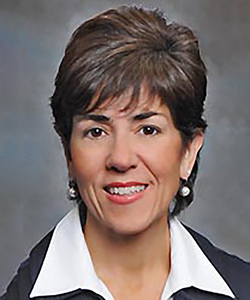
Del. Mary Lehman
Sponsored bills
Maddy summaryHB 1465 requires Maryland's Department of the Environment to update stormwater management rules, prioritizing practices that maintain predevelopment runoff characteristics and protect water quality. It directly affects local governments (counties/municipalities) that adopt stormwater ordinances, developers who must implement environmental site design, and the Department itself. Key provisions mandate that stormwater plans prevent soil erosion, reduce pollution in runoff, maintain stream channel integrity, restore water quality, and use the latest precipitation data. The bill also restricts using stream/floodplain restoration projects to meet certain mitigation or permit requirements and requires the Department to review rules every 5 years. These changes aim to improve watershed health while ensuring development minimizes impacts on Maryland's waterways.
Maddy summaryHB 1316 directs the Hilltop Institute at the University of Maryland, Baltimore County to study the feasibility of implementing a single-payer universal health care system in Maryland. The study will evaluate coverage scope (including essential benefits under federal law and Maryland programs), cost projections, and potential impacts on health equity and access, while examining how to integrate existing programs like Medicaid and Medicare. An Advisory Commission, composed of state officials, labor representatives, and community stakeholders, will assist the Institute in developing final recommendations. This bill is purely a study mandate with no immediate policy changes; it aims to inform future legislative decisions about universal health care.
Maddy summaryHB 1133 requires drug manufacturers and patient advocacy groups receiving drug manufacturer funding to register with Maryland's Department of Health before running disease awareness campaigns. It mandates that campaign materials disclose if the campaign relates to a drug or device the manufacturer is developing, manufacturing, or marketing. The law directly affects drug companies and patient advocacy organizations that receive manufacturer funding for campaigns focused on specific medical conditions. Campaigns promoting marketed drugs must include a clear statement identifying the specific drug or device being promoted. The bill takes effect October 1, 2026.
Maddy summaryHB 1153 prohibits health insurers, nonprofit health service plans, HMOs, and managed care organizations in Maryland from unilaterally lowering medical claim payments (downcoding) without clinical justification. The bill requires these entities to notify providers within 30 days if they intend to downcode, including specific reasons, references to clinical guidelines, and the original vs. revised codes. It bans practices like downcoding based solely on diagnosis codes, using AI without reviewing medical records, or targeting providers treating complex conditions, and mandates emergency claims be downcoded based on documented symptoms - not final diagnoses. A downcoding decision resulting in nonpayment is treated as a coverage denial, allowing providers to appeal under existing law.
Maddy summaryHB 1134 prohibits pharmaceutical and medical device sellers from giving healthcare professionals gifts exceeding $50 in total retail value per calendar year. It directly affects drug/device manufacturers and healthcare professionals who prescribe or recommend products, including their organizations and employees. The bill defines "gifts" broadly to include payments, food, travel, and entertainment (excluding peer-reviewed medical literature) and sets a clear annual $50 limit. Violations are punishable as misdemeanors with fines up to $5,000 or six months in jail. The law takes effect October 1, 2026.
Maddy summaryHB 1522 removes a legal exemption that previously protected vehicle rental companies from liability for traffic violations captured by traffic control signal or speed monitoring systems. The bill repeals specific sections of Maryland law (21-202.1 and 21-809) that excluded rental companies and special plate holders from receiving citations for red-light running or speeding violations recorded by these systems. As a result, rental companies will now be directly liable for such violations, facing the same civil penalties as individual vehicle owners. This change affects all vehicle rental companies operating in Maryland, requiring them to address violations recorded by municipal or state monitoring systems. The bill takes effect October 1, 2026.
Maddy summaryHB 1477 establishes Maryland's Ibogaine Clinical Research Grant Program to fund clinical trials on ibogaine - a naturally occurring compound from the iboga plant - for treating opioid use disorder and other neurological conditions. The program, administered by the Maryland Department of Health in consultation with the Department of Veterans and Military Families, awards up to three annual grants to eligible research institutions in Maryland that meet specific criteria (including expertise in neurological disorders and substance use treatment) and require matching funds equal to the grant amount. Funding comes from $500,000 annually (fiscal years 2028-2030) in the Opioid Restitution Fund, with recipients required to conduct FDA-overseen trials and submit quarterly progress and financial reports. The bill aligns with the "Veterans Mental Health Innovations Act" title but does not restrict trials to veterans, focusing instead on broader neurological and opioid use disorder research.
Maddy summaryHB 1065 establishes a grant program for Maryland manufacturers of cement, concrete, or construction materials that use coal ash waste (like fly ash or bottom ash) as feedstock. It requires the Department of the Environment to award grants to eligible manufacturers meeting specific criteria, including using Maryland-sourced coal by-products, creating jobs in communities affected by coal waste, and demonstrating measurable greenhouse gas reductions compared to conventional materials. The bill also mandates that all state government agencies give procurement preference to bids that incorporate these coal by-products. This directly affects cement/concrete manufacturers, state purchasing decisions, and communities near coal waste generation sites. The policy change focuses on repurposing existing coal waste for construction materials through financial incentives and procurement rules.
Maddy summaryHB 1237 establishes a new "Residential Pollinator Protection and Neighbor Notification Registry" managed by the Maryland Department of Agriculture. It requires pesticide businesses with residential subscription contracts to inspect properties before each application, communicate findings and recommend non-chemical options, and provide written safety information to customers. The bill also mandates posting visible signs for 48 hours after pesticide applications and creates the registry for residents who want advance notice of pesticides applied to nearby properties. Residents can register to receive notifications if their property is adjacent to a registered location, and the form asks about pesticide sensitivities, pets, or pollinator habitats. This directly affects residential customers, pesticide licensees, and the Department of Agriculture.