

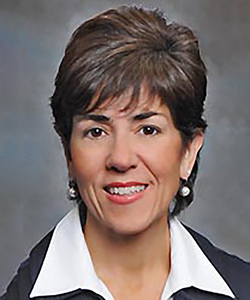
Photo of Mary Lehman
D Maryland House of Delegates · District 21 On the 2026 ballot

Del. Mary Lehman

Compare
Total votes
10,482
all sessions
Attendance
98%
211 missed
Higher than 85% of chamber peers
With party
99%
of cast votes
Near the chamber average
Bipartisan score
0%
crosses aisle rarely
Near the chamber average
Sponsored
895
bills & resolutions
Higher than 94% of chamber peers
Committees
3
assignments
895 bills and resolutions

Sponsored bills

Total
895
Primary
780
Co-sponsor
115
This page
895
matching current filters
Primary HB 1213
In committee · Maryland House of Delegates · Lead sponsor
State Transfer Tax - Rate - Alterations (Housing Affordability for Buyers and Sellers)

Maddy summaryHB 1213 lowers Maryland's transfer tax rates for specific affordable housing properties to increase housing accessibility. It creates a new "deed-restricted property" category requiring 15% of units to be affordable to households earning ≤80% of the area median income (defined as housing costing ≤30% of income). The bill reduces tax rates for these properties: 0.25% (under $1M), 0.375% ($1M-$10M), and 0.5% ($10M+) versus standard rates for similar properties. It also adds a 0.5% tax rate for transfers involving certain low-income housing tax credit developments, directly benefiting first-time homebuyers and affordable housing developers.

In committee Feb 11, 2026 0 co-sponsors
Primary HB 807
In committee · Maryland House of Delegates · Lead sponsor
Education - Teacher Preparation Programs - English Language Learner Teacher Competency Requirements

Maddy summaryHB 807 requires all Maryland teacher preparation programs to integrate specific training in teaching English language learners (ELLs) into their curricula. This includes adding dedicated instruction on ELL competencies - such as language development, equitable literacy opportunities, and working with linguistically diverse students - starting in the 2028-2029 academic year, along with a mandatory three-credit course focused on ELL teaching methods. The bill directly affects all undergraduate and graduate teacher preparation programs in Maryland, mandating they incorporate these competencies throughout their coursework, not just in a single course. It aims to ensure future teachers gain practical skills to support ELL students in classrooms across the state.

In committee Feb 11, 2026 0 co-sponsors
Primary HB 1066
In committee · Maryland House of Delegates · Lead sponsor
Municipal Elections - Qualified Electronic Transmission Systems - Authorization for Use

Maddy summaryHB 1066 authorizes Maryland municipalities to conduct local elections using secure electronic voting systems that meet strict security standards. The bill defines a "qualified electronic transmission system" as one with end-to-end encryption, verifiability, biometric ID verification, and paper record backup. Municipalities may use these systems for elections but are prohibited from using voter data collected through them for any purpose beyond election administration or voter participation statistics. This bill directly affects local governments in Maryland planning to adopt electronic voting methods for municipal elections, effective July 1, 2026.

In committee Feb 11, 2026 0 co-sponsors
Primary HB 1027
In committee · Maryland House of Delegates · Lead sponsor
Election Law - Telephone Voting System - Requirements

Maddy summaryHB 1027 requires Maryland's State Board of Elections to establish a telephone voting system for absentee ballots, specifically for voters who certify having a print disability (a condition preventing reading standard printed materials). The bill mandates the State Board to select, certify, and acquire a system meeting strict security and accessibility standards - including ballot secrecy, accuracy, paper trail requirements, and toll-free access - after independent testing by a federally approved lab. Eligible voters must submit a form certifying their disability to be added to a list, and the State Board must send them detailed instructions, a toll-free number, and voting dates 75 days before absentee ballots are mailed. The bill also requires the State Board to implement a public education campaign about the system and report progress to legislative committees by December 1, 2028.

In committee Feb 11, 2026 0 co-sponsors
Primary HB 704
In committee · Maryland House of Delegates · Lead sponsor
Community Eligibility Provision Expansion Program - Establishment

Maddy summaryHB 704 establishes Maryland's Community Eligibility Provision Expansion Program within the State Department of Education. It provides state funding to cover the difference between federal reimbursement rates for free and paid school meals, directly supporting Maryland schools with high poverty rates (25%+ students qualifying for free meals) that participate in the federal child nutrition program. The state will appropriate $10 million annually starting in fiscal year 2028 to complement federal funds, with funds distributed based on school poverty concentration and geographic diversity. Schools must report on program outcomes, meal debt resolution, and reasons for opting out of federal eligibility, with annual reports published online.

In committee Feb 11, 2026 0 co-sponsors
Primary HB 937
In committee · Maryland House of Delegates · Lead sponsor
Workgroup to Study Youth Camp and RV Park Emergency Preparedness - Established

Maddy summaryHB 937 establishes a workgroup to study emergency preparedness for youth camps and RV parks in Maryland. The workgroup, composed of state agency representatives, legislators, and industry stakeholders (including camp and park owners), will create a county-by-county inventory of these facilities, review emergency policies from other states, and make recommendations for potential new laws. It will report findings to the legislature by December 31, 2027. This bill does not create new regulations but initiates a study to inform future policy. The workgroup expires automatically on September 30, 2028.

In committee Feb 10, 2026 0 co-sponsors
Primary HB 853
In committee · Maryland House of Delegates · Lead sponsor
Real Property - Regulation of Common Ownership Community Managers

Maddy summaryHB 853 creates a State Board of Common Ownership Community Managers within Maryland’s Department of Labor to license and regulate professionals managing residential communities. It directly affects condominiums, cooperatives, and homeowners associations (excluding timeshares) by requiring community managers to hold licenses, mandating community registration under certain conditions, and requiring contracts to include fidelity bonds or theft insurance. Key provisions include setting licensing standards, specifying required contract terms for management services, and establishing a dedicated fund to cover board operations. The bill aims to standardize oversight for community management services across Maryland’s residential communities.

In committee Feb 9, 2026 0 co-sponsors
Primary HB 350
In committee · Maryland House of Delegates · Lead sponsor
Voting Rights Act of 2026 - Counties and Municipal Corporations

Maddy summaryHB 350, the "Voting Rights Act of 2026," applies to local elections in Maryland counties and cities, protecting the voting rights of racial, ethnic, and language minority groups. It prohibits election methods that weaken the voting power of these groups, preventing them from electing preferred candidates or influencing election outcomes. Courts will determine violations by examining past election patterns and federal voting rights standards, rather than requiring proof of discriminatory intent. If a violation is found, courts can order remedies like changing election systems, but must respect existing statewide election practices.

In committee Feb 6, 2026 0 co-sponsors
Primary HB 568
In committee · Maryland House of Delegates · Lead sponsor
Public Financing Act - State Senate and House of Delegates Candidates

Maddy summaryHB 568 expands Maryland's public campaign financing program to include candidates for State Senate and House of Delegates, who were previously ineligible. The bill establishes specific qualifications (like residency and contribution limits) that candidates must meet to receive public funds from the Fair Campaign Financing Fund. It sets limits on the total public contributions these candidates can receive during elections and requires the State Board of Elections to distribute funds in a specified manner. The fund is financed through voluntary contributions, tax checkoffs, and campaign finance penalties, making it available to qualifying legislative candidates alongside existing gubernatorial candidates. This change directly affects candidates running for state legislative office by providing a new public financing option.

In committee Feb 6, 2026 0 co-sponsors
Primary HB 636
In committee · Maryland House of Delegates · Lead sponsor
Public Ethics - Members of the General Assembly - State and Local Government Employment Exemption

Maddy summaryHB 636 modifies Maryland's ethics rules to allow members of the General Assembly, candidates for the Assembly, and newly elected members to earn income from state or local government jobs under specific exemptions. It creates four categories of allowable income: educational instruction, merit-system positions, human services roles, or logical career transitions from prior employment. The Joint Ethics Committee must approve these exemptions, while certain existing relationships or post-term employment meeting education/licensure requirements remain excluded. This bill directly affects legislators' ability to hold outside public-sector jobs without violating current ethics prohibitions.

In committee Feb 6, 2026 0 co-sponsors
Showing 101 to 110 of 895 bills
Previous 1 … 10 11 12 … 90 Next