

Maddy summaryHB 1504 requires Maryland's State Highway Administration to prioritize funding for sidewalk and bicycle pathway construction/reconstruction on highways with "complete streets" policies or Vision Zero programs. It mandates that local governments request such projects through annual funding letters, with costs typically shared 50-50 between state and local governments unless the project is in a sustainable community (100% state-funded) or addresses a public safety risk (100% state-funded). The bill specifically applies to urban highways defined as those in urban areas with high pedestrian traffic, curb/gutter systems, or within municipal boundaries. This directly affects local governments seeking infrastructure funding and the State Highway Administration managing transportation budgets.
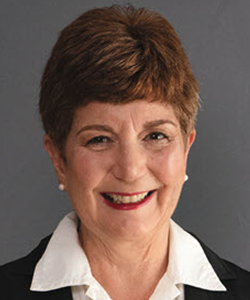
Del. Linda Foley
Sponsored bills
Maddy summaryHB 1532 amends Maryland's energy laws to adjust electricity rate structures and efficiency programs. It lowers the qualifying threshold for large commercial/industrial customers to access a specific rate schedule from 100 megawatts to 25 megawatts, directly affecting major energy users like factories and data centers. The bill also changes multiyear rate plan rules to prevent utilities from passing certain costs to customers and requires refunds if actual revenue differs from forecasts. Additionally, it updates energy efficiency program cycles, greenhouse gas target calculations, and definitions for energy resources like "zero-emission credits" used in procurement.
Maddy summaryHB 1164 allows water and sewage disposal companies in Maryland to use the same rates for multiple systems (even if not connected) and combine their costs and revenues when setting rates. It requires the Public Service Commission to approve these rate consolidations and permits gradual rate adjustments over up to three years. The bill also extends existing limited-income assistance programs - like payment plans for low-income households (earning ≤175% of federal poverty level) - to water and sewage companies, ensuring these customers receive the same support previously available to electric and gas providers. This primarily affects utility companies and their residential customers with limited income.
Maddy summaryHB 870, the "Large Buildings for Tomorrow Act," requires new construction of large commercial and multifamily residential buildings (over 35,000 square feet) to meet specific energy conservation standards set by the Maryland Department of Labor. The bill defines "covered buildings" to include most large commercial structures and state-owned buildings, but excludes historic properties, schools, manufacturing facilities, and agricultural buildings. It mandates that adopted energy conservation requirements must be at least as stringent as the International Energy Conservation Code, with the state allowed to set stricter standards to improve efficiency. The law also establishes clear definitions for terms like "energy conservation measure" to guide implementation and ensure consistency.
Maddy summaryHB 1081 creates a new Board of Directors for Baltimore Core Transit Service (encompassing local buses, light rail, Metro Subway, and paratransit in Baltimore) within the Maryland Transit Administration (MTA). The Board, composed of 9 voting members (including 5 governor-appointed members with specific rider, accessibility, and labor representation requirements, plus city/county appointees), must approve major service plans and policies for Baltimore transit. The bill repeals the existing Baltimore Regional Transit Commission, proposes a constitutional amendment to allow MTA to use land acquisition powers for projects, and exempts MTA capital construction from certain state procurement rules. It directly affects MTA operations in Baltimore and establishes new governance structures for regional transit services.
Maddy summaryHB 30 modifies Maryland's towing regulations for police-initiated towing of commercial vehicles. It bans "per pound billing" (charging based on vehicle weight) by October 2023 and requires the Department of State Police to establish fixed approved rates for medium- and heavy-duty towing by January 2024. The bill creates a committee with towing industry, trucking association, and state agency representatives to recommend these rates and resolve complaints. This directly affects towing companies designated by the state, vehicle owners involved in police towing, and the Department of State Police in setting and enforcing pricing rules.
Maddy summaryHB 451 extends the reporting deadlines and lifespan of Maryland's Zero Emission Electric Vehicle Infrastructure Council. It modifies the schedule for the Council's interim reports (now due December 1 annually through 2031, instead of 2024-2025) and moves the final report deadline to June 30, 2031 (from June 30, 2026). The bill also extends the Council's termination date from June 30, 2026 to June 30, 2031, keeping it active for five additional years. This procedural change directly affects the Council's operational timeline but does not alter the Council's purpose or policy recommendations.
Maddy summaryHB 461 establishes the Rural Readiness Program, administered by the Rural Maryland Council, to help rural communities improve their capacity for economic development. It also creates a permanent Rural Maryland Capacity Building Fund to provide grants for planning and capacity-building initiatives. The program assists eligible applicants - including local governments, nonprofits, tribal organizations, and regional planning agencies - with grant applications and project development. Successful participants receive a completion certificate that grants them priority for three specific state grant programs focused on rural economic growth.
Maddy summaryHB 895 prohibits large food retailers (defined as those with at least 15,000 square feet selling tax-exempt food) from using dynamic pricing (real-time price changes based on demand or AI) or consumer surveillance data to set prices for individual shoppers. It also bans retailers from using data about protected characteristics (like race or gender) to deny discounts or services to specific customers. The bill further protects union rights by preventing retailers from weakening employee benefits under existing collective bargaining agreements without negotiation. Violations would be treated as unfair trade practices under Maryland’s Consumer Protection Act, subject to enforcement and penalties.
Maddy summaryHB 925 establishes limits on per- and polyfluoroalkyl substances (PFAS) in sewage sludge applied to land, prohibiting use if PFAS levels exceed specific thresholds after a set date. It directly affects sewage sludge generators (like wastewater treatment facilities), industrial users discharging PFAS, and local jurisdictions managing sludge. Key provisions include mandatory PFAS monitoring in sludge, requirements for industrial pretreatment standards when PFAS levels exceed action levels, and rules allowing limited blending of sludge from multiple sources. The bill also authorizes local fees for industrial dischargers and updates regulations for safe land application practices.