

Maddy summaryHB 686, "Zoey's Law," increases penalties for drivers who flee police and cause death during the chase. It reclassifies causing death while attempting to elude police as a felony, raising the maximum penalty to 5 years for a first offense and 10 years for repeat offenses, with fines up to $5,000. The bill directly affects drivers who evade law enforcement and result in a fatality, replacing prior misdemeanor penalties. This change applies to all drivers who fail to stop for police signals (e.g., lights, sirens) and cause death, regardless of whether the driver was fleeing for a "crime of violence."
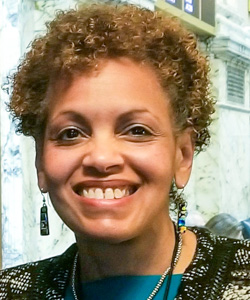
Del. Terri Hill
Sponsored bills
Maddy summaryHB 530 establishes a task force to study using artificial intelligence to proactively review audio and video recordings from special education buses, aiming to enhance student safety. The task force, composed of state education officials, transportation representatives, disability advocates, and parents, will examine AI tools, privacy concerns, costs, and best practices from other states. It will analyze current recording systems, investigate incidents like abuse or harassment, and evaluate implementation feasibility for special education bus safety. The task force must report findings and recommendations to Maryland lawmakers by December 1, 2026, with the bill expiring June 30, 2027.
Maddy summaryHB 541 requires all Maryland public schools to provide free menstrual hygiene products (tampons or sanitary napkins) in women’s restrooms at no cost to students. Each county board of education must install dispensers in at least two women’s restrooms at middle/high schools by October 2022 (and all by August 2025) and in at least one restroom at elementary schools by October 2022. Schools must regularly restock these dispensers to ensure availability, with the state reimbursing counties for installation and product costs through a $500,000 fiscal year 2023 appropriation. The law applies directly to public school students and county education boards, taking effect July 1, 2026.
Maddy summaryHB 659 adds a new member position to Maryland's State Board of Education, requiring the Governor to appoint an early childhood development professional with extensive experience in child care operations and curriculum development. This member must be selected from a list of three candidates provided by the Office of Child Care Advisory Council. The bill directly affects the State Board's composition and ensures representation from early childhood education professionals, who will attend executive sessions but cannot vote on personnel appeals. The appointment process requires the Department to notify licensed child care providers of vacancies, and the position takes effect July 1, 2026.
Maddy summaryHB 488 establishes the geographic boundaries for Maryland's eight congressional districts for the 2026 elections. It specifies exact county and election district portions, using census tract data to define district lines where precincts are split, based on boundaries as they existed on January 13, 2026. This bill directly affects voters in Maryland's congressional districts by determining which communities are grouped together for electing U.S. Representatives. It replaces previous election law sections (8-702 through 8-709) and clarifies that certain districting rules apply only to state legislative districts, not congressional ones.
Maddy summaryHB 331 establishes Maryland's Beverage Container Recycling Refund and Litter Reduction Program. It requires beverage producers to register, pay fees, and join a stewardship organization to manage recycling, mandates that all redeemable containers display refund information, and requires retailers to include the container's refund value in prices. Consumers receive refunds when returning containers to designated redemption facilities, while local governments can operate facilities to earn credits toward recycling targets. The bill also creates a grant program to fund public water fountains and refill stations, aiming to reduce litter and increase recycling rates.
Maddy summaryHB 641 establishes a three-county pilot program to test curbside voting in Maryland, directly affecting voters with mobility challenges and local election officials implementing the program. The bill requires the State Board to select one county each with small, medium, and large voter populations to test curbside voting at designated locations outside early voting centers or polling places. Key provisions mandate that locations must prioritize accessibility for historically disenfranchised communities, proximity to voters, and public transportation access, while ensuring ballot secrecy and allowing voters to complete ballots without assistance unless requested. The pilot program requires voting systems to accommodate curbside voting and specifies that election officials must set boundaries to prevent campaigning near curbside locations. This pilot will run during early voting and election days at designated sites, with implementation starting at least six months before each statewide primary election.
Maddy summaryHB 438 establishes the Adult Prison School Board Model Development Committee to create a school board system for correctional education in Maryland's prisons and juvenile facilities. The committee, composed of state officials, correctional education representatives, and experts (including formerly incarcerated individuals and nonprofit advocates), must develop a funding and operational plan by June 2028, examining costs for staff, materials, and budget management. This procedural bill does not enact immediate policy changes but sets a timeline for recommendations to the Governor and legislature. It expires automatically on June 30, 2028, after its two-year study period.
Maddy summaryHB 670 updates Maryland’s criminal code to prohibit possessing or viewing certain child pornography, including computer-generated images that appear realistic. It directly affects individuals who possess or access visual materials depicting children under 16 engaged in sadomasochistic abuse, sexual conduct, or sexual excitement - whether actual or digitally created to look real. The bill adds new penalties: a misdemeanor for first offenses (up to 5 years or $2,500 fine) and a felony for repeat violations (up to 10 years or $10,000 fine). It also clarifies that parents may possess non-exploitative images of their own children, and includes a defense for those who destroy or report such material. The law replaces and amends existing sections 11-207 and 11-208 of Maryland’s Criminal Law.
Maddy summaryHB 572 authorizes Maryland’s Attorney General to sue large fossil fuel companies (with over $1 billion in market capitalization involved in extracting or processing coal, oil, or gas) for unlawful conduct contributing to climate change, including fraud or deception. It creates the Climate Crimes Accountability Fund, financed by settlements or judgments from these lawsuits, to pay for programs addressing specific climate harms like flooding, extreme heat, drought, and waterborne pathogens. The fund is a special, non-lapsing account managed by the state, with interest earnings automatically added to it. All money must directly support climate harm prevention, mitigation, or repair efforts as defined in the bill.