

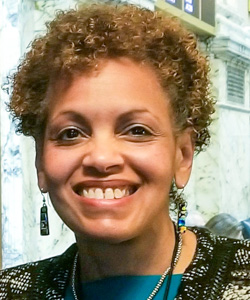
Photo of Terri Hill
D Maryland House · District 12A On the 2026 ballot

Rep. Terri Hill

Compare
Total votes
11,908
all sessions
Attendance
96%
438 missed
Near the chamber average
With party
99%
of cast votes
Near the chamber average
Bipartisan score
0%
crosses aisle rarely
Near the chamber average
Sponsored
1,399
bills & resolutions
Higher than 98% of chamber peers
Committees
2
assignments
1,399 bills and resolutions

Sponsored bills

Total
1,399
Primary
982
Co-sponsor
417
This page
1,399
matching current filters
Primary HB 1151
Passed · Maryland House · Lead sponsor
Maryland Department of Health - Study on Maryland Medical Assistance Program Reimbursement of Hospice Room and Board Services

Maddy summaryHB 1151 requires the Maryland Department of Health to study whether reimbursing hospice houses for room and board services under the state's Medicaid program (Maryland Medical Assistance Program) would save costs and improve patient outcomes. The study must quantify Medicaid savings per death from hospice care and analyze how reimbursement might reduce hospital deaths, emergency room visits, hospice readmissions, and increase hospice care duration. It specifically examines the impact of covering room and board expenses for hospice providers, as defined by existing regulations. The Department must submit findings to state legislative committees by September 30, 2026. This is a procedural study with no immediate policy change.

Passed Aug 3, 2026 0 co-sponsors
Primary HB 1249
Signed into law · Maryland House · Lead sponsor
Certified Recovery Residences - Refusing Services to Individuals Receiving Medication-Assisted Treatment - Prohibition

Maddy summaryHB 1249 prohibits certified recovery residences in Maryland from refusing services to individuals receiving medication-assisted treatment (MAT) for opioid use disorder or requiring them to stop or change their MAT as a condition for housing. The bill amends certification standards for recovery residences (which provide non-clinical housing for people with substance use disorders) to ensure credentialing entities cannot allow such discrimination. It directly affects certified recovery residences and individuals using MAT for opioid addiction, requiring certification rules to explicitly ban these practices. The law takes effect October 1, 2026, and applies only to opioid use disorder treatment under MAT.

Signed into law May 26, 2026 0 co-sponsors
Primary HB 1280
Signed into law · Maryland House · Lead sponsor
Supporting Our Caregiver Infrastructure Program - Feasibility Study

Maddy summaryHB 1280 directs Maryland's Comptroller to study whether a program providing monthly payments to caregivers for specific family members would be feasible. The study must examine economic impacts like potential job growth, increased tax revenue, and reduced public benefits use, while assessing costs and funding options. It requires collaboration with the Department of Human Services and agencies like the Department of Aging, with a final report due by July 1, 2027. The bill expires June 30, 2028, and does not create the program itself.

Signed into law May 26, 2026 0 co-sponsors
Primary HB 1091
Signed into law · Maryland House · Lead sponsor
Health Insurance and Dental Plan Organizations - Dentists - Assignment of Benefits and Reimbursement of Nonpreferred Providers

Maddy summaryHB 1091 requires health insurers and dental plan organizations to directly reimburse dentists not in their network (nonpreferred dentists) when a patient assigns their insurance benefits to the dentist, and prohibits them from blocking such assignments. It also mandates that nonpreferred dentists inform patients about their non-network status, potential out-of-pocket costs, and payment terms before providing care, and submit a disclosure form to the insurer for the assignment. Insurers may still refuse direct payment only in specific cases, such as if the assignment was received too late, an error occurred, the patient withdrew the assignment, or the patient paid the dentist at the time of service. The bill directly affects non-network dentists, their patients, and insurance companies covering dental services.

Signed into law May 26, 2026 0 co-sponsors
Primary HB 1365
Signed into law · Maryland House · Lead sponsor
Health Occupations, Public Health, and Insurance - Menopause - Provider Training Coverage Requirements, Policy Initiatives, and Access to Care

Maddy summaryHB 1365 requires healthcare providers (like doctors and nurses) to complete menopause-specific training to earn continuing education credits, with licensing boards mandated to grant double credit (2 hours for every 1 hour of training). It also requires insurers, nonprofit health plans, and health maintenance organizations to cover the evaluation and management of menopause and related symptoms. The law applies to all relevant providers and insurers in Maryland, effective January 1, 2027. The Department must identify a standardized training program after consulting with professional associations like The Menopause Society.

Signed into law May 26, 2026 0 co-sponsors
Primary HB 919
Signed into law · Maryland House · Lead sponsor
Maryland Higher Education Commission - Practical Applications of Real Estate Appraisal (PAREA) Grant Program - Established

Maddy summaryHB 919 establishes the Practical Applications of Real Estate Appraisal (PAREA) Grant Program through the Maryland Higher Education Commission. The program provides grants directly to minorities residing in historically redlined neighborhoods and underrepresented communities who aim to become real estate appraisers. Its key mechanisms include closing appraisal gaps in these communities, diversifying the appraisal field, and supporting individuals pursuing PAREA certification. The Maryland Higher Education Commission will administer the grants starting July 1, 2026.

Signed into law May 26, 2026 0 co-sponsors
Primary HB 1490
Signed into law · Maryland House · Lead sponsor
Family Investment Program - Temporary Cash Assistance - Good Cause and Adequate Reason Exceptions

Maddy summaryHB 1490 modifies Maryland's Family Investment Program to protect individuals receiving Temporary Cash Assistance from losing benefits due to noncooperation with child support. It establishes specific "good cause" exceptions - such as domestic violence, homelessness, housing crises, child care barriers, or situations where cooperation would harm a child (e.g., incest, rape, or pending adoption) - that prevent the Department of Human Services from denying, reducing, or terminating assistance. The bill requires the Secretary to define these criteria and allows individuals to prove good cause through a simple oral or written statement, without needing written evidence, third-party verification, or paying for notarization. This directly affects low-income families navigating child support requirements while maintaining access to critical cash aid.

Signed into law May 26, 2026 0 co-sponsors
Primary HB 776
Signed into law · Maryland House · Lead sponsor
Juvenile Law - Child in Need of Supervision - Mandatory Petition (NyKayla Strawder Memorial Act)

Maddy summaryHB 776, the NyKayla Strawder Memorial Act, requires Maryland intake officers to automatically file a petition declaring a child under 13 a "child in need of supervision" if the child is alleged to have caused a death through a criminal act (e.g., homicide or manslaughter). This applies specifically to cases where the child's actions would be a felony if committed by an adult. The bill removes the intake officer's discretion to handle such cases informally or dismiss them, mandating formal juvenile court processing. Law enforcement must also forward these complaints directly to the Department of Juvenile Services.

Signed into law May 26, 2026 0 co-sponsors
Primary HB 746
Signed into law · Maryland House · Lead sponsor
Maryland Medical Assistance Program and Health Insurance - Collaborative Care Model - Cost Sharing Prohibition and Coverage Requirements

Maddy summaryHB 746 prohibits Maryland Medicaid (Medical Assistance Program) and private health insurers from charging copays, coinsurance, or deductibles for services delivered under the Collaborative Care Model. This model integrates mental/behavioral health services into primary care through coordinated care, regular outcome monitoring, and specialist consultations. The law applies to all Medicaid recipients and covers services under private health insurance plans (including nonprofit health plans and health maintenance organizations) issued in Maryland, with an exception for high-deductible health plans. It takes effect January 1, 2027, ensuring no cost-sharing for these integrated care services.

Signed into law May 26, 2026 0 co-sponsors
Primary HB 1300
Signed into law · Maryland House · Lead sponsor
African American Heritage Preservation Program and Maryland Commission for Women - Renaming and Alterations

Maddy summaryHB 1300 updates Maryland's Commission for Women by changing how its executive director is appointed and clarifying the Commission's responsibilities. It removes the Secretary of Human Services' authority to appoint the director, stating the director will be a regular state employee (not a "special appointee") and receive standard state compensation. The bill revises the Commission's duties to focus on conducting studies, supporting programs, and advocating for policies that promote equality for women, including career development, violence prevention, and economic opportunities. These changes directly affect the Commission's operations and its executive director, effective October 1, 2026.

Signed into law May 26, 2026 0 co-sponsors
Showing 1 to 10 of 1,399 bills
1 2 3 140 Next