

Maddy summaryHB 614 requires every county board of education in Maryland to collect monthly data on energy usage in school buildings and submit it to the Interagency Commission on School Construction. The Commission must then create rules specifying exactly what data to collect and how often to report it. After gathering this data, the Commission must analyze it and provide specific recommendations to county boards for improving school energy efficiency. This bill directly affects county school districts and the state Commission, aiming to standardize energy reporting and drive efficiency improvements in public schools.
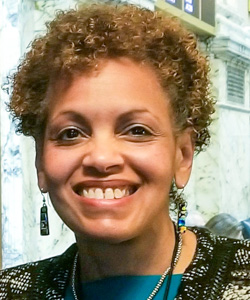
Del. Terri Hill
Sponsored bills
Maddy summaryHB 444 prohibits Maryland state and local governments, including county sheriffs and agencies, from entering into new agreements with federal authorities to enforce civil immigration law. It requires existing agreements to be terminated by July 1, 2026, or immediately upon the law’s effective date (June 1, 2026). The bill specifically targets contracts, memorandums, or agreements that allow local entities to assist in federal immigration enforcement under federal laws like 8 U.S.C. § 1103 or § 1357. This directly affects local law enforcement agencies and government bodies that previously collaborated with federal immigration authorities. The law aims to prevent state/local resources from being used for immigration enforcement under federal programs.
Maddy summaryThis bill designates January 13 as Korean American Day in Maryland. It requires the Governor to annually issue a proclamation urging educational and cultural organizations to observe the day with appropriate programs, ceremonies, and activities. The bill is procedural and commemorative, with no funding or new policy requirements. It takes effect October 1, 2026, and does not directly impact individuals or create new legal obligations.
Maddy summaryHB 1309 establishes a Commission to study racial disparities in Maryland’s criminal justice system, directly affecting African American, Hispanic, and other non-White individuals who experience disproportionate treatment. The Commission, composed of legislative leaders, public defenders, prosecutors, court officials, and community advocates, will examine disparities in policing, arrests, sentencing, and data collection. It will specifically assess cumulative impacts of disparate practices, mandatory minimums (including firearm offenses), and propose reforms like race-neutral risk assessments and expanded judicial discretion. The Commission must make recommendations by 2028, focusing on systemic changes to improve transparency and reduce racial inequities without implementing new laws itself.
Maddy summaryHB 588 designates May 5 as an annual "Missing and Murdered American Indian and Alaskan Native Women and Girls Awareness Day" for the Governor to proclaim. It requires the Department of State Police to submit a report to the Maryland General Assembly by December 1, 2026, on whether law enforcement agencies collect sufficient data about violence against these communities. The report must include policy recommendations to improve data collection methods, coordinate with federal agencies during investigations, and raise public awareness. This bill directly affects state agencies and aims to address gaps in tracking violence against American Indian and Alaskan Native women and girls, who face disproportionately high rates of violence.
Maddy summaryHB 1295 establishes new rules for fully autonomous vehicles (Level 4/5 systems) operating on Maryland highways without human drivers. It requires these vehicles to achieve a "minimal risk condition" (like safely stopping) if their automated system fails, and mandates compliance with Maryland's vehicle laws unless exempted by regulations. The bill also explicitly states that data collected by these vehicles (e.g., location, sensor data) falls under the state's Online Data Privacy Act, requiring protection similar to other personal information. This directly affects manufacturers, operators, and passengers of fully autonomous vehicles operating in Maryland.
Maddy summaryThis bill allows the Maryland Transportation Authority to waive unpaid video tolls and associated penalties without recalling the debt from the state's Central Collection Unit. It applies when tolls exceed $300, were assessed within 30 days, or if mitigating circumstances exist. If waived, the Authority must notify the Central Collection Unit to adjust collection fees accordingly. It directly affects drivers who owe video tolls (e.g., from cameras instead of E-ZPass) and streamlines collections for recent or high-value unpaid charges.
Maddy summaryHB 1264 requires Maryland's Medical Assistance Program (Medicaid for low-income residents) to cover individual and group counseling for tobacco cessation, subject to state budget and federal law limits. It prohibits the program and managed care organizations from demanding prior authorization for any tobacco cessation product or service. This bill directly affects Medicaid beneficiaries seeking to quit tobacco use and their healthcare providers. The law amends existing Maryland health code sections to implement these coverage requirements and remove authorization barriers.
Maddy summaryHB 1106 establishes the Maryland Commission on Women’s Health Advancement to study the feasibility of creating a state women’s hospital in Southern Maryland and a statewide clinical network focused on women’s health across all life stages. The commission, composed of 20 members including legislators, health experts, patient advocates, and representatives addressing racial and socioeconomic health disparities, must analyze healthcare gaps, financial viability, and alternative approaches like hub networks. It is required to submit an initial action plan by January 1, 2027, and annual progress reports through 2032 to the governor and legislature. The bill does not mandate building the hospital but directs the commission to evaluate options for improving access to women’s healthcare services, particularly in underserved communities.
Maddy summaryHB 1133 requires drug manufacturers and patient advocacy groups receiving drug manufacturer funding to register with Maryland's Department of Health before running disease awareness campaigns. It mandates that campaign materials disclose if the campaign relates to a drug or device the manufacturer is developing, manufacturing, or marketing. The law directly affects drug companies and patient advocacy organizations that receive manufacturer funding for campaigns focused on specific medical conditions. Campaigns promoting marketed drugs must include a clear statement identifying the specific drug or device being promoted. The bill takes effect October 1, 2026.