

Maddy summaryHB 307 modifies the Community Reinvestment and Repair Fund by directing the Comptroller to administer the Fund under the Office of Social Equity’s guidance instead of previous oversight. It requires counties to consult with the Office when adjusting their fund distribution plans and clarifies that county expenditures from the Fund must be supplemental (not replacing) existing local programs. The bill also updates reporting requirements and reaffirms that Fund money cannot fund law enforcement or supplant other public services. These changes aim to align Fund administration with social equity goals while maintaining its focus on community-based initiatives like housing, job training, and behavioral health services in historically impacted areas.
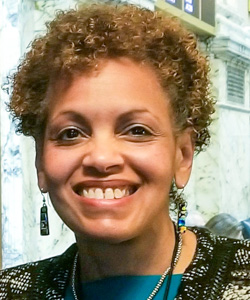
Del. Terri Hill
Sponsored bills
Maddy summaryHB 984 establishes a mattress stewardship program requiring mattress producers to submit recycling plans to the Maryland Department of the Environment for approval. The bill prohibits landfill disposal and incineration of mattresses (with limited exceptions) starting on a future date, and mandates that producers add a fee to new mattresses to fund recycling. Retailers must provide consumers with information about the program after it launches. This affects mattress producers, retailers, and consumers through new fees and disposal rules, aiming to increase recycling and reduce landfill use.
Maddy summaryHB 917 limits when health insurance companies in Maryland can deny payment for past medical services (retroactive denial of reimbursement). It restricts such denials to cases involving coordination of benefits within 18 months of payment or after insurers provide providers with training on billing standards within 3 months. The bill requires insurers to give providers written explanations with supporting details for any denial and prohibits denials based on service outcomes or without first discussing the circumstances with the provider. It also mandates that insurers developing retroactive denial policies create training plans for healthcare providers on reimbursement protocols. The law applies to all insurance policies effective January 1, 2027.
Maddy summaryThis bill directs Maryland's Higher Education Commission to create a framework for transformative economic efficiency, which focuses on measurable improvements in economic performance, resource use, and health risk prevention through education and research. The Commission must develop independent consensus-based standards collaboratively with universities, research institutions, and subject matter experts, using independent research and verification methods. These standards must be posted on the Commission's website and updated regularly to encourage continuous improvement in higher education practices. The law takes effect on July 1, 2026, and applies to institutions of higher education and community-based research institutions in Maryland.
Maddy summaryHB 818 requires Maryland public colleges to cover tuition, room, board, required books, course materials, supplies, and equipment for foster care recipients and homeless youth who qualify. It defines "foster care recipient" as individuals in out-of-home placements (with specific age or guardianship criteria) and "homeless youth" as those verified under federal McKinney-Vento guidelines. To qualify, students must enroll before age 25 for a vocational certificate, associate’s, or bachelor’s degree, file for federal/state financial aid, and cannot use scholarships/grants toward covered costs. The exemption lasts until the student earns their degree or 10 years after starting their program, whichever comes first.
Maddy summaryHB 884 requires Maryland to appropriate at least $5 million annually to the University of Maryland Eastern Shore (UMES) starting in fiscal year 2028, continuing until a total of $321,181,312 is funded. This addresses a historical funding disparity between UMES (Maryland's 1890 land-grant university for historically Black students) and the University of Maryland, College Park (the 1862 land-grant institution), which received less state funding per student from 1987-2020. Funds must supplement - never replace - existing state budget allocations and can be used for infrastructure, faculty investment, scholarships, or other institutional needs identified by UMES. The bill mandates annual appropriations that cannot decrease year-over-year, aiming to fully remediate the identified funding gap.
Maddy summaryHB 737 requires health insurance plans (HMOs) to pay non-contracted healthcare providers at minimum rates: 140% of Medicare rates for trauma care, and 125% of the 2019 rate adjusted for inflation for other services. This affects independent doctors, hospitals, and clinics that treat HMO members but aren’t directly contracted with them. The law updates payment standards to better reflect current costs using Medicare’s inflation index, replacing older fixed-rate calculations. It ensures non-contracted providers receive fairer compensation for services rendered to HMO enrollees.
Maddy summaryHB 1488 proposes amending the Maryland Constitution to replace gendered terms like "man," "his," and "him" with gender-neutral language such as "person" and "their." It specifically targets multiple articles and sections across the Constitution (including the Declaration of Rights, Executive Department, and Judiciary Department) to update outdated terminology. The bill does not change substantive rights or policies but modernizes the language to be inclusive. This is a procedural constitutional amendment focused solely on terminology, not on altering legal obligations or government functions.
Maddy summaryHB 1296 requires developers of new residential projects with at least five homes located within walking distance of a public school to submit a "Safe School Route Report" as part of their preliminary subdivision or site plan. The report must identify affected schools, assess existing pedestrian/bicycle infrastructure, propose safe routes, and detail gaps or hazards like missing sidewalks. This applies to most new housing developments but excludes projects intended as housing for older persons under federal law. Local governments cannot approve such plans without this report, aiming to improve safety for students walking or biking to school.
Maddy summaryHB 1399 requires credit bureaus and other consumer reporting agencies in Maryland to meet strict standards when using algorithms to evaluate credit data. It mandates that agencies explain algorithmic decisions in plain language (meeting an 8.0 Flesch-Kincaid readability score), maintain public algorithm registries, and achieve error rates below 0.5% and discriminatory bias below 0.1% when compared to human reviews. Agencies must also conduct quarterly bias audits by independent third parties, implement data governance with minimum data point requirements (1,000-10,000 per category), and require human review within 24 hours before final credit decisions. This bill directly affects agencies that compile credit reports for lenders, insurers, or employers, aiming to ensure transparency and fairness in automated credit evaluations.