Issue · Healthcare

Healthcare

Every healthcare bill, vote, and legislator stance in Maryland, automatically classified by Maddy, our AI policy reader.

Total bills
376
2026 Regular Session
Top supporter
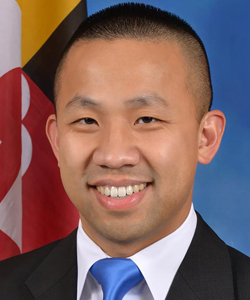
C.T. Wilson
100% support rate
Top opponent
Jason Gallion
0% support rate
Ranked legislators
10
5 support · 5 oppose
Key legislators

Who's moving healthcare in Maryland

Legislators moving healthcare in Maryland
Legislator Party Stance Support rate Decisive votes
C.T. Wilson
C.T. Wilson House · District 28
D
Strong +
100% 34
Ben Kramer
Ben Kramer Senate · District 19
D
Strong +
100% 23
Carl Jackson
Carl Jackson Senate · District 8
D
Strong +
100% 23
Clarence Lam
Clarence Lam Senate · District 12
D
Strong +
100% 23
Craig Zucker
Craig Zucker Senate · District 14
D
Strong +
100% 23
Jason Gallion
Jason Gallion Senate · District 35
R
Strong −
0% 23
Jack Bailey
Jack Bailey Senate · District 29
R
Strong −
0% 22
J.B. Jennings
J.B. Jennings Senate · District 7
R
Strong −
4% 23
Johnny Salling
Johnny Salling Senate · District 6
R
Strong −
4% 23
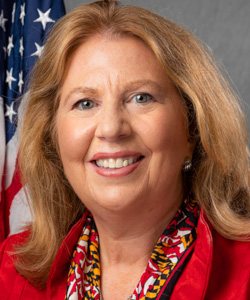
Mary Beth Carozza
Mary Beth Carozza Senate · District 38
R
Strong −
5% 22
Showing 181–190 of 376 bills

All healthcare bills

in committee · Maryland · House of Delegates Feb 11, 2026

HB 1055: Health - Newborn Screening Program - Gaucher Disease

HB 1055 requires Maryland’s Department of Health to add Gaucher disease to the state’s mandatory newborn screening program, effective October 1, 2026. This bill directly affects all newborns in Maryland by expanding the list of conditions screened during routine newborn testing, unless parents or guardians object. The key mechanism is amending Maryland’s Health Code (Section 13-111) to explicitly mandate screening for Gaucher disease, which is currently not included in the standard panel. The bill does not alter existing screening protocols or costs but ensures Gaucher disease is screened for alongside other core conditions listed in federal recommendations.
in committee · Maryland · House of Delegates Feb 16, 2026

HB 1051: Public Health - Patient Access to Medication

HB 1051 creates Maryland’s "Meds-to-Beds Program," requiring all state hospitals to partner with licensed pharmacists who deliver discharge medications to patients *before* they leave the hospital, aiming to reduce readmissions. It also expands insurance coverage for telehealth to include automated drug dispensing systems and remote dispensing systems, allowing pharmacies to outsource prescription processing under specific conditions. The bill directly affects hospitals (mandated to participate), pharmacists (who deliver medications), and patients (who receive timely discharge drugs). Key changes include updating telehealth definitions in insurance law and establishing new regulations for medication access systems.
died · Maryland · Senate Mar 16, 2026

SB 796: Commercial Law - Consumer Protections - Health Care Financing

SB 796 establishes new consumer protections for health care financing in Maryland by restricting how health care providers handle third-party financing (like credit cards or loans for treatment costs). It prohibits providers from applying for financing on a patient’s behalf, promoting financing to patients under anesthesia or during active treatment, or billing financiers more than 30 days before a procedure. Providers must give patients a written treatment plan and specific disclosures before discussing financing, and must issue full refunds within 15 days if treatment isn’t provided. The law applies to licensed health care providers (excluding hospitals) and aims to prevent deceptive practices while allowing financing for insurance copays or deductibles.
passed · Maryland · Senate Mar 25, 2026

SB 774: Health Insurance - Plan Benefits and Coverage - Annual Reporting (Transparency, Reporting, Understanding, Timeliness, and Honesty (TRUTH) in Mental Health Coverage Act)

SB 774, the "TRUTH in Mental Health Coverage Act," requires Maryland health insurance carriers to annually report detailed claims data on mental health and substance use coverage starting in 2028. This affects all insurers offering health benefit plans in Maryland, mandating they submit standardized data on access, network availability, and coverage for services like outpatient care, telehealth, and youth/adult services. The report must include breakdowns by facility type, provider specialty, service format, and geographic area. The Maryland Insurance Commissioner will make this data publicly available through a website and interactive dashboards to improve transparency for consumers.
in committee · Maryland · House of Delegates Feb 16, 2026

HB 1154: Correctional Services - Restrictive Housing

HB 1154 limits restrictive housing for pregnant incarcerated individuals in Maryland correctional facilities. It prohibits placing them in restrictive housing (defined as 20+ hours locked in a cell daily) except in specific emergencies involving immediate safety risks or disease control, requiring facility staff to document why less restrictive options weren’t possible. The bill mandates medical assessments every 8 hours, access to recreation and programming for pregnant individuals in infirmary care, and requires facilities to submit detailed reports to officials within 30 days of any placement. It also prohibits placing other vulnerable populations in restrictive housing and mandates the Correctional Ombudsman to review implementation annually.
Sub-Topics Corrections
signed · Maryland · House of Delegates Apr 28, 2026

HB 772: Behavioral Health Rate Methodology Modernization - Workgroup Establishment and Study

HB 772 establishes a workgroup within Maryland's Health Care Commission to develop fairer reimbursement methods for certified community behavioral health clinics and outpatient mental health centers. The workgroup will study current costs, staffing models, and federal requirements to create transparent, cost-based payment systems, comparing approaches used in other states. It must submit an interim report by December 2026 and a final report by October 2027 with specific recommendations, implementation options, and fiscal estimates. The bill does not require immediate rate changes or new funding, but rather sets a process for future policy decisions based on the workgroup's findings.
Sub-Topics Mental Health
in committee · Maryland · Senate Feb 12, 2026

SB 663: Nursing Homes - Direct Care Wages and Benefits and Cost Reports

This bill requires Maryland nursing homes to spend at least 75% of their total nursing and residential care revenue on direct care staff wages and benefits (including nurses, dietary, therapy, and social workers). Nursing homes must annually submit detailed cost reports by September 1 starting in 2027, including proof of wage payments and other data determined by the Maryland Department of Health. Failure to comply may result in enforcement actions, including suspension from the Maryland Medical Assistance Program. The law takes effect October 1, 2026, directly affecting all nursing homes operating in Maryland.
Sub-Topics Long-Term Care
in committee · Maryland · Senate Feb 12, 2026

SB 702: Behavioral Health Administration - Behavioral Health Program Relocation - Regulations

SB 702 streamlines the relocation process for existing behavioral health programs in Maryland. It requires the Behavioral Health Administration to adopt regulations creating an expedited approval path separate from new program applications. Key provisions include allowing programs to reuse unchanged prior documentation, granting temporary approval at new sites meeting life safety standards, and mandating clear timelines for relocations. This directly affects current behavioral health programs seeking to move locations without restarting full licensing. The bill takes effect October 1, 2026.
Sub-Topics Mental Health
in committee · Maryland · House of Delegates Feb 17, 2026

HB 1228: Insurance - Premium Receipts Tax - Exemption for Captive Insurance Procured by Nonprofit Hospitals and Health Care Systems

HB 1228 exempts premiums paid by nonprofit hospitals and health care systems in Maryland for their own captive insurance (insurance they set up themselves) from the state's 3% premium receipts tax. This applies to all entities within the system, including parent companies, subsidiaries, and affiliated providers. The bill removes the tax obligation for these organizations on qualifying captive insurance premiums and prohibits the state from collecting past-due taxes, fees, or penalties related to this tax before the law takes effect. It directly affects nonprofit health care providers across Maryland by reducing their insurance-related costs.
Sub-Topics Insurance
in committee · Maryland · House of Delegates Mar 19, 2026

HB 1281: Health - Abortion - Ultrasound and Wait Time

HB 1281 requires that a transabdominal ultrasound be performed before most abortions in Maryland, with specific standards for the procedure and information provided to the patient. The ultrasound must include fetal measurements and images when viewable, and the woman must be offered the option to view the image, receive a printed copy, or hear the fetal heartbeat - though she is not required to accept these. Abortion providers cannot perform the procedure within 24 hours of the ultrasound for most patients, but the wait time is reduced to 2 hours for women living 100+ miles from the facility. Facilities must retain a printed copy of the ultrasound for at least 7 years, and violations may result in a $2,500 penalty.
Sub-Topics Women's Health
Showing 181 to 190 of 376 bills
Previous 1 18 19 20 38 Next