Issue · Education

Education

Every education bill, vote, and legislator stance in Maryland, automatically classified by Maddy, our AI policy reader.

Total bills
252
2026 Regular Session
Top supporter
Nick Charles
100% support rate
Top opponent
Robin Grammer
6% support rate
Ranked legislators
10
5 support · 5 oppose
Key legislators

Who's moving education in Maryland

Legislators moving education in Maryland
Legislator Party Stance Support rate Votes
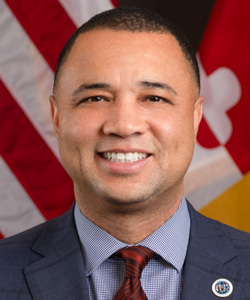
Nick Charles
Nick Charles Senate · District 25
D
Strong +
100% 48
Denise Roberts
Denise Roberts House · District 25
D
Strong +
96% 92
Adrian Boafo
Adrian Boafo House · District 23
D
Strong +
96% 48
Antonio Hayes
Antonio Hayes Senate · District 40
D
Strong +
95% 50
Shaneka Henson
Shaneka Henson Senate · District 30
D
Strong +
95% 51
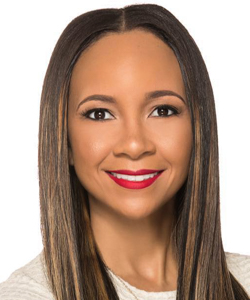
Robin Grammer
Robin Grammer House · District 6
R
Strong −
6% 85
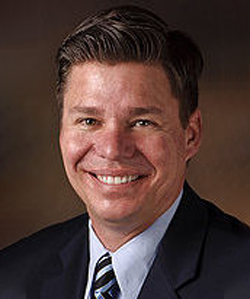
Matt Morgan
Matt Morgan House · District 29A
R
Strong −
9% 98
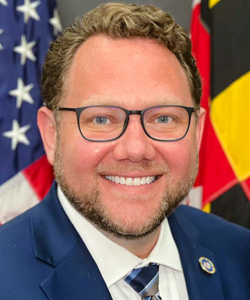
Mark Fisher
Mark Fisher House · District 27C
R
Strong −
9% 98
Nic Kipke
Nic Kipke House · District 31
R
Strong −
9% 100
Lauren Arikan
Lauren Arikan House · District 7B
R
Strong −
9% 98
Showing 241–250 of 252 bills

All education bills

in committee · Maryland · House of Delegates Feb 9, 2026

HB 562: Primary and Secondary Education - Maintenance of Effort - Inflation Adjustment (Maintenance of Effort Modernization Act)

HB 562, the "Maintenance of Effort Modernization Act," updates Maryland's method for calculating annual inflation adjustments in local school funding. It replaces the current formula with a new standard that uses the lesser of three measures: the Consumer Price Index for the Washington Metropolitan Area, a government spending index, or 5%, with 0% if neither index rises. This change requires county governments and Baltimore City to adjust their annual local school funding appropriations based on this new inflation metric, starting July 1, 2026. The bill directly affects all Maryland counties and Baltimore City, which are responsible for maintaining local school funding levels.
Sub-Topics School Funding
passed · Maryland · House of Delegates Mar 27, 2026

HB 649: Advancing Equal Educational Opportunities for All Students in Maryland

HB 649 establishes new protections against discrimination in Maryland's educational institutions by creating a dedicated enforcement mechanism under the Commission on Civil Rights. It prohibits discrimination based on race, color, national origin, ethnicity, religion, sex, pregnancy, sexual orientation, gender identity, disability, age, or marital status in schools and colleges. The bill requires Maryland's higher education agencies to refer discrimination complaints to the Commission and creates a private right of action, allowing individuals to directly pursue legal claims for violations. This shifts enforcement authority from the State Superintendent to the Commission while expanding the scope of protected categories in educational settings.
in committee · Maryland · Senate Feb 19, 2026

SB 329: Education - Certification of Scholarship Granting Organizations (Opting in on Opportunity Act)

SB 329 (Opting in on Opportunity Act) requires Maryland’s State Department of Education to certify nonprofit organizations as scholarship granting organizations (SGOs) if they meet specific criteria, such as being organized under Maryland law and providing scholarships to eligible students. It mandates the Department to annually submit a list of certified SGOs to the U.S. Treasury starting in 2027 and directs the Comptroller to provide online guidance helping taxpayers claim federal tax credits for donations to these SGOs. The bill directly affects nonprofit scholarship organizations seeking certification and Maryland taxpayers who contribute to them. Key provisions include standardized certification rules, annual reporting requirements, and public reporting of scholarship data (e.g., numbers awarded, amounts, schools attended). It aims to align Maryland’s process with the federal tax credit program under Section 25F of the Internal Revenue Code.
in committee · Maryland · House of Delegates Mar 11, 2026

HJ 3: Elementary and Secondary Education - Curriculum - Importance of Diversity

This House Joint Resolution (HJ 3) is a policy statement, not a binding law, acknowledging Maryland's commitment to inclusive education. It resolves that elementary and secondary school curricula should include the history of communities that have experienced discrimination (based on disability, ethnicity, gender, race, religion, indigenous affiliation, or sexual orientation) to ensure all students feel represented. The resolution directs education officials to adopt this inclusive approach but does not mandate specific curriculum changes or allocate funding. It primarily affects state education leaders, school boards, and curriculum developers by setting a policy direction for curriculum content.
in committee · Maryland · House of Delegates Feb 17, 2026

HB 614: Education - School Building Energy Usage - Monthly Report

HB 614 requires every county board of education in Maryland to collect monthly data on energy usage in school buildings and submit it to the Interagency Commission on School Construction. The Commission must then create rules specifying exactly what data to collect and how often to report it. After gathering this data, the Commission must analyze it and provide specific recommendations to county boards for improving school energy efficiency. This bill directly affects county school districts and the state Commission, aiming to standardize energy reporting and drive efficiency improvements in public schools.
Sub-Topics Energy Efficiency
in committee · Maryland · Senate Feb 19, 2026

SB 375: County Boards of Education - Artificial Intelligence Training Program - Requirement

SB 375 requires Maryland's State Department of Education to create an annual artificial intelligence training program for county board of education members. The program includes foundational training (covering AI risks, policy development, student privacy, and oversight) and yearly continuing training on new AI developments. County board members must complete foundational training within one year of taking office or by June 30, 2027, and annual training thereafter. The bill mandates submission of completion certificates to county boards and the state department, with public reporting of non-completers and biennial effectiveness reports to the legislature.
in committee · Maryland · Senate Jan 29, 2026

SB 343: County Boards of Education - Post College and Career Readiness Pathways - Payment of Costs

SB 343 modifies Maryland law to clarify how county school boards fund post-college and career readiness (post-CCR) pathways for students meeting college and career readiness (CCR) standards. It requires counties to provide free access to specific pathways (like International Baccalaureate, dual enrollment, or career-technical programs) for all eligible students, but allows boards to establish income-based eligibility for the college-preparatory pathway (Section 7-205.1(g)(2)). Crucially, students from families earning below 400% of the federal poverty level must receive these pathways at no cost, regardless of income guidelines. The bill directly affects public high school students meeting CCR standards and ensures equitable access to pathways without cost barriers for low-income families.
in committee · Maryland · Senate Jan 16, 2026

SB 71: Education - Interjurisdictional Safe Pathways Commission - Establishment

SB 71 establishes the Interjurisdictional Safe Pathways Commission to identify and improve safe routes for students traveling to and from school across Maryland. The commission, including state education, transportation, health, and disability officials plus local school representatives, students, parents, and transportation experts, will coordinate infrastructure (like sidewalks and crosswalks), secure funding from federal grants and private sources, and develop strategic plans. It must annually report progress to the governor and legislative committees by December 1, focusing on gaps in safety infrastructure and funding opportunities. The commission will operate for seven years, ending September 30, 2033.
passed · Maryland · Senate Mar 26, 2026

SB 84: State Personnel - Collective Bargaining - Graduate Assistants

SB 84 would grant graduate assistants at Maryland's public universities (including the University System of Maryland, Morgan State University, and St. Mary’s College of Maryland) the right to form a separate collective bargaining unit. The bill amends state law to explicitly include "all eligible graduate assistants" as a distinct bargaining group, meaning they would negotiate contracts separately from other university employees like faculty or staff. This change takes effect on July 1, 2026, and directly affects graduate students working as teaching, research, or administrative assistants in these institutions. The policy creates a formal structure for graduate assistants to collectively address employment terms like pay, benefits, and working conditions.
passed both · Maryland · Senate Apr 13, 2026

SB 212: Higher Education - Nonresident Tuition - Exemption for Spouses and Dependents of State or Local Public Safety Employees (Maryland Fallen Heroes Tuition Benefits Act)

SB 212, the Maryland Fallen Heroes Tuition Benefits Act, exempts financially dependent children of state or local public safety employees who died while performing their duties from paying higher out-of-state or out-of-county tuition rates at Maryland public colleges and universities. It directly affects the children of qualifying employees, including firefighters, police officers, correctional officers, and Maryland National Guard members who died in the line of duty. The bill amends Maryland education code to create this tuition exemption, defining "state or local public safety employee" and requiring the Commission to adopt implementing regulations. The exemption applies regardless of where the dependent child resides and takes effect July 1, 2026.
Sub-Topics Higher Education
Showing 241 to 250 of 252 bills