Issue · Criminal Justice

Criminal Justice (Courts)

Every criminal justice bill, vote, and legislator stance in Maryland, automatically classified by Maddy, our AI policy reader.

Total bills
67
2026 Regular Session
Top supporter
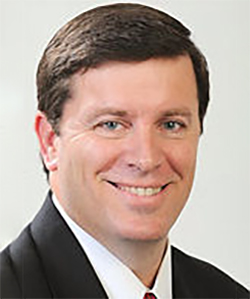
Stuart Schmidt
88% support rate
Top opponent
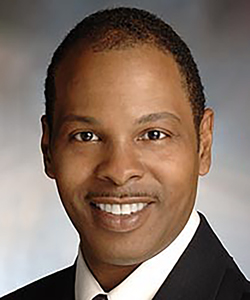
Nicole Williams
18% support rate
Ranked legislators
10
5 support · 5 oppose
Key legislators

Who's moving courts in Maryland

Legislators moving courts in Maryland
Legislator Party Stance Support rate Votes
Stuart Schmidt
Stuart Schmidt House · District 33B
R
Strong +
88% 34
Bryan Simonaire
Bryan Simonaire Senate · District 31
R
Strong +
83% 23
Robin Grammer
Robin Grammer House · District 6
R
Strong +
82% 33
Katie Hester
Katie Hester Senate · District 9
D
Strong +
81% 21
Chris Tomlinson
Chris Tomlinson House · District 5
R
Support
77% 39
Nicole Williams
Nicole Williams House · District 22
D
Strong −
18% 33
Dalya Attar
Dalya Attar Senate · District 41
D
Strong −
18% 22
Joanne Benson
Joanne Benson Senate · District 24
D
Strong −
20% 15
Frank Conaway
Frank Conaway House · District 40
D
Oppose
22% 40
Caylin Young
Caylin Young House · District 45
D
Oppose
24% 38
Showing 61–67 of 67 bills

All criminal justice bills

passed · Maryland · House of Delegates Mar 5, 2026

HB 477: Criminal Procedure - Admission of Out-of-Court Statements - Assault in the Second Degree

HB 477 modifies Maryland's evidence rules to allow certain out-of-court statements in assault in the second degree cases where the defendant caused the witness's unavailability. It permits such statements as evidence if the court finds by a preponderance of evidence that the defendant engaged in wrongdoing to make the witness unavailable. The bill requires statements to have been given under oath, written and signed, or recorded verbatim, and mandates early notice to the defense about the statement's use. This directly affects criminal trials for assault in the second degree by expanding admissible evidence while adding procedural safeguards. The law takes effect October 1, 2026.
Sub-Topics Courts Violent Crime
in committee · Maryland · Senate Jan 14, 2026

SB 67: Criminal Procedure - Incompetency to Stand Trial Dismissal

SB 67 changes the time limits for dismissing criminal charges against defendants found incompetent to stand trial. For serious crimes like rape or first-degree assault, charges must be dismissed after 10 years (or the maximum sentence for the crime); for other felonies or violent crimes, after 5 years; and for other offenses, after 3 years. The bill requires courts to give the State’s Attorney and victims (or their representatives) advance notice and a chance to argue against dismissal before proceeding. It also allows prosecutors to request more time for "extraordinary cause" and mandates notifying victims and the state crime database if charges are dismissed. These changes directly affect defendants, prosecutors, and crime victims in Maryland court cases.
passed · Maryland · House of Delegates Mar 24, 2026

HB 313: Landlord and Tenant - Residential Housing - Rental Applications and Tenant Screening

HB 313 prohibits landlords in Maryland from charging application or screening fees unless a rental unit is immediately available or will become available within 30 days. Landlords must provide written disclosures about screening criteria, fees, and reporting agencies before collecting any fees, and must give prospective tenants specific reasons, copies of screening reports, and the right to dispute inaccuracies if denying an application. The bill also bans landlords from considering sealed court records or failure-to-pay rent proceedings in screening decisions. Violations are treated as consumer protection law violations under Maryland law, subject to enforcement and penalties.
died · Maryland · House of Delegates Feb 23, 2026

HB 287: Criminal Procedure - Lifetime Sexual Offender Supervision - Conditions, Violations, and Petitions for Discharge

HB 287 modifies Maryland's lifetime sexual offender supervision requirements. It mandates lifelong supervision for individuals convicted of specific serious sexual offenses (like crimes against minors under certain age thresholds or repeat offenses), requiring conditions such as GPS tracking, restrictions near schools, mandatory treatment programs, and prohibitions on contact with minors. Violating these conditions can result in misdemeanor or felony penalties (up to 10 years in jail), with supervision continuing even after punishment. Individuals may petition for discharge after serving at least five years, subject to court review.
Sub-Topics Corrections Courts
passed · Maryland · Senate Mar 26, 2026

SB 483: Criminal Procedure - Automated Shielding (Clean Slate Act of 2026)

SB 483 (Clean Slate Act of 2026) automatically removes certain criminal records from public view without requiring individuals to apply. It affects people with eligible misdemeanor convictions (excluding domestic violence cases and specific assaults) that are at least 7 years old, or cases where all charges were dismissed (with at least 3 years elapsed since the outcome). The law requires the Department of Public Safety and the Judiciary to expunge all currently eligible cases by July 1, 2028, and then automatically process newly qualifying cases monthly starting August 1, 2028. Expungement means permanently removing all references to the case from electronic court records and the central repository, with no need for manual redaction.
in committee · Maryland · House of Delegates Jan 29, 2026

HB 471: Public Safety - State and Local Governments - Use of Unmanned Aircraft

HB 471 restricts how Maryland state and local governments can use drones (unmanned aircraft). It prohibits most deployments for surveillance or evidence collection, and bans using information gathered by drones unless specific exceptions apply. Evidence obtained through unauthorized drone use becomes inadmissible in court. Exceptions allow drone use only for activities like executing search warrants, active rescues, or responding to credible terrorism threats, as outlined in the bill. This directly affects state agencies and local governments operating drones for public safety purposes.
passed · Maryland · House of Delegates Apr 9, 2026

HB 687: Criminal Procedure - Evidence - Protecting Artists' Creative Expression (PACE Act)

HB 687 (the PACE Act) protects criminal defendants and juvenile respondents in Maryland from having their creative works (like music, poetry, visual art, or film) used as evidence against them in court. It blocks such evidence unless a court finds, by a preponderance of evidence, that the creator intended the work to be literal (not fictional), it directly references the specific facts of the alleged crime, and it's relevant to a disputed fact. The bill explicitly excludes this protection for juvenile cases where creative expression is used to evaluate mental health or diversion programs. This law directly affects artists facing criminal or juvenile charges in Maryland, changing how their original creative expression can be considered as evidence. The law takes effect October 1, 2026.
Showing 61 to 67 of 67 bills
Previous 1 5 6 7