Issue · Criminal Justice

Criminal Justice

Every criminal justice bill, vote, and legislator stance in Maryland, automatically classified by Maddy, our AI policy reader.

Total bills
229
2026 Regular Session
Top supporter
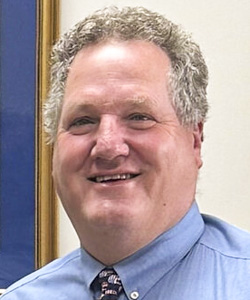
Stuart Schmidt
91% support rate
Top opponent
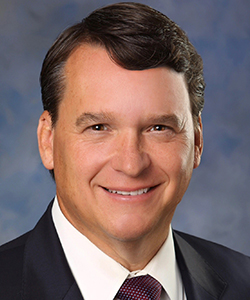
Jim Hinebaugh
41% support rate
Ranked legislators
10
5 support · 5 oppose
Key legislators

Who's moving criminal justice in Maryland

Legislators moving criminal justice in Maryland
Legislator Party Stance Support rate Votes
Stuart Schmidt
Stuart Schmidt House · District 33B
R
Strong +
91% 182
Katie Hester
Katie Hester Senate · District 9
D
Strong +
80% 86
Brian Crosby
Brian Crosby House · District 29B
D
Support
72% 101
Mary-Dulany James
Mary-Dulany James Senate · District 34
D
Support
71% 88
Matthew Schindler
Matthew Schindler House · District 2B
D
Support
67% 191
Jim Hinebaugh
Jim Hinebaugh House · District 1A
R
Mixed −
41% 162
Dalya Attar
Dalya Attar Senate · District 41
D
Mixed −
42% 77
Kevin Anderson
Kevin Anderson House · District 38A
R
Mixed −
42% 119
Steve Hershey
Steve Hershey Senate · District 36
R
Mixed −
43% 108
Mary Beth Carozza
Mary Beth Carozza Senate · District 38
R
Mixed −
43% 110
Showing 51–60 of 229 bills

All criminal justice bills

passed · Maryland · House of Delegates Mar 20, 2026

HB 1294: Criminal Law - Child Sexual Abuse Material - Artificial Intelligence Software

HB 1294 updates Maryland law to define "child sexual abuse material" (replacing "child pornography") and explicitly includes images created using artificial intelligence software in this definition. The bill modifies legal provisions to prohibit possessing or viewing AI-generated images that appear indistinguishable from real children engaged in sexual conduct or abuse, while excluding drawings, cartoons, sculptures, or paintings. It increases penalties for repeat offenses (up to 10 years in prison) and adds a defense for individuals who promptly destroy such material or report it to authorities. This change directly affects anyone creating, sharing, or accessing AI-generated images that mimic real minors in sexual contexts.
Sub-Topics Corrections Tags Artificial Intelligence
passed · Maryland · House of Delegates Mar 5, 2026

HB 821: Judiciary Department - Judicial Removal - Disqualification From Future Judicial Office

This constitutional amendment prohibits judges or justices removed or retired for misconduct from holding any future judicial position. It directly affects judges disciplined by the Commission on Judicial Disabilities, adding a new provision that explicitly bars such individuals from future judicial office. The key mechanism requires the Supreme Court to remove or retire judges found guilty of misconduct, with the amendment ensuring these individuals lose eligibility for any subsequent judicial role. This change modifies Article IV of the Maryland Constitution and requires voter approval in the November 2026 election.
Sub-Topics Courts Judges
in committee · Maryland · Senate Feb 12, 2026

SB 692: Firearms Dealers and Employees - Required Training and Exam

SB 692 requires all licensed firearms dealers, their applicants, and employees to complete mandatory training and pass a written exam by January 1, 2027. The training covers state/federal firearm laws, preventing theft, safe storage, recognizing straw purchases, trafficking, and other illegal activities. Dealers must maintain proof of completion for all employees at their business location, and failure to comply carries a $1,000 civil penalty. The Secretary of State Police must approve at least one online training course and administer the exam by October 1, 2026, with a 70% passing requirement.
Sub-Topics Firearms Policing
in committee · Maryland · House of Delegates Feb 5, 2026

HB 749: Criminal Procedure - Theft - Notification of Victims and Victims' Representatives

HB 749 requires prosecutors in Maryland to notify victims (or their designated representatives) about court proceedings in theft cases involving property or services valued at $100 or more. This applies to misdemeanor thefts between $100-$1,500 and all thefts under $100, with victims or representatives defined as family members, guardians, or advocates for minors, deceased, or disabled individuals. Prosecutors must mail specific forms and notifications within 10 days of an indictment, allowing victims to request updates via a state system (MDEC) or written form. The bill also clarifies that filing these requests satisfies legal requirements for victim notification under Maryland law.
Sub-Topics Courts Victims' Rights
in committee · Maryland · House of Delegates Feb 16, 2026

HB 1131: Public Health - Pregnancy Loss - Prohibited Actions (Pregnancy Outcome Protection Act)

HB 1131 (Pregnancy Outcome Protection Act) prohibits law enforcement and agencies from investigating, prosecuting, or imposing civil liability on individuals who experienced pregnancy loss (including miscarriage, stillbirth, or self-managed abortion), except when independent evidence of unrelated criminal conduct exists or the individual consents. It protects healthcare providers from liability for supporting patients during or after pregnancy loss and restricts disclosure of medical records related to pregnancy loss without evidence of abuse, unrelated criminal conduct, or patient consent. The bill creates a private right to sue for violations and establishes misdemeanor penalties for knowingly violating its provisions. These changes apply to all Maryland residents and healthcare providers within the state’s health system.
in committee · Maryland · House of Delegates Mar 11, 2026

HB 1536: Maryland Enforcement Limits and Transparency (MELT) Act

HB 1536, the Maryland Enforcement Limits and Transparency (MELT) Act, prohibits state and local government entities, including sheriffs and contractors, from voluntarily aiding immigration enforcement without a judicial warrant or legal requirement. It requires these entities to document all interactions with immigration authorities, maintain records for five years, and notify individuals whose information was shared. Victims harmed by violations can sue for damages, while the Attorney General can investigate, publish findings, and refer cases to licensing authorities. The law also allows state procurement agencies to terminate contracts with violators and licensing bodies to sanction licensees who breach the act.
died · Maryland · Senate Mar 2, 2026

SB 679: Criminal Procedure - Motion to Reduce Duration of Sentence - Eligibility (Vincent Anthony Fisher III Act)

SB 679, the "Vincent Anthony Fisher III Act," allows certain individuals to request a reduction in their prison sentence. It applies to people convicted as adults for offenses committed when they were minors (before October 1, 2021) and imprisoned for at least 20 years, or those convicted between ages 18-24 (not life without parole, not sex offenders, and not convicted of specific violent crimes like murder of first responders or hate crimes) with 20+ years served. The bill requires a court hearing where the person must show they are not a public danger and that a reduced sentence serves justice, considering factors like their age at the offense, rehabilitation efforts, victim input, and family circumstances. The court must consider these factors before deciding whether to shorten the prison term.
died · Maryland · House of Delegates Mar 16, 2026

HB 1031: Law Enforcement - Use of Force - National Guard Members

HB 1031 establishes specific use-of-force standards for National Guard members operating in Maryland under federal authority (per 32 U.S.C. § 502). It requires National Guard members to use only necessary and proportional force to prevent imminent harm or achieve legitimate law enforcement objectives, while mandating de-escalation, intervention in excessive force incidents, medical aid for injured persons, and detailed documentation of all force encounters. Violating these standards and causing serious injury or death constitutes a misdemeanor punishable by up to 10 years in prison. The law applies directly to National Guard personnel supporting state operations under federal orders, not to regular police officers.
in committee · Maryland · Senate Feb 5, 2026

SB 537: Youth Delinquency Prevention Fund - Establishment

SB 537 establishes Maryland's Youth Delinquency Prevention Fund to provide grants to community programs focused on preventing youth delinquency, suicide, substance abuse, and supporting youth development. The fund, administered by the Office, receives state budget appropriations and interest earnings, and is designated as a non-lapsing special fund (meaning it doesn't expire or revert to the General Fund). It requires annual reports detailing grant distribution, recipient demographics (by age, race, geography, and ethnicity), services provided, and unspent funds. The fund specifically supports community-based programs like youth service bureaus and aims to supplement, not replace, existing youth funding.
in committee · Maryland · House of Delegates Feb 16, 2026

HB 1347: Task Force to Study Postrelease Services and Requirements (Bri's Law)

HB 1347 (Bri’s Law) creates a 7-member task force to study Maryland’s post-incarceration support systems. The task force, including state legislators, corrections officials, and prosecutors, will examine all release types from prison and current programs designed to prevent reoffending. It must submit recommendations to the Governor and legislature by July 2027, after which the task force automatically expires on June 30, 2028. This bill does not change existing services but mandates a review of current postrelease requirements.
Sub-Topics Corrections
Showing 51 to 60 of 229 bills
Previous 1 5 6 7 23 Next