Issue · Criminal Justice

Criminal Justice

Every criminal justice bill, vote, and legislator stance in Maryland, automatically classified by Maddy, our AI policy reader.

Total bills
59
2026 Regular Session
Top supporter
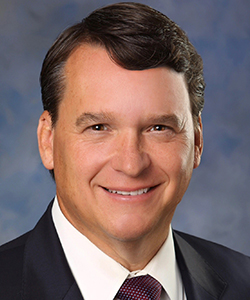
Stuart Schmidt
91% support rate
Top opponent
Jim Hinebaugh
41% support rate
Ranked legislators
10
5 support · 5 oppose
Key legislators

Who's moving criminal justice in Maryland

Legislators moving criminal justice in Maryland
Legislator Party Stance Support rate Votes
Stuart Schmidt
Stuart Schmidt House · District 33B
R
Strong +
91% 182
Katie Hester
Katie Hester Senate · District 9
D
Strong +
80% 86
Brian Crosby
Brian Crosby House · District 29B
D
Support
72% 101
Mary-Dulany James
Mary-Dulany James Senate · District 34
D
Support
71% 88
Matthew Schindler
Matthew Schindler House · District 2B
D
Support
67% 191
Jim Hinebaugh
Jim Hinebaugh House · District 1A
R
Mixed −
41% 162
Dalya Attar
Dalya Attar Senate · District 41
D
Mixed −
42% 77
Kevin Anderson
Kevin Anderson House · District 38A
R
Mixed −
42% 119
Steve Hershey
Steve Hershey Senate · District 36
R
Mixed −
43% 108
Mary Beth Carozza
Mary Beth Carozza Senate · District 38
R
Mixed −
43% 110
Showing 41–50 of 59 bills

All criminal justice bills

in committee · Maryland · House of Delegates Jan 29, 2026

HB 463: First Degree Murder - Diminution Credits - Prohibition

HB 463 prohibits incarcerated individuals serving sentences for specific first-degree murder convictions from earning time-off credits (diminution credits) that reduce their prison terms. It directly affects people convicted of murder under Maryland law, including those convicted of murder involving a child under 16 (under older statutes), repeat child murder offenders, or any first-degree murder (§2-201 of the Criminal Law Article). The bill amends Maryland’s Correctional Services law to block these credits for the specified offenses, effective October 1, 2026. This change applies only to sentences for offenses committed on or after that date, not past cases.
Sub-Topics Corrections
in committee · Maryland · House of Delegates Jan 16, 2026

HB 171: Criminal Law - Drug Trafficking Crime - Definition

HB 171 modifies Maryland's definition of "drug trafficking crime" to include misdemeanor cannabis possession or distribution violations (under sections 5-602(b)(1) and 5-603(b)), expanding the scope of offenses triggering firearm restrictions. This means individuals charged with certain cannabis-related misdemeanors could now face enhanced penalties if they possess a firearm during the offense. The bill mandates a minimum 5-year prison sentence for a first offense and 10 years for repeat offenses, with no possibility of sentence suspension or parole eligibility. It directly affects people convicted of cannabis misdemeanors who possess firearms, as these offenses would now qualify as "drug trafficking crimes" under the law. The changes would take effect October 1, 2026.
signed · Maryland · Senate May 12, 2026

SB 230: Criminal Law - Third-Degree Sexual Offense - Burglary

SB 230 amends Maryland law to treat sexual contact without consent during a burglary (first, second, or third degree) as a third-degree sexual offense. This directly affects individuals who commit such acts, elevating the offense level from a misdemeanor to a felony punishable by up to 10 years in prison. The bill also updates sex offender registration tiers to include this specific burglary-related offense in the definitions of "tier I" and "tier II" sex offenders. These changes clarify that committing sexual contact without consent while burglarizing a property triggers stricter legal consequences and registration requirements. The bill does not alter existing provisions for offenses involving minors or other specific circumstances.
Sub-Topics Corrections
died · Maryland · House of Delegates Feb 23, 2026

HB 205: Violent Criminals - Parole Limitation and Legislative Testimony Removal (Sexual Offender Accountability and Victim Protection Act)

HB 205 limits parole consideration for individuals convicted of specific sexual crimes (under Maryland Criminal Law §§ 3-602 or Title 3, Subtitle 3) to a single opportunity after eligibility. If a victim, family member, advocacy group, or representative objects to parole, it is permanently denied. The bill also requires removing any legislative testimony given by a convicted violent offender from the General Assembly’s website upon request by a victim or their representative, replacing it with a standard notice explaining the removal and a process for requesting the testimony. The law takes effect October 1, 2026.
Sub-Topics Probation & Parole
passed · Maryland · Senate Mar 26, 2026

SB 202: Police Discipline - Order to Show Cause

SB 202 creates a new legal process for Maryland police officers who believe they were denied a right during disciplinary proceedings. It allows officers to request a court order requiring their law enforcement agency to explain why the right (such as the right to present evidence or appeal) should not be granted, before a disciplinary hearing occurs. Officers must apply to the circuit court in their county (for local agencies) or Anne Arundel County (for statewide agencies), and the bill takes effect October 1, 2026. This is a procedural change affecting how officers challenge disciplinary actions, not the substance of discipline itself.
signed · Maryland · Senate May 12, 2026

SB 465: Criminal Procedure - Admission of Out-of-Court Statements - Assault in the Second Degree

SB 465 modifies Maryland's evidence rules to allow certain out-of-court statements in second-degree assault cases when the defendant caused the witness's unavailability through wrongdoing. It permits statements made under oath, in writing with the declarant's signature, or recorded verbatim to be admitted if the court finds by a preponderance of evidence that the defendant engaged in wrongdoing to make the witness unavailable. Before admitting such a statement, the court must hold a separate hearing outside the jury's presence to verify the defendant's wrongdoing. This bill directly affects defendants charged with second-degree assault and prosecutors seeking to use specific witness statements in trial.
Sub-Topics Courts Violent Crime
in committee · Maryland · House of Delegates Jan 29, 2026

HB 544: Vehicle Laws - Cannabis Use in Motor Vehicle With Minor Occupant - Prohibition

HB 544 prohibits smoking, vaping, or consuming cannabis in the passenger area of a motor vehicle when a minor (under 18) is present. This applies to all occupants, including drivers and passengers, and creates a new misdemeanor offense for violations. Penalties include up to one year in jail, a $1,000 fine, or both. The bill, introduced in January 2026, will take effect on October 1, 2026.
in committee · Maryland · Senate Feb 9, 2026

SB 362: Criminal Law - Child's Access to Firearms - Penalty (Ny'Kala Strawder Act)

SB 362 (the Ny'Kala Strawder Act) amends Maryland law to increase penalties for storing or leaving a loaded firearm where a person knew or should have known an unsupervised minor could access it. It prohibits negligent firearm storage in locations accessible to minors, making violations a misdemeanor punishable by up to 5 years in prison or a $1,000 fine, or both. Exceptions include supervised access by an adult, unlawful entry, law enforcement possession during duties, or a minor with a valid hunter safety certificate. The law also explicitly states violations cannot be used as evidence of negligence in civil cases or referenced during civil trials involving firearm-related injuries or deaths. The bill takes effect October 1, 2026.
in committee · Maryland · House of Delegates Feb 5, 2026

HB 686: Vehicle Laws - Eluding Police - Penalties (Zoey's Law)

HB 686, "Zoey's Law," increases penalties for drivers who flee police and cause death during the chase. It reclassifies causing death while attempting to elude police as a felony, raising the maximum penalty to 5 years for a first offense and 10 years for repeat offenses, with fines up to $5,000. The bill directly affects drivers who evade law enforcement and result in a fatality, replacing prior misdemeanor penalties. This change applies to all drivers who fail to stop for police signals (e.g., lights, sirens) and cause death, regardless of whether the driver was fleeing for a "crime of violence."
passed · Maryland · House of Delegates Mar 23, 2026

HB 159: Mail Theft

HB 159 proposes to amend Maryland law regarding mail theft by creating new prohibitions on stealing mail or packages under specific circumstances. The bill establishes two new sections (3-905 and 3-905.1) in the Criminal Law Article, defining prohibited acts and penalties for mail theft. It also clarifies that violations of these new provisions will be tried in District Court or Circuit Court, depending on the offense severity. This bill directly affects individuals who steal or possess stolen mail or packages, and it is currently pending in the Maryland General Assembly.
Sub-Topics Courts
Showing 41 to 50 of 59 bills
Previous 1 4 5 6 Next