Issue · Criminal Justice

Criminal Justice (Policing)

Every criminal justice bill, vote, and legislator stance in Maryland, automatically classified by Maddy, our AI policy reader.

Total bills
46
2026 Regular Session
Top supporter
Stuart Schmidt
100% support rate
Top opponent
Frank Conaway
0% support rate
Ranked legislators
10
5 support · 5 oppose
Key legislators

Who's moving policing in Maryland

Legislators moving policing in Maryland
Legislator Party Stance Support rate Votes
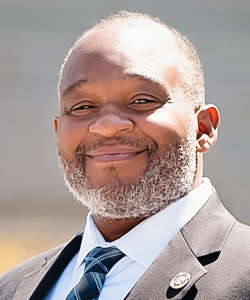
Stuart Schmidt
Stuart Schmidt House · District 33B
R
Strong +
100% 4
Dana Jones
Dana Jones House · District 30A
D
Strong +
100% 3
Diana Fennell
Diana Fennell House · District 47A
D
Strong +
100% 3
Gary Simmons
Gary Simmons House · District 12B
D
Strong +
100% 3
Aletheia McCaskill
Aletheia McCaskill House · District 44B
D
Support
75% 4
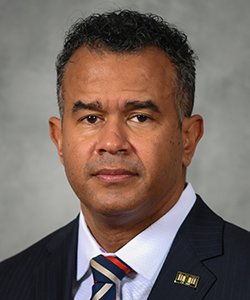
Frank Conaway
Frank Conaway House · District 40
D
Strong −
0% 6
C.T. Wilson
C.T. Wilson House · District 28
D
Strong −
0% 3
William Wivell
William Wivell House · District 2A
R
Strong −
0% 3
Caylin Young
Caylin Young House · District 45
D
Oppose
25% 4
Chris West
Chris West Senate · District 42
R
Oppose
25% 4
Showing 31–40 of 46 bills

All criminal justice bills

in committee · Maryland · House of Delegates Jan 29, 2026

HB 349: Public Safety - Law Enforcement - Use of Body-Worn Cameras

HB 349 requires specific Maryland law enforcement agencies to mandate body-worn cameras for all sworn officers during public duties while in uniform. It applies immediately to the State Police, Anne Arundel County Police, Howard County Police, and Harford County Sheriff’s Office, with all other county agencies required to comply by July 1, 2025. The law specifies officers must wear cameras "regardless of rank" during public interactions, subject to each agency’s existing camera policy. The bill takes effect October 1, 2026, and does not alter existing policies governing camera usage.
signed · Maryland · House of Delegates May 26, 2026

HB 634: Police Training - Autism and Dementia (LEAD Act of 2026)

HB 634 (LEAD Act of 2026) requires Maryland police training programs to include specific instruction on interacting with individuals with dementia or autism. It directly affects all entrance-level and in-service police training curricula across state, county, and municipal departments. Key provisions mandate training in six areas: locating wandering individuals, searching near water, sensory-aware approaches, reunification, documentation, and interagency coordination. The law amends Maryland's Public Safety Code to add these requirements, effective October 1, 2026. It focuses on practical, life-saving protocols rather than broader policy changes.
Sub-Topics Policing
in committee · Maryland · House of Delegates Jan 16, 2026

HB 114: Motor Vehicles - Accidents - Required Testing for Impaired Driving (Mateo's Law)

HB 114, "Mateo's Law," requires drivers involved in motor vehicle accidents causing death or life-threatening injuries to submit to mandatory breath and blood testing for alcohol or drug impairment. It directly affects drivers detained by police who have reasonable suspicion of impairment (e.g., under the influence of alcohol, drugs, or controlled substances) following such accidents. The bill mandates testing for blood alcohol concentration or drug content via breath (for alcohol) and blood samples, with police directing the tests under existing legal procedures. Medical personnel performing these tests are protected from civil liability for non-gross-negligent actions. The law takes effect October 1, 2026.
Sub-Topics Policing
in committee · Maryland · House of Delegates Jan 29, 2026

HB 464: Criminal Procedure - No-Knock Search Warrants - Repeal

HB 464 repeals Maryland's existing law allowing no-knock search warrants, requiring law enforcement officers to always announce their presence and authority before entering a residence during a search. This directly affects police officers executing search warrants and residents living in properties subject to searches. The bill removes all exceptions permitting entry without notice, mandating that officers provide audible announcement of their authority and purpose prior to entry. It specifically repeals provisions in Maryland's Criminal Procedure and Public Safety codes that previously permitted no-knock warrants under certain conditions.
signed · Maryland · House of Delegates May 12, 2026

HB 563: Criminal Law - Emergency Response Animal - Prohibited Actions Against

HB 563 strengthens protections for law enforcement and search/rescue animals by making it a crime to harm them during their duties. The bill prohibits intentionally harassing, interfering with, injuring, or killing emergency response animals (including police dogs, horses used by police, and search/rescue dogs), and adds penalties for these acts. Violations are classified as misdemeanors with fines up to $15,000 or jail terms up to 5 years, depending on the severity. This directly affects anyone who targets these animals while they are performing official law enforcement or rescue tasks. The law replaces an outdated provision that previously allowed intentional harm to such animals.
passed · Maryland · Senate Mar 26, 2026

SB 202: Police Discipline - Order to Show Cause

SB 202 creates a new legal process for Maryland police officers who believe they were denied a right during disciplinary proceedings. It allows officers to request a court order requiring their law enforcement agency to explain why the right (such as the right to present evidence or appeal) should not be granted, before a disciplinary hearing occurs. Officers must apply to the circuit court in their county (for local agencies) or Anne Arundel County (for statewide agencies), and the bill takes effect October 1, 2026. This is a procedural change affecting how officers challenge disciplinary actions, not the substance of discipline itself.
in committee · Maryland · House of Delegates Jan 29, 2026

HB 113: Criminal Procedure - Expungement of Records - Resisting Arrest and Making a False Statement to a Law Enforcement Officer

HB 113 would allow individuals convicted of misdemeanor resisting arrest (§9-408) or making false statements to police (§9-501, §9-502) to petition for expungement of those records under Maryland law. It directly affects people with these specific misdemeanor convictions who currently cannot clear such records. The bill amends the expungement statute (§10-110(a)(1)(xii)) to add these offenses to the list of eligible misdemeanors. This change applies only to misdemeanor offenses (not felonies) and would take effect October 1, 2026, if passed.
in committee · Maryland · Senate Jan 23, 2026

SB 321: Public Safety - Law Enforcement Agencies - Use of Body-Worn Cameras

SB 321 requires all Maryland law enforcement agencies to mandate body-worn cameras for every sworn officer while they are in uniform, in public, and performing law enforcement duties. It directly affects all sworn officers across Maryland, with specific deadlines: named agencies (State Police, Anne Arundel, Howard, and Harford County) must comply by July 1, 2023, and other county agencies by July 1, 2025. Agencies must develop their own policies governing camera use, but the mandate applies uniformly regardless of an officer’s rank. The bill amends Maryland’s public safety code to establish this requirement, focusing on transparency during public interactions. It does not specify data retention or public access details, only the operational mandate for officers.
Sub-Topics Law Enforcement Policing Tags Public Safety
in committee · Maryland · House of Delegates Feb 2, 2026

HB 699: Maryland Use of Force Statute - Failure to Prevent Excessive Force or Render First Aid - Misdemeanor

HB 699 amends Maryland's use of force statute to require police officers to intervene when another officer uses excessive force and to provide basic first aid to individuals injured during police actions. It creates two new misdemeanor offenses: intentionally failing to intervene (penalty: up to 10 years imprisonment) or failing to render first aid and request medical assistance (penalty: up to 5 years imprisonment). The bill directly affects all police officers and supervisors, mandating they sign a "sanctity of life pledge," undergo de-escalation training, document force incidents, and supervisors must review video evidence of use-of-force cases. These provisions aim to enforce accountability during police encounters by codifying specific duties to prevent harm and provide aid.
Sub-Topics Policing
in committee · Maryland · House of Delegates Feb 16, 2026

HB 588: Missing and Murdered American Indian and Alaskan Native Women and Girls - Day of Awareness and Reporting Requirement

HB 588 designates May 5 as an annual "Missing and Murdered American Indian and Alaskan Native Women and Girls Awareness Day" for the Governor to proclaim. It requires the Department of State Police to submit a report to the Maryland General Assembly by December 1, 2026, on whether law enforcement agencies collect sufficient data about violence against these communities. The report must include policy recommendations to improve data collection methods, coordinate with federal agencies during investigations, and raise public awareness. This bill directly affects state agencies and aims to address gaps in tracking violence against American Indian and Alaskan Native women and girls, who face disproportionately high rates of violence.
Sub-Topics Law Enforcement Policing Tags Tribal Nations
Showing 31 to 40 of 46 bills
Previous 1 3 4 5 Next