Issue · Criminal Justice

Criminal Justice (Corrections)

Every criminal justice bill, vote, and legislator stance in Maryland, automatically classified by Maddy, our AI policy reader.

Total bills
46
2026 Regular Session
Top supporter
Stuart Schmidt
100% support rate
Top opponent
Barrie Ciliberti
0% support rate
Ranked legislators
10
5 support · 5 oppose
Key legislators

Who's moving corrections in Maryland

Legislators moving corrections in Maryland
Legislator Party Stance Support rate Votes
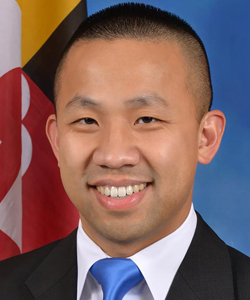
Stuart Schmidt
Stuart Schmidt House · District 33B
R
Strong +
100% 5
Gabriel Moreno
Gabriel Moreno House · District 13
D
Strong +
100% 4
Clarence Lam
Clarence Lam Senate · District 12
D
Strong +
100% 3
Cory McCray
Cory McCray Senate · District 45
D
Strong +
100% 3
Jennifer White Holland
Jennifer White Holland House · District 10
D
Strong +
100% 3
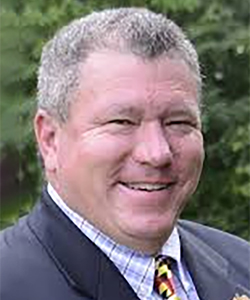
Barrie Ciliberti
Barrie Ciliberti House · District 4
R
Strong −
0% 4
Josh Stonko
Josh Stonko House · District 42C
R
Strong −
0% 4
Bryan Simonaire
Bryan Simonaire Senate · District 31
R
Strong −
0% 3
Chris West
Chris West Senate · District 42
R
Strong −
0% 3
Jack Bailey
Jack Bailey Senate · District 29
R
Strong −
0% 3
Showing 31–40 of 46 bills

All criminal justice bills

died · Maryland · Senate Feb 16, 2026

SB 220: Criminal Procedure - Lifetime Sexual Offender Supervision - Conditions, Violations, and Petitions for Discharge

SB 220 modifies Maryland's lifetime supervision requirements for certain convicted sexual offenders. It applies to individuals convicted of specific offenses against minors (like crimes committed against children under 13 or 16 years old), sexual violent predators, or those required to register under existing law. Key provisions include mandating GPS tracking, restricting proximity to schools or minors, requiring treatment programs, and imposing penalties for violations (misdemeanor for first offense, felony for repeat offenses with up to 10 years in prison). The bill also establishes a process allowing offenders to petition for discharge after five years of compliance with supervision terms.
Sub-Topics Corrections
in committee · Maryland · House of Delegates Feb 4, 2026

HB 566: Criminal Law – Distribution of Students’ Personal Information – Prohibition

HB 566 prohibits distributing a student's personal details - such as name, address, Social Security number, or school address - without their explicit consent (or a parent/guardian's consent if the student is under 18). It specifically targets situations where the distribution is done with intent to cause harm (like physical injury, serious emotional distress, or economic damage) or with reckless disregard for that risk. The law applies to students in secondary schools (grades 6-12) or postsecondary institutions and carries misdemeanor penalties of up to one year in jail or a $5,000 fine for violations. Exceptions include journalistic reporting, academic activities, and disclosures required for campus safety or legal compliance.
signed · Maryland · Senate May 12, 2026

SB 241: Election Law - Individuals Released From State Correctional Facilities - Automatic Restoration of Voter Registration

SB 241 automatically restores voting rights for Maryland residents released from state correctional facilities who were previously registered to vote. The Department of Public Safety and Correctional Services must send weekly lists of released individuals (including new addresses) to the State Board of Elections, which then automatically reinstates their voter registration at the provided address. The bill prohibits disclosing that someone was restored through this process under public information laws. It directly affects people released from facilities like Patuxent Institution and Baltimore City Detention Center who were registered before incarceration. The law takes effect January 1, 2027.
signed · Maryland · House of Delegates May 12, 2026

HB 563: Criminal Law - Emergency Response Animal - Prohibited Actions Against

HB 563 strengthens protections for law enforcement and search/rescue animals by making it a crime to harm them during their duties. The bill prohibits intentionally harassing, interfering with, injuring, or killing emergency response animals (including police dogs, horses used by police, and search/rescue dogs), and adds penalties for these acts. Violations are classified as misdemeanors with fines up to $15,000 or jail terms up to 5 years, depending on the severity. This directly affects anyone who targets these animals while they are performing official law enforcement or rescue tasks. The law replaces an outdated provision that previously allowed intentional harm to such animals.
in committee · Maryland · House of Delegates Feb 16, 2026

HB 495: Criminal Procedure - Immigration Arrest - Immunity in Connection With Court Proceeding

HB 495 provides legal immunity from immigration arrests for individuals attending court hearings as parties, witnesses, or as family/household members of such individuals. It prohibits immigration arrests during travel to, at, or from court unless authorized by a judicial warrant. Violations of this provision are punishable as misdemeanors (up to 1 year in jail or $1,000 fine) or felonies (up to 4 years in jail or $5,000 fine), and affected individuals can seek legal remedies including injunctions and attorney fees. The law directly affects people participating in court proceedings and their close relatives living in the same household, aiming to prevent immigration enforcement from disrupting court access.
in committee · Maryland · Senate Jan 14, 2026

SB 196: Correctional Services - Medication Review Committee - Administration of Psychotropic Medication to an Incarcerated Individual

SB 196 establishes a medication review committee within Maryland's state correctional facilities' licensed mental health infirmaries to decide whether to approve administering psychotropic medication to an incarcerated person who refuses it, except in emergencies. The committee must review medical records, consider alternatives, and ensure the inmate's rights - including attending meetings, understanding treatment risks, and receiving a lay advisor - are protected before approving non-emergency medication. It requires staff to document treatment history and less intrusive alternatives before seeking committee approval, and mandates the committee determine if medication is necessary to prevent substantial risk of self-harm or dangerous behavior. This bill directly affects inmates in mental health infirmaries and sets new procedural safeguards for medication decisions.
in committee · Maryland · House of Delegates Jan 22, 2026

HB 389: Juveniles - Detention and Confinement - Limitations on Juvenile Contact With Incarcerated Adults

HB 389 prohibits holding juveniles (under 18) who are arrested, convicted, or awaiting trial for criminal charges in any facility where they might have contact with, see, or hear adults in jail or prison. It bans holding juveniles in adult correctional facilities except for up to six hours during processing if they are kept separated by sight and sound from adults and then transferred to a juvenile facility. The bill requires courts to place juveniles in secure juvenile facilities unless no space is available, the juvenile is released pretrial, or the court determines juvenile facility detention would pose a risk of harm. This law directly affects young people in Maryland's justice system who face criminal charges.
passed · Maryland · Senate Apr 10, 2026

SB 407: Criminal Law - Sexual Offense by a Person in a Position of Authority

SB 407 strengthens protections for minors by prohibiting individuals in positions of authority (such as teachers, coaches, or school staff) from engaging in sexual contact with minors they supervise who are at least 6 years younger. It specifically amends Maryland's criminal code to increase penalties for violations, including up to 3 years in prison for repeat offenders, and adds this offense as a basis for sex offender registry classification. The bill also refines definitions of "person in a position of authority" to include school staff and program leaders, and clarifies that these offenses cannot be treated as lesser included crimes. This directly affects school employees, youth program leaders, and minors under 18 in their care.
Sub-Topics Corrections
in committee · Maryland · Senate Jan 20, 2026

SB 268: Correctional Services – Restrictive Housing – Individuals With Developmental or Intellectual Disabilities

SB 268 requires clinical professionals (licensed mental health providers) to assess new inmates at Maryland state correctional facilities for developmental or intellectual disabilities during intake. If assessed, facilities must limit restrictive housing (locked in a cell for 22+ hours daily) to 15 consecutive days within any 30-day period for these individuals, unless they commit a prohibited act like causing serious injury, making credible threats with prior violence, or possessing weapons. The bill excludes medical isolation, suicide watch, and self-requested protective custody from the restrictive housing definition. It applies only to Maryland state correctional facilities and takes effect October 1, 2026.
signed · Maryland · Senate May 12, 2026

SB 81: Criminal Law - School Resource Officers - Prohibition on Sexual Activity with Students

SB 81 prohibits law enforcement officers assigned as school resource officers (SROs) from engaging in sexual contact, vaginal intercourse, or sexual acts with students enrolled at their assigned school. It amends Maryland's criminal law (Section 3-314(e)(iv)) to explicitly include SROs in the ban, defining "school resource officer" under the Education Article (Section 7-1501(j)). Violations are misdemeanors punishable by up to 3 years in jail or a $3,000 fine. The law directly affects SROs in Maryland public schools, targeting conduct specific to their role as law enforcement officers within educational settings. It takes effect July 1, 2026.
Showing 31 to 40 of 46 bills
Previous 1 3 4 5 Next