Issue · Criminal Justice

Criminal Justice

Every criminal justice bill, vote, and legislator stance in Maryland, automatically classified by Maddy, our AI policy reader.

Total bills
229
2026 Regular Session
Top supporter
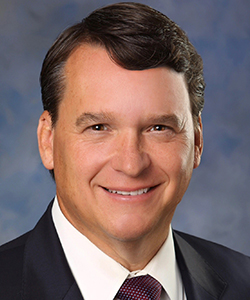
Stuart Schmidt
91% support rate
Top opponent
Jim Hinebaugh
41% support rate
Ranked legislators
10
5 support · 5 oppose
Key legislators

Who's moving criminal justice in Maryland

Legislators moving criminal justice in Maryland
Legislator Party Stance Support rate Votes
Stuart Schmidt
Stuart Schmidt House · District 33B
R
Strong +
91% 182
Katie Hester
Katie Hester Senate · District 9
D
Strong +
80% 86
Brian Crosby
Brian Crosby House · District 29B
D
Support
72% 101
Mary-Dulany James
Mary-Dulany James Senate · District 34
D
Support
71% 88
Matthew Schindler
Matthew Schindler House · District 2B
D
Support
67% 191
Jim Hinebaugh
Jim Hinebaugh House · District 1A
R
Mixed −
41% 162
Dalya Attar
Dalya Attar Senate · District 41
D
Mixed −
42% 77
Kevin Anderson
Kevin Anderson House · District 38A
R
Mixed −
42% 119
Steve Hershey
Steve Hershey Senate · District 36
R
Mixed −
43% 108
Mary Beth Carozza
Mary Beth Carozza Senate · District 38
R
Mixed −
43% 110
Showing 31–40 of 229 bills

All criminal justice bills

signed · Maryland · Senate May 12, 2026

SB 634: Office of the State Prosecutor - Investigation of Threats - Judges

SB 634 authorizes Maryland's State Prosecutor to investigate threats against judges or judge-elects. The bill amends the State Prosecutor's authority under Criminal Procedure Section 14-107 to explicitly include investigations of threats violating Criminal Law Section 3-708 when directed at judges or judge-elects. This expands existing protections for officials covered under the law, which previously included state/local officials, prosecutors, and public defenders but not judges. The key change is adding judges to the list of protected individuals whose threats trigger the State Prosecutor's investigative role, without altering penalty levels for making threats. The bill takes effect October 1, 2026.
Sub-Topics Judges
signed · Maryland · Senate May 26, 2026

SB 524: Juvenile Records - Access by Baltimore City Mayor's Office

SB 524 allows Baltimore City's Mayor's Offices of Neighborhood Safety and Engagement, Children and Family Success, and African American Male Engagement to access confidential juvenile police and court records under specific circumstances. The bill modifies Maryland law to permit these offices to view records *only* when providing services to a child whose record is involved, for developing treatment plans or delivering programs. It explicitly states that this access does not violate confidentiality rules, but the offices would be liable for unauthorized releases of such records. The law directly affects Baltimore City's targeted offices and the children receiving services from them, while maintaining existing protections for juvenile records elsewhere.
in committee · Maryland · House of Delegates Mar 12, 2026

HB 1363: Criminal Procedure - Domestic Violence Offenders - Registration

HB 1363 requires individuals convicted of two or more "domestically related crimes" (defined as crimes against someone eligible for family law relief or with whom they had a sexual relationship within 12 months) to register as domestic violence offenders. Within 7 days of the second conviction, registrants must provide their full name, crime details, physical description, valid ID, and signature to a supervising authority (like a court or correctional facility). Registration lasts 2 years for one prior conviction or 5 years for two or more convictions, and the Department of Public Safety must make this information publicly available online. This bill directly affects repeat domestic violence offenders in Maryland, creating a formal registration system to track them.
died · Maryland · House of Delegates Mar 16, 2026

HB 1266: Criminal Procedure - Victims of Sexual Assault Offenses - Test Kit Submission Requirements

HB 1266 requires Maryland law enforcement agencies to submit sexual assault evidence collection kits (physical evidence gathered from victims' bodies/clothing after an assault) to forensic labs within 30 days of receipt. It clarifies that kits must include all requested reference standards within this timeframe and specifies exceptions where submission isn’t required (e.g., if evidence disproves the assault, the victim declines consent, or the suspect’s DNA is already in CODIS). The bill directly affects law enforcement agencies handling sexual assault cases and ensures timely forensic analysis for victims. It amends Maryland’s Criminal Procedure law (Section 11-926) and takes effect October 1, 2026.
in committee · Maryland · Senate Feb 5, 2026

SB 525: Criminal Procedure - Expungement of Records - Good Cause

SB 525 allows individuals with past misdemeanor convictions to petition for record expungement after completing their sentence (5 years) and those with felony convictions after 7 years. Courts may grant expungement if they find "good cause," considering factors like the crime's nature, rehabilitation progress, public safety risk, and how the conviction affects employment, housing, or education. If denied, the petition cannot be appealed, and the person must wait 3 years before reapplying for the same conviction. The bill amends Maryland's criminal procedure code and takes effect October 1, 2026.
signed · Maryland · Senate May 31, 2026

SB 791: Correctional Services and Criminal Procedure - Immigration Enforcement - Prohibitions (Community Trust Act)

SB 791 (the Community Trust Act) prohibits employees of Maryland state and local correctional facilities from asking about or detaining individuals based on immigration status, notifying federal immigration authorities without a court order, or transferring people to federal authorities without a judicial warrant. It allows limited exceptions only for routine booking procedures or when immigration status affects legal protections under state/federal law or international treaties. The bill requires correctional facilities to adopt compliance policies with penalties for violations and gives affected individuals the right to sue for damages if their rights are breached. This directly affects correctional staff and facilities, not the general public.
in committee · Maryland · House of Delegates Mar 11, 2026

HB 1313: Higher Education - Tuition Exemption - Incarcerated Individuals

HB 1313 would exempt incarcerated individuals in Maryland from paying tuition at public colleges and universities, directly affecting those enrolled in higher education programs within correctional facilities. The bill requires incarcerated individuals to apply for non-loan financial aid (like grants), which must first cover their tuition costs; the exemption then applies to any remaining tuition after aid is applied. It does not cover student loans and applies regardless of other scholarships or grants received. The exemption takes effect July 1, 2026, for all public higher education institutions in Maryland.
signed · Maryland · Senate May 12, 2026

SB 544: Courtroom Security - Minimum Adequate Security Standard

SB 544 establishes minimum security staffing requirements for all Maryland courthouses. It requires courthouse security providers to have specific numbers of qualified officers present during proceedings: one officer per courtroom for most cases (starting July 2027), two officers for cases involving incarcerated individuals or potential custody changes, and one additional officer for every four or fewer courtrooms per floor. Security officers must meet the qualifications for a special police officer under Maryland law. The standards phase in over time, with full implementation by July 1, 2029, and take effect October 1, 2026. This directly affects all Maryland courthouses and the security entities responsible for staffing them.
Sub-Topics Policing
signed · Maryland · Senate Apr 28, 2026

SB 473: Public Utilities - For-Hire Drivers and Transportation Network Operators - Human Trafficking Awareness and Prevention Training and Liability

SB 473 requires new applicants for taxicab, for-hire driver, or transportation network operator (e.g., Uber/Lyft) licenses in Maryland to submit proof they completed human trafficking awareness training. This includes either the U.S. Department of Transportation’s "Leaders Against Human Trafficking" program or another nationally recognized training program. The bill also protects licensed drivers from civil or criminal liability when reporting suspected trafficking in good faith. These requirements apply specifically to new license applicants, not current license holders, and are designed to help identify and prevent trafficking through driver training and reporting.
Sub-Topics Human Trafficking
passed · Maryland · Senate Mar 26, 2026

SB 689: Task Force on the Creation of a Division of Returning Citizens and Expanded Reentry Services - Requirement Alterations and Extension of Report Deadline (Bri's Law)

SB 689 (Bri's Law) creates a task force to study postrelease services for people leaving prison in Maryland, focusing on programs designed to prevent re-arrest. The task force, composed of legislative members, corrections officials, and state's attorneys, must examine all release types and existing post-release requirements by July 2027. It will recommend improvements to these programs based on its findings. The bill expires automatically on June 30, 2028, with no further legislative action required. This study directly affects individuals transitioning from incarceration back into communities.
Showing 31 to 40 of 229 bills
Previous 1 3 4 5 23 Next