Issue · Criminal Justice

Criminal Justice (Policing)

Every criminal justice bill, vote, and legislator stance in Maryland, automatically classified by Maddy, our AI policy reader.

Total bills
40
2026 Regular Session
Top supporter
Stuart Schmidt
100% support rate
Top opponent
Frank Conaway
0% support rate
Ranked legislators
10
5 support · 5 oppose
Key legislators

Who's moving policing in Maryland

Legislators moving policing in Maryland
Legislator Party Stance Support rate Votes
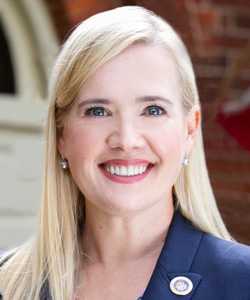
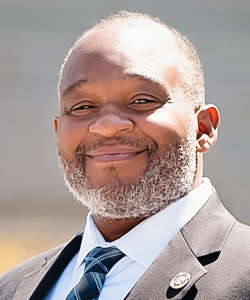
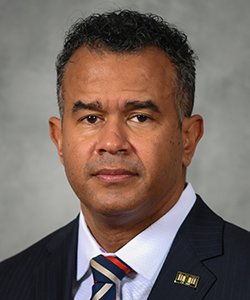
Stuart Schmidt
Stuart Schmidt House · District 33B
R
Strong +
100% 4
Dana Jones
Dana Jones House · District 30A
D
Strong +
100% 3
Diana Fennell
Diana Fennell House · District 47A
D
Strong +
100% 3
Gary Simmons
Gary Simmons House · District 12B
D
Strong +
100% 3
Aletheia McCaskill
Aletheia McCaskill House · District 44B
D
Support
75% 4
Frank Conaway
Frank Conaway House · District 40
D
Strong −
0% 6
C.T. Wilson
C.T. Wilson House · District 28
D
Strong −
0% 3
William Wivell
William Wivell House · District 2A
R
Strong −
0% 3
Caylin Young
Caylin Young House · District 45
D
Oppose
25% 4
Chris West
Chris West Senate · District 42
R
Oppose
25% 4
Showing 21–30 of 40 bills

All criminal justice bills

signed · Maryland · House of Delegates May 12, 2026

HB 351: Civil Actions - Violation of Constitutional Rights (No Kings Act)

HB 351 allows Maryland's Attorney General or State's Attorney to direct the Maryland State Police to collect and securely retain specific digital data (like license plates, cell tower records, GPS, or facial recognition data) about federal agents when a complaint alleges misconduct such as excessive force or civil rights violations. It directly affects complainants who file such misconduct claims and law enforcement agencies handling those cases. The bill requires that complainants can only access this digital data through a court order in a 42 U.S.C. § 1983 civil rights case or a related criminal proceeding. It does not authorize general surveillance but creates a targeted process for gathering evidence in verified misconduct complaints against federal agents. The law takes effect October 1, 2026.
Sub-Topics Civil Rights Courts Policing Tags Civil Liberties
signed · Maryland · House of Delegates May 12, 2026

HB 491: Criminal Procedure - Victims of Sexually Assaultive Behavior - Request for Verbal Acknowledgement

HB 491 prohibits law enforcement agencies from requesting verbal acknowledgments from victims of sexually assaultive behavior that could limit investigations, prevent prosecutions, or restrict victims' legal rights. It specifically bans forms or requests that: relieve the agency of obligations to the victim, define investigation scope, block prosecutions, or limit private legal actions. The bill requires agencies to thoroughly document any victim request to limit or suspend an investigation and follow up per Maryland Police Commission guidelines. Agencies must adopt and submit compliance policies to the Maryland Sexual Assault Evidence Kit Committee by January 15, 2021, with the law taking effect October 1, 2026.
signed · Maryland · Senate May 26, 2026

SB 285: Higher Education - Scholarships for Correctional Officers

SB 285 expands Maryland's existing scholarship program to include correctional officers. The bill amends state law to add "correctional officers" to the eligibility criteria for the Maryland Police Officers, Probation Agents, and Correctional Officers Scholarship Program, which previously covered only police officers and probation agents. It defines "correctional officer" per Maryland law and allows current or future correctional officers to apply for tuition assistance if they meet residency, enrollment, and service obligation requirements. The scholarship requires recipients to work in the field for at least five years within eight years of graduation or repay funds. This change directly affects correctional officers seeking higher education in Maryland.
passed · Maryland · House of Delegates Mar 24, 2026

HB 172: Municipalities - Enforcement Officers - Body-Worn Cameras

HB 172 allows Maryland municipalities to authorize code, parking, and traffic enforcement officers to use body-worn cameras during their duties. It expands the legal definition of "law enforcement officer" to include these municipal officers for camera use, requiring cities to adopt policies that align with state standards for body-worn camera use. The bill mandates that municipalities publishing such policies must follow guidelines similar to those for police body cameras, including notifying individuals when recording is occurring. The law takes effect October 1, 2026, and does not require municipalities to implement the policy.
in committee · Maryland · House of Delegates Jan 29, 2026

HB 398: Public Safety - Persistent Aerial Surveillance

HB 398 prohibits Maryland state and local law enforcement agencies from using persistent aerial surveillance (like drones recording continuous video of people's movements) in criminal investigations, except under seven specific exceptions. These exceptions include having a valid search warrant, executing arrest warrants, conducting active search/rescue operations, locating escaped prisoners, preventing imminent harm, or responding to specific terrorism threats with federal approval. The law directly affects police departments and state agencies that previously used such surveillance methods. It takes effect October 1, 2026, and defines "persistent aerial surveillance" as recording video/images showing a person's actions over time.
in committee · Maryland · House of Delegates Jan 29, 2026

HB 513: Hate Crimes and Hate Bias - Definitions of Sexual Orientation and Hate Bias Incident

HB 513 updates Maryland's legal definitions related to hate crimes and hate bias incidents. It redefines "sexual orientation" to focus on an individual's identity or others' perception of that identity regarding attraction, explicitly stating it does not include gender identity. The bill also defines "hate bias incident" to include non-criminal acts like slurs, offensive symbols, or online threats targeting protected classes (including sexual orientation, gender, disability, and others). It requires law enforcement agencies to report such incidents to the Department of State Police, which must collect, analyze, and quarterly report this data to the Commission on Civil Rights. These changes directly affect law enforcement reporting requirements and the scope of protections under hate crime laws.
in committee · Maryland · Senate Jan 28, 2026

SB 330: Public Safety - Police Accountability - Investigation Records Relating to Not Administratively Charged, Unfounded, and Exonerated Complaints

SB 330 requires Maryland law enforcement agencies to remove certain investigation records from police officers' personnel files three years after specific findings: when an administrative committee decides not to charge an officer, or a trial board finds misconduct allegations "unfounded" or "exonerated." It directly affects police officers whose misconduct complaints were resolved without administrative action. The bill amends Maryland's Public Safety laws to mandate this removal, replacing prior rules that prohibited expungement or destruction of such records. Key provisions specify the exact timeline (3 years post-determination) and define terms like "unfounded" (allegations unsupported by fact) and "exonerated" (officer acted lawfully). The law takes effect October 1, 2026.
in committee · Maryland · House of Delegates Jan 29, 2026

HB 349: Public Safety - Law Enforcement - Use of Body-Worn Cameras

HB 349 requires specific Maryland law enforcement agencies to mandate body-worn cameras for all sworn officers during public duties while in uniform. It applies immediately to the State Police, Anne Arundel County Police, Howard County Police, and Harford County Sheriff’s Office, with all other county agencies required to comply by July 1, 2025. The law specifies officers must wear cameras "regardless of rank" during public interactions, subject to each agency’s existing camera policy. The bill takes effect October 1, 2026, and does not alter existing policies governing camera usage.
signed · Maryland · House of Delegates May 26, 2026

HB 634: Police Training - Autism and Dementia (LEAD Act of 2026)

HB 634 (LEAD Act of 2026) requires Maryland police training programs to include specific instruction on interacting with individuals with dementia or autism. It directly affects all entrance-level and in-service police training curricula across state, county, and municipal departments. Key provisions mandate training in six areas: locating wandering individuals, searching near water, sensory-aware approaches, reunification, documentation, and interagency coordination. The law amends Maryland's Public Safety Code to add these requirements, effective October 1, 2026. It focuses on practical, life-saving protocols rather than broader policy changes.
Sub-Topics Policing
in committee · Maryland · House of Delegates Jan 16, 2026

HB 114: Motor Vehicles - Accidents - Required Testing for Impaired Driving (Mateo's Law)

HB 114, "Mateo's Law," requires drivers involved in motor vehicle accidents causing death or life-threatening injuries to submit to mandatory breath and blood testing for alcohol or drug impairment. It directly affects drivers detained by police who have reasonable suspicion of impairment (e.g., under the influence of alcohol, drugs, or controlled substances) following such accidents. The bill mandates testing for blood alcohol concentration or drug content via breath (for alcohol) and blood samples, with police directing the tests under existing legal procedures. Medical personnel performing these tests are protected from civil liability for non-gross-negligent actions. The law takes effect October 1, 2026.
Sub-Topics Policing
Showing 21 to 30 of 40 bills
Previous 1 2 3 4 Next