Issue · Criminal Justice

Criminal Justice

Every criminal justice bill, vote, and legislator stance in Maryland, automatically classified by Maddy, our AI policy reader.

Total bills
288
2026 Regular Session
Top supporter
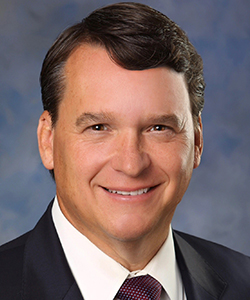
Stuart Schmidt
91% support rate
Top opponent
Jim Hinebaugh
41% support rate
Ranked legislators
10
5 support · 5 oppose
Key legislators

Who's moving criminal justice in Maryland

Legislators moving criminal justice in Maryland
Legislator Party Stance Support rate Votes
Stuart Schmidt
Stuart Schmidt House · District 33B
R
Strong +
91% 182
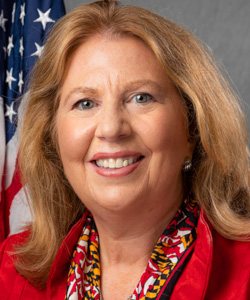
Katie Hester
Katie Hester Senate · District 9
D
Strong +
80% 86
Brian Crosby
Brian Crosby House · District 29B
D
Support
72% 101
Mary-Dulany James
Mary-Dulany James Senate · District 34
D
Support
71% 88
Matthew Schindler
Matthew Schindler House · District 2B
D
Support
67% 191
Jim Hinebaugh
Jim Hinebaugh House · District 1A
R
Mixed −
41% 162
Dalya Attar
Dalya Attar Senate · District 41
D
Mixed −
42% 77
Kevin Anderson
Kevin Anderson House · District 38A
R
Mixed −
42% 119
Steve Hershey
Steve Hershey Senate · District 36
R
Mixed −
43% 108
Mary Beth Carozza
Mary Beth Carozza Senate · District 38
R
Mixed −
43% 110
Showing 261–270 of 288 bills

All criminal justice bills

signed · Maryland · Senate May 12, 2026

SB 437: Criminal Law – Theft and Fraud Crimes – Valuation and Forgery of Gift Cards

SB 437 clarifies how gift card value is determined in theft and fraud cases and prohibits tampering with gift cards to defraud others. It defines "closed-loop" (single merchant) and "open-loop" (multi-merchant network) gift cards, setting their value as the highest of: face value, what the defendant claimed, or actual loss incurred. The bill creates a new misdemeanor offense for altering gift cards or packaging with fraudulent intent, punishable by up to 18 months in jail or a $500 fine. This directly affects individuals committing gift card fraud and businesses handling gift card transactions in Maryland.
Sub-Topics Corrections
passed · Maryland · House of Delegates Mar 19, 2026

HB 310: Correctional Services - Restrictive Housing - Individuals With Developmental or Intellectual Disabilities

HB 310 limits the use of restrictive housing (locked cell confinement for 22+ hours daily) for incarcerated individuals in Maryland state facilities who have a developmental or intellectual disability. It requires a licensed clinical professional to assess new inmates for these disabilities during intake and to recommend against placing them in restrictive housing for more than 15 consecutive days within any 30-day period. This 15-day limit does not apply if the individual commits a "prohibited act," such as causing serious injury, making threats, or possessing weapons. The bill directly affects incarcerated people with these disabilities and mandates correctional facilities to follow this assessment and limitation process.
Sub-Topics Corrections
in committee · Maryland · Senate Jan 14, 2026

SB 67: Criminal Procedure - Incompetency to Stand Trial Dismissal

SB 67 changes the time limits for dismissing criminal charges against defendants found incompetent to stand trial. For serious crimes like rape or first-degree assault, charges must be dismissed after 10 years (or the maximum sentence for the crime); for other felonies or violent crimes, after 5 years; and for other offenses, after 3 years. The bill requires courts to give the State’s Attorney and victims (or their representatives) advance notice and a chance to argue against dismissal before proceeding. It also allows prosecutors to request more time for "extraordinary cause" and mandates notifying victims and the state crime database if charges are dismissed. These changes directly affect defendants, prosecutors, and crime victims in Maryland court cases.
signed · Maryland · Senate May 12, 2026

SB 8: Criminal Law - Identity Fraud - Artificial Intelligence and Deepfake Representations

SB 8 prohibits using personal identifying information (like Social Security numbers or bank details) or AI-generated deepfakes - defined as computer images indistinguishable from real people - to cause harm, such as physical injury, emotional distress, or financial loss. It bans maliciously disclosing personal details via online services, assuming another’s identity for fraud (e.g., accessing healthcare or avoiding debt), and using devices that copy payment card data without consent. The law directly affects individuals or entities exploiting personal data or deepfakes for fraudulent gain, harassment, or harm. Victims may pursue civil lawsuits against violators, and the bill updates Maryland’s criminal law to address emerging threats from AI and deepfake technology.
in committee · Maryland · House of Delegates Mar 30, 2026

HB 332: Civil Actions - Violation of Constitutional Rights (No Kings Act)

HB 332 (the "No Kings Act") creates a new civil rights lawsuit option in Maryland for individuals deprived of constitutional rights by officials acting "under color of law." It allows victims to sue state or local officials (including law enforcement or judicial officers) for damages, injunctions, or declaratory relief when their rights under the U.S. Constitution, Maryland Declaration of Rights, or Maryland Constitution are violated. Key provisions include a 3-year statute of limitations for filing claims, special rules limiting injunctive relief against judicial officers, and protections for officials claiming qualified immunity. The law applies to all pending cases as of its effective date (October 1, 2026).
Sub-Topics Civil Rights Law Enforcement Tags Civil Liberties
signed · Maryland · Senate May 26, 2026

SB 140: Criminal Law - Benefits Exploitation

SB 140 prohibits individuals from knowingly recruiting, harboring, transporting, or obtaining another person specifically to appropriate their government benefits for personal gain or another's benefit. It directly affects vulnerable populations receiving benefits like Medicare, Medicaid, SNAP, Social Security, or veterans' aid, and targets those exploiting them through coercion (e.g., threats, financial control) or deception. The law defines "exploitation" as illegally using benefits via undue influence, false promises, or isolation, and bans profiting from such exploitation or aiding violations. Violations are felonies punishable by up to 25 years in prison, a $15,000 fine, or both, with each violation treated as a separate offense.
in committee · Maryland · House of Delegates Jan 29, 2026

HB 155: Public Safety - Law Enforcement Officers - Prohibition on Face Coverings

HB 155 requires all Maryland law enforcement agencies to adopt policies prohibiting officers from wearing face coverings (like opaque masks or helmets) during routine duties, with specific exceptions. The Maryland Police Training and Standards Commission must create a model policy emphasizing transparency and excluding religious items, medical masks, or safety gear (such as helmets for motorcycle operations). Officers violating this rule face potential fines or loss of civil immunity, but exceptions cover religious garments, medical protection, and occupational safety needs. The law takes effect October 1, 2026.
Sub-Topics Law Enforcement Policing Tags Public Safety
signed · Maryland · House of Delegates May 12, 2026

HB 467: Correctional Services - Maryland Parole Commission and Erroneously Convicted Individuals - Improvements in Transparency and Equity

HB 467 requires the Maryland Parole Commission to improve transparency and equity in parole decisions. It mandates annual reports broken down by race showing parole grants, denials (with reasons), administrative releases, hearing purposes, and parole-eligible individuals not granted parole. The bill also prohibits permanent parole denial, requires the Commission to document hearing reasoning publicly, and makes all hearing recordings publicly available after redaction for privacy, with specific retention rules. These changes directly affect incarcerated individuals in Maryland's correctional system by increasing accountability in parole proceedings.
Sub-Topics Probation & Parole
in committee · Maryland · Senate Jan 22, 2026

SB 302: Criminal Law - Causing Ingestion of an Abortion-Inducing Drug - Prohibition (Women's Freedom From Coercion Act)

SB 302 prohibits knowingly causing another person to ingest an abortion-inducing drug when the person knows or believes the other is pregnant and does so without consent, through fraud/coercion, or force/threat of force. The bill directly affects individuals who would cause others to take such drugs under these specific conditions. Key provisions define "abortion-inducing drug" and establish that violations constitute a felony punishable by up to 25 years in prison. The law takes effect October 1, 2026, and applies to conduct occurring after that date.
Sub-Topics Corrections
signed · Maryland · Senate May 12, 2026

SB 162: Criminal Procedure - Motion to Reduce Duration of Sentence - Repeal of Sentencing Date Limitation

SB 162 repeals a deadline that previously prevented certain individuals from filing motions to reduce their prison sentences. It affects adults convicted as minors for crimes committed before their 18th birthday (and sentenced before October 1, 2021) or adults aged 18-25 convicted of non-violent offenses (not life sentences, sex offenders, or murder involving first responders). The bill removes the October 2021 cutoff, allowing eligible individuals to file motions regardless of when they were sentenced. If approved, courts must hold a hearing where the person can present evidence, and victims may submit impact statements without cross-examination. The law takes effect October 1, 2026.
Sub-Topics Corrections Sentencing
Showing 261 to 270 of 288 bills
Previous 1 26 27 28 29 Next