Issue · Criminal Justice

Criminal Justice

Every criminal justice bill, vote, and legislator stance in Maryland, automatically classified by Maddy, our AI policy reader.

Total bills
229
2026 Regular Session
Top supporter
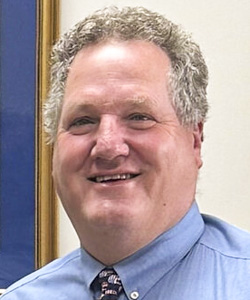
Stuart Schmidt
91% support rate
Top opponent
Jim Hinebaugh
41% support rate
Ranked legislators
10
5 support · 5 oppose
Key legislators

Who's moving criminal justice in Maryland

Legislators moving criminal justice in Maryland
Legislator Party Stance Support rate Votes
Stuart Schmidt
Stuart Schmidt House · District 33B
R
Strong +
91% 182
Katie Hester
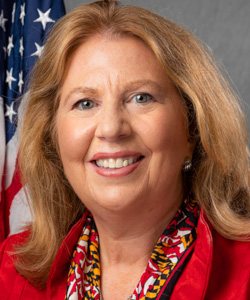
Katie Hester Senate · District 9
D
Strong +
80% 86
Brian Crosby
Brian Crosby House · District 29B
D
Support
72% 101
Mary-Dulany James
Mary-Dulany James Senate · District 34
D
Support
71% 88
Matthew Schindler
Matthew Schindler House · District 2B
D
Support
67% 191
Jim Hinebaugh
Jim Hinebaugh House · District 1A
R
Mixed −
41% 162
Dalya Attar
Dalya Attar Senate · District 41
D
Mixed −
42% 77
Kevin Anderson
Kevin Anderson House · District 38A
R
Mixed −
42% 119
Steve Hershey
Steve Hershey Senate · District 36
R
Mixed −
43% 108
Mary Beth Carozza
Mary Beth Carozza Senate · District 38
R
Mixed −
43% 110
Showing 201–210 of 229 bills

All criminal justice bills

signed · Maryland · Senate May 12, 2026

SB 360: Criminal Law - Emergency Response Animal - Prohibited Actions Against

SB 360 modifies Maryland's criminal law to specifically protect emergency response animals used by law enforcement. It prohibits intentionally harassing, interfering with, injuring, or killing these animals - such as police dogs, law enforcement horses, or search/rescue dogs - while they are performing official duties. Violations are classified as misdemeanors with penalties including fines up to $15,000 or imprisonment for up to 5 years, depending on the severity. The law directly affects individuals who target these animals during operations and law enforcement agencies that rely on them. It does not change general animal cruelty laws but adds targeted protections for animals serving in emergency response roles.
signed · Maryland · Senate May 12, 2026

SB 81: Criminal Law - School Resource Officers - Prohibition on Sexual Activity with Students

SB 81 prohibits law enforcement officers assigned as school resource officers (SROs) from engaging in sexual contact, vaginal intercourse, or sexual acts with students enrolled at their assigned school. It amends Maryland's criminal law (Section 3-314(e)(iv)) to explicitly include SROs in the ban, defining "school resource officer" under the Education Article (Section 7-1501(j)). Violations are misdemeanors punishable by up to 3 years in jail or a $3,000 fine. The law directly affects SROs in Maryland public schools, targeting conduct specific to their role as law enforcement officers within educational settings. It takes effect July 1, 2026.
in committee · Maryland · House of Delegates Jan 29, 2026

HB 169: Criminal Procedure - Expungement of Records - Good Cause

HB 169 allows individuals with past misdemeanor or felony convictions to petition courts for expungement (removal of court records) after specific waiting periods: 5 years for misdemeanors and 7 years for felonies following completion of sentences, parole, or probation. Courts may grant expungement if a person demonstrates "good cause," considering factors like the crime's nature, rehabilitation success, public safety risk, and the impact of the conviction on employment or housing. If denied, the decision cannot be appealed, and the person must wait 3 years before reapplying for the same conviction. This bill directly affects Maryland residents seeking to clear past criminal records to improve access to jobs, housing, and other opportunities.
passed · Maryland · House of Delegates Mar 23, 2026

HB 83: Family and Law Enforcement Protection Act

HB 83, the Family and Law Enforcement Protection Act, modifies Maryland's domestic violence protective order process to strengthen firearm safety measures. The bill requires petitioners seeking protective orders to provide specific details about a respondent's firearms - including make, model, location, and whether stored in a vehicle - if the petition alleges abuse involving firearms. Judges must then order the respondent to surrender all firearms and firearm licenses in cases where abuse involved firearm use, threats with a firearm, or serious bodily harm (with or without firearm threat). This directly affects domestic violence victims and respondents in protective order cases, creating clearer mechanisms for law enforcement to enforce firearm surrender during temporary protective orders under Sections 4-504(e) and 4-505(a)(viii) of Maryland's Family Law.
in committee · Maryland · Senate Jan 23, 2026

SB 327: Criminal Law - Drug Paraphernalia and Controlled Paraphernalia Prohibitions - Repeal

SB 327 repeals specific sections of Maryland's criminal law that prohibited certain drug-related items. It removes prohibitions on "drug paraphernalia" and "controlled paraphernalia" defined in sections 5-619 and 5-620, including items like syringes, gelatin capsules, and diluents (e.g., lactose, quinine) used with controlled substances. The bill also modifies related definitions in sections 5-101(h), (p), and (i)-(q). This repeal would eliminate criminal penalties for possessing these items under the repealed sections, directly affecting individuals who might have previously faced charges for such possession. The change removes existing legal barriers but does not create new allowances for drug use.
Sub-Topics Drug Policy
in committee · Maryland · Senate Jan 28, 2026

SB 44: State Retirement and Pension System - Forfeiture of Benefits

SB 44 would require forfeiture of pension benefits for public employees convicted of specific crimes committed while performing job duties. It applies to members of systems like police, teachers, correctional officers, and judges' pensions. The bill establishes procedures for courts to review requests for partial benefit payments within one year of conviction, considering factors like crime severity and financial need. It also protects existing court orders for spousal support or child custody from being altered by the forfeiture.
Sub-Topics Pensions Courts Policing
in committee · Maryland · House of Delegates Jan 16, 2026

HB 184: Criminal Law - Identity Fraud - Artificial Intelligence and Deepfake Representations

HB 184 prohibits using personal identifying information (like Social Security numbers or bank details) or artificial intelligence/deepfake representations to cause harm, such as physical injury, emotional distress, or financial loss. It specifically bans maliciously sharing personal data online to harass someone or using AI-generated content that mimics real people to deceive others for fraud, health care access, or other benefits. Victims can file civil lawsuits against those who cause harm through these actions. The bill defines "deepfakes" as computer-generated images indistinguishable from real people (excluding cartoons or sculptures) and clarifies that harm includes emotional or economic damage. It updates Maryland’s criminal law to address identity fraud involving AI, without restricting legitimate uses of technology.
passed · Maryland · House of Delegates Apr 10, 2026

HB 577: Criminal Law - Firearm Crimes - Machine Gun Convertible Pistols

HB 577 prohibits the manufacture, sale, purchase, possession, or transfer of "machine gun convertible pistols" in Maryland after a specified date. These are defined as semiautomatic pistols with a special trigger mechanism that can be easily converted to automatic fire using common tools or a "pistol converter" device. The bill creates new criminal penalties for violating this ban, with key exceptions allowing law enforcement use, licensed dealer transactions for specific purposes, and inheritance by qualified individuals. It does not affect standard semiautomatic firearms or restrict existing lawfully owned weapons.
passed · Maryland · House of Delegates Mar 5, 2026

HB 477: Criminal Procedure - Admission of Out-of-Court Statements - Assault in the Second Degree

HB 477 modifies Maryland's evidence rules to allow certain out-of-court statements in assault in the second degree cases where the defendant caused the witness's unavailability. It permits such statements as evidence if the court finds by a preponderance of evidence that the defendant engaged in wrongdoing to make the witness unavailable. The bill requires statements to have been given under oath, written and signed, or recorded verbatim, and mandates early notice to the defense about the statement's use. This directly affects criminal trials for assault in the second degree by expanding admissible evidence while adding procedural safeguards. The law takes effect October 1, 2026.
Sub-Topics Courts Violent Crime
passed · Maryland · House of Delegates Mar 19, 2026

HB 310: Correctional Services - Restrictive Housing - Individuals With Developmental or Intellectual Disabilities

HB 310 limits the use of restrictive housing (locked cell confinement for 22+ hours daily) for incarcerated individuals in Maryland state facilities who have a developmental or intellectual disability. It requires a licensed clinical professional to assess new inmates for these disabilities during intake and to recommend against placing them in restrictive housing for more than 15 consecutive days within any 30-day period. This 15-day limit does not apply if the individual commits a "prohibited act," such as causing serious injury, making threats, or possessing weapons. The bill directly affects incarcerated people with these disabilities and mandates correctional facilities to follow this assessment and limitation process.
Sub-Topics Corrections
Showing 201 to 210 of 229 bills
Previous 1 20 21 22 23 Next