Issue · Budget & Taxes

Budget & Taxes

Every budget & taxes bill, vote, and legislator stance in Maryland, automatically classified by Maddy, our AI policy reader.

Total bills
413
2026 Regular Session
Top supporter
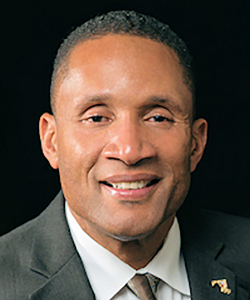
Carl Jackson
92% support rate
Top opponent
Jason Gallion
27% support rate
Ranked legislators
10
5 support · 5 oppose
Key legislators

Who's moving budget & taxes in Maryland

Legislators moving budget & taxes in Maryland
Legislator Party Stance Support rate Votes
Carl Jackson
Carl Jackson Senate · District 8
D
Strong +
92% 95
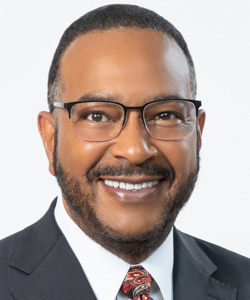
Cory McCray
Cory McCray Senate · District 45
D
Strong +
89% 97
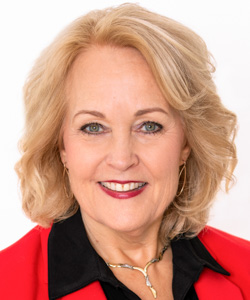
Arthur Ellis
Arthur Ellis Senate · District 28
D
Strong +
88% 60
Anthony Muse
Anthony Muse Senate · District 26
D
Strong +
88% 65
Alonzo Washington
Alonzo Washington Senate · District 22
D
Strong +
87% 90
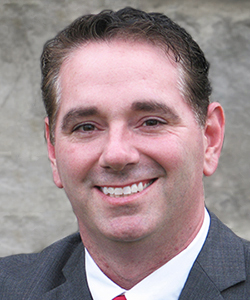
Jason Gallion
Jason Gallion Senate · District 35
R
Oppose
27% 103
Steve Hershey
Steve Hershey Senate · District 36
R
Oppose
30% 96
Kathy Szeliga
Kathy Szeliga House · District 7A
R
Oppose
30% 220
Matt Morgan
Matt Morgan House · District 29A
R
Oppose
30% 218
Lauren Arikan
Lauren Arikan House · District 7B
R
Oppose
30% 214
Showing 281–290 of 413 bills

All budget & taxes bills

in committee · Maryland · House of Delegates Feb 20, 2026

HB 705: State Government - Attorney General - Office of the Attorney General Enforcement Recovery Fund - Establishment

HB 705 establishes a special, nonlapsing fund within Maryland's Attorney General's Office to support consumer protection, antitrust, and securities enforcement activities. The fund receives up to 25% of penalties exceeding $100,000 from consumer protection cases (e.g., violations of commercial law or corporate regulations), capped at $7.5 million annually. Money in the fund can only cover direct enforcement costs like investigations, technology tools, staff training, and public education - not victim restitution or general operating expenses. The fund cannot replace regular state budget appropriations, and any balance over $7.5 million must be transferred to the state’s general fund by year-end.
Sub-Topics State Budget
in committee · Maryland · Senate Jan 16, 2026

SB 209: Department of Natural Resources - Savage Highlands State Park - Hotel Rental Surcharge

SB 209 requires the Maryland Department of Natural Resources to collect a hotel rental surcharge on units at Savage Highlands State Park. The proceeds will be split: 6% of the surcharge funds will go to Garrett County for tourism promotion, and any amount above 6% will go to the county's general fund. This bill directly affects park renters (through the surcharge) and Garrett County (through the designated funding). The law takes effect July 1, 2026.
passed · Maryland · Senate Mar 25, 2026

SB 23: Green and Renewable Energy Efficiency for Nonprofits (GREEN) Loan Program and Fund - Establishment

This bill creates Maryland's GREEN Loan Program, providing no-interest loans to 501(c)(3) nonprofits for solar panels, energy-efficient building upgrades (like new windows or HVAC systems), and related planning. Nonprofits must contribute 10% of project costs, with priority given to those with annual budgets under $1 million. The program is funded through state budget appropriations and transfers from the Strategic Energy Investment Fund, managed by the Maryland Clean Energy Center. Loans require repayment over time with deferred payment options, and must demonstrate long-term energy cost savings exceeding the loan's total cost.
died · Maryland · Senate Feb 11, 2026

SB 393: Community College Facilities Renewal Grant Program - Alterations

SB 393 removes a $1 million cost limit for community college facility projects (like repairs or upgrades) that qualify for state grants. It requires the Governor to appropriate 5% of funds allocated to the Community College Construction Grant Program annually for the Facilities Renewal Program, and to make up any shortfall if that program receives less than $80 million. The bill increases the annual grant limit from eight to sixteen and mandates equal funding distribution among eligible colleges if the total appropriation falls below $4 million. These changes directly affect Maryland community colleges seeking state funding for facility maintenance and improvements.
in committee · Maryland · House of Delegates Feb 3, 2026

HB 729: Sales and Use Tax - Precious Metal Bullion or Coins - Exemption

HB 729 removes two requirements for a sales tax exemption on precious metal bullion or coins. Currently, the exemption only applies if the sale price exceeds $1,000 and occurs at the Baltimore Convention Center. This bill repeals both conditions, making the exemption available for all qualifying sales regardless of price or location. It specifically defines "precious metal bullion or coins" to exclude jewelry and art, ensuring the exemption applies only to investment-grade metal products. The change takes effect July 1, 2026.
signed · Maryland · Senate May 26, 2026

SB 309: Sales and Use Tax - Precious Metal Bullion or Coins - Exemption

SB 309 expands Maryland's sales tax exemption for precious metal bullion or coins by removing two current requirements: a $1,000 minimum sale price and the need for sales to occur at the Baltimore Convention Center. The bill clarifies that the exemption applies to refined precious metal products (like gold or silver bars) and coins used as currency, excluding jewelry or art made from precious metals. This change directly affects buyers purchasing investment-grade bullion or coins, making the exemption available for more transactions regardless of price or location. The policy update takes effect July 1, 2026, broadening access to the tax break for eligible purchases.
in committee · Maryland · House of Delegates Jan 29, 2026

HB 585: Transportation - Rental Cars - Excise Tax Exemption

HB 585 exempts rental cars from Maryland's vehicle excise tax, directly affecting rental car companies operating in the state. The bill adds "RENTAL VEHICLE" to the list of vehicles already exempt from this tax under Maryland law. This change takes effect July 1, 2026, removing a tax burden specifically on vehicles used for short-term rentals.
in committee · Maryland · House of Delegates Feb 17, 2026

HB 715: Algorithmic Addiction Fund – Establishment

HB 715 establishes the Algorithmic Addiction Fund as a special, nonlapsing state fund to address harms linked to social media algorithms affecting children. The fund is financed by civil penalties from settlements/judgments about social media-related harm to youth, state budget appropriations, and interest earnings. It mandates the Maryland Department of Health to use these resources exclusively for evidence-based prevention, intervention, and treatment services - including school education programs on digital literacy, mental health support for issues like depression and anxiety, and research - prioritizing youth mental health outcomes. The fund cannot replace existing state funding for these services.
in committee · Maryland · House of Delegates Jan 16, 2026

HB 33: Income Tax - Itemized Deductions - Charitable Donations

HB 33 would exempt charitable donations from a 7.5% reduction applied to itemized deductions for high-income Maryland taxpayers. Specifically, it removes the requirement to reduce itemized deductions by 7.5% of income exceeding $200,000 (or $100,000 for married filing separately) for charitable contributions claimed under federal law. This change directly affects Maryland residents who itemize deductions on their state tax returns and earn above these thresholds. The bill modifies Maryland’s tax code to align charitable giving with federal deduction rules, effective for 2026 tax years. It does not alter the deduction limits themselves but prevents charitable donations from being subject to the income-based reduction.
Sub-Topics Income Tax
signed · Maryland · House of Delegates Apr 28, 2026

HB 363: Local Government - Grant for Recipients of State Child Tax Credit - Authorization

HB 363 authorizes Maryland counties to create a local child tax credit against county income tax for low-income families with children. It allows counties to provide a $500 credit per qualified child for taxpayers with federal adjusted gross income below $15,000, reduced by $50 for every $1,000 over that threshold. To qualify, both the taxpayer and child must be residents of the county (either domiciled there or maintaining a principal residence). Counties must formally adopt the credit by July 1 prior to implementation and notify the Comptroller, but the credit is optional for counties to implement.
Showing 281 to 290 of 413 bills
Previous 1 28 29 30 42 Next