Issue · Budget & Taxes

Budget & Taxes

Every budget & taxes bill, vote, and legislator stance in Maryland, automatically classified by Maddy, our AI policy reader.

Total bills
413
2026 Regular Session
Top supporter
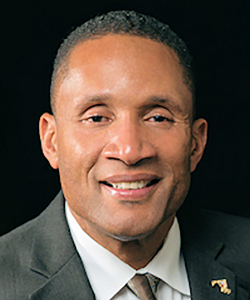
Carl Jackson
92% support rate
Top opponent
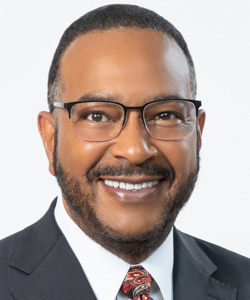
Jason Gallion
27% support rate
Ranked legislators
10
5 support · 5 oppose
Key legislators

Who's moving budget & taxes in Maryland

Legislators moving budget & taxes in Maryland
Legislator Party Stance Support rate Votes
Carl Jackson
Carl Jackson Senate · District 8
D
Strong +
92% 95
Cory McCray
Cory McCray Senate · District 45
D
Strong +
89% 97
Arthur Ellis
Arthur Ellis Senate · District 28
D
Strong +
88% 60
Anthony Muse
Anthony Muse Senate · District 26
D
Strong +
88% 65
Alonzo Washington
Alonzo Washington Senate · District 22
D
Strong +
87% 90
Jason Gallion
Jason Gallion Senate · District 35
R
Oppose
27% 103
Steve Hershey
Steve Hershey Senate · District 36
R
Oppose
30% 96
Kathy Szeliga
Kathy Szeliga House · District 7A
R
Oppose
30% 220
Matt Morgan
Matt Morgan House · District 29A
R
Oppose
30% 218
Lauren Arikan
Lauren Arikan House · District 7B
R
Oppose
30% 214
Showing 271–280 of 413 bills

All budget & taxes bills

in committee · Maryland · House of Delegates Jan 21, 2026

HB 122: State Aid - Nonprofits - Status

HB 122 requires Maryland state agencies providing grants or subsidies to nonprofits to verify that recipients meet four specific criteria: maintaining good standing with the IRS, being current on all federal/state/local taxes, having a valid state charter on file, and submitting required annual tax forms (Form 990 or personal property tax return). This bill directly affects nonprofits seeking state aid, including community organizations, social services groups, and cultural institutions that rely on state funding. The law, effective July 1, 2026, aims to ensure nonprofits are financially compliant before receiving state funds. It does not change the amount of aid provided but establishes standardized verification steps for all state aid recipients.
Sub-Topics Property Tax
in committee · Maryland · House of Delegates Jan 15, 2026

HB 124: Income Tax - Subtraction Modification - Losses From Theft or Fraud

HB 124 allows Maryland taxpayers to subtract certain personal casualty losses from their state income tax if those losses involve theft or fraud targeting retirement plan assets. It specifically applies to losses that were deductible under federal tax law before 2018, requiring taxpayers to attach documentation proving the theft/fraud occurred and that the assets were retirement plan property. The bill prevents double-deduction by reducing the state subtraction if the taxpayer already claimed a federal deduction for the same loss. This change affects Maryland residents who lost retirement savings due to theft or fraud schemes, effective for tax years beginning after December 31, 2025.
Sub-Topics Income Tax
passed both · Maryland · Senate Apr 13, 2026

SB 328: Property Tax Credit - Disabled or Fallen Public Safety Officer or Judicial Officer - Alterations

SB 328 amends Maryland’s property tax credit for disabled or fallen public safety officers by expanding eligibility. It adds disabled officers who die regardless of cause (not just duty-related deaths) to the definition of "fallen public safety officer," and removes the requirement that a dwelling must have been acquired within 10 years of the disability or death. The bill also allows the tax credit amount for new dwellings to match the original credit for a previous dwelling, and authorizes local governments to set their own acquisition timelines or eligibility limits. This directly affects disabled officers, their surviving spouses, and cohabitants who own qualifying homes, as well as county/municipal tax administrators.
signed · Maryland · Senate May 26, 2026

SB 109: Anne Arundel County - Residential Property Tax Payment Deferrals - Eligibility

SB 109 would expand eligibility for property tax payment deferrals in Anne Arundel County to include members of certain military reserve components (like National Guard reservists) and members of the National Oceanic and Atmospheric Administration (NOAA) and the Public Health Service. Currently, deferrals are available to seniors (62+), permanently disabled residents with specific federal benefits, or those meeting income requirements; this bill adds these two new federal service groups to the eligible categories. The change would allow qualifying members to delay paying county property taxes on their primary residence without needing to prove additional disability or age. The bill requires the county governing body to adopt a deferral program following specific rules and would take effect for tax years beginning after June 30, 2026.
signed · Maryland · Senate May 26, 2026

SB 340: Office of the Long-Term Care Ombudsman - Mandatory Appropriation

SB 340 requires the Governor to allocate at least 3% of funds collected from nursing facilities' Medicaid quality assessments toward the Office of the Long-Term Care Ombudsman's operations in the state budget. It directly affects nursing facilities with 45 or more beds operating in Maryland, which must pay the quality assessment. The bill mandates that these funds - collected quarterly based on non-Medicare patient days - must be used solely for the Ombudsman office, with no reduction to existing funding for this purpose. This creates a dedicated, ongoing funding source to support the Ombudsman's role in investigating resident complaints and advocating for long-term care rights.
signed · Maryland · Senate May 26, 2026

SB 193: Washington County - Sales and Use Tax Exemption - Target Redevelopment Area

SB 193 creates a sales and use tax exemption for construction materials and warehousing equipment purchased specifically for use in Washington County's designated Target Redevelopment Area (bounded by Robinwood Drive, Mount Aetna Road, and Yale Drive within an Office/Research/Industry zoning district). Businesses buying these items for that area can avoid the tax if they provide the vendor with Comptroller-issued eligibility proof. The exemption is valid from July 1, 2026, through June 30, 2036, after which it automatically expires without further legislative action. This directly affects developers and businesses operating within the defined redevelopment zone.
died · Maryland · House of Delegates Mar 4, 2026

HB 368: Prince George's County - Supplemental Homeowners' Property Tax Credit - Required PG 412-26

HB 368 requires Prince George's County to provide an additional property tax credit for homeowners, supplementing Maryland's existing state credit. The credit reduces taxes based on income: 0% on the first $8,000, 4% on the next $4,000, 6.5% on the following $4,000, and 9% on income above $16,000. Homeowners must have combined income under $75,000 and net worth under $200,000 to qualify. The State Department of Assessments and Taxation administers the credit, and Prince George's County must reimburse the state for administrative costs. The law takes effect for tax years beginning after June 30, 2026.
signed · Maryland · House of Delegates May 26, 2026

HB 671: Office of the Long-Term Care Ombudsman - Mandatory Appropriation

HB 671 requires Maryland's Governor to allocate at least 3% of funds collected from a Medicaid quality assessment on qualifying nursing facilities (45+ beds operating in the state) to fund the Office of the Long-Term Care Ombudsman starting in fiscal year 2027. This directly affects nursing facilities that pay the assessment and ensures dedicated, supplemental funding for the Ombudsman office, which advocates for residents' rights in long-term care settings. The bill updates existing law to mandate this specific allocation from the assessment pool, specifying that these funds must be "in addition to" and not replace existing Ombudsman funding. It does not change the assessment rate (capped at 6% of facility revenue) or the reporting requirements for the Department.
signed · Maryland · House of Delegates May 12, 2026

HB 135: Economic Development - Tax Increment Financing - Noncontiguous Areas

HB 135 allows local governments in Maryland to designate *noncontiguous* areas as development districts for tax increment financing (TIF). This means political subdivisions (like counties or cities) can now create TIF zones that include separate, disconnected parcels of land - not just connected areas - under new provisions in Section 12-201(i)(1). The bill modifies existing law to explicitly permit this by redefining "development district" to include noncontiguous areas and updating related sections (e.g., 12-203). It directly affects local governments seeking to use TIF for economic development projects across multiple, non-adjacent sites. The law takes effect October 1, 2026.
Sub-Topics Tax Incentives Tags Economic Development
in committee · Maryland · House of Delegates Feb 3, 2026

HB 559: Transportation - Highway User Revenues Capital Grants - Calculation

HB 559 revises how Maryland distributes highway user revenue funds for capital grants to Baltimore City, counties, and municipalities. It changes the percentage allocations from the Gasoline and Motor Vehicle Revenue Account across specific fiscal years: Baltimore City’s share increases to 12.2% for 2026-2027 (down to 9.5% after 2028), counties’ share rises to 4.8% for 2026-2027 (then 3.7%), and municipalities’ share grows to 3.0% for 2026-2027 (then 2.4%). These adjustments apply to funds calculated annually based on highway user revenues like fuel taxes and vehicle registration fees. The bill directly affects local governments receiving these state-funded transportation grants.
Showing 271 to 280 of 413 bills
Previous 1 27 28 29 42 Next