Issue · Budget & Taxes

Budget & Taxes

Every budget & taxes bill, vote, and legislator stance in Maryland, automatically classified by Maddy, our AI policy reader.

Total bills
413
2026 Regular Session
Top supporter
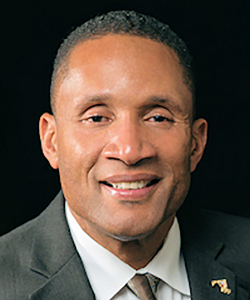
Carl Jackson
92% support rate
Top opponent
Jason Gallion
27% support rate
Ranked legislators
10
5 support · 5 oppose
Key legislators

Who's moving budget & taxes in Maryland

Legislators moving budget & taxes in Maryland
Legislator Party Stance Support rate Votes
Carl Jackson
Carl Jackson Senate · District 8
D
Strong +
92% 95
Cory McCray
Cory McCray Senate · District 45
D
Strong +
89% 97
Arthur Ellis
Arthur Ellis Senate · District 28
D
Strong +
88% 60
Anthony Muse
Anthony Muse Senate · District 26
D
Strong +
88% 65
Alonzo Washington
Alonzo Washington Senate · District 22
D
Strong +
87% 90
Jason Gallion
Jason Gallion Senate · District 35
R
Oppose
27% 103
Steve Hershey
Steve Hershey Senate · District 36
R
Oppose
30% 96
Kathy Szeliga
Kathy Szeliga House · District 7A
R
Oppose
30% 220
Matt Morgan
Matt Morgan House · District 29A
R
Oppose
30% 218
Lauren Arikan
Lauren Arikan House · District 7B
R
Oppose
30% 214
Showing 291–300 of 413 bills

All budget & taxes bills

passed · Maryland · House of Delegates Apr 13, 2026

HB 653: Income Tax - Subtraction Modification for Public Safety Retirement Income - Amount

HB 653 increases Maryland's tax deduction for retirement income earned by retired public safety employees, including correctional officers, law enforcement officers, firefighters, and emergency medical personnel. It phases in a gradual increase in the deductible amount from $15,000 to $20,000 over five years, starting with $15,000 for 2025-2026 tax years and rising by $1,000 annually until reaching $20,000 by 2029-2030. This deduction reduces taxable income for eligible retirees aged 55+ who receive retirement income tied to their public safety service. The changes take effect July 1, 2026, as part of Maryland's income tax code.
Sub-Topics Income Tax
in committee · Maryland · House of Delegates Jan 21, 2026

HB 391: Creation of a State Debt – Maryland Consolidated Capital Bond Loan of 2026, and the Maryland Consolidated Capital Bond Loans of 2015, 2016, 2017, 2018, 2019, 2020, 2021, 2022, 2023, 2024, and 2025

HB 391 authorizes Maryland to issue $1.824 billion in state debt through a "Consolidated Capital Bond Loan of 2026" to fund state capital projects. The bill directs proceeds toward building, renovating, and equipping state facilities, acquiring real estate, and providing grants to local governments and organizations for development projects. It requires matching funds from grantees, sets deadlines for project spending, and amends prior bond loan laws (2015-2025) to clarify funding rules and project requirements. The bill does not create new policies but establishes the financial mechanism for state capital investment.
in committee · Maryland · Senate Jan 28, 2026

SB 377: Earned Income Tax Credit - Individuals Without Qualifying Children - Eligibility

SB 377 expands Maryland's Earned Income Tax Credit (EITC) for low-income residents without qualifying children by raising the income level at which the credit begins to phase out. It directly affects eligible Maryland workers earning below the new, higher income thresholds who previously lost credit benefits too quickly. The bill establishes annual inflation adjustments starting in 2026 to keep the credit's value current, calculated using the federal cost-of-living adjustment formula. This change ensures the credit remains accessible for more low-income workers without children as living costs rise.
Sub-Topics Income Tax Tax Credits
in committee · Maryland · House of Delegates Feb 3, 2026

HB 707: Income Tax - Subtraction Modification - Retirement Income

HB 707 modifies Maryland's income tax rules to allow residents aged 65+ or disabled individuals (or their spouses) to subtract a larger portion of retirement income from taxable income. Starting in 2026, it increases the subtraction from 30% to 60% and eventually to 100% of retirement income from qualified plans (like 401(k)s or IRAs) for tax years beginning after 2025. It also clarifies that military or public safety retirement income already used for other tax subtractions cannot be double-counted. Special rules apply to retired forest/park/rangers, limiting the subtraction to $15,000 of their specific retirement income unless they or their spouse are disabled or over 65. The changes take effect July 1, 2026, for all applicable tax years.
Sub-Topics Income Tax
signed · Maryland · Senate May 26, 2026

SB 30: Baltimore County - Property Tax Credit - Fraternal Order of Police Lodge 34

SB 30 would authorize Baltimore County's governing body to grant a 100% property tax credit against county taxes for real property owned by the Fraternal Order of Police Lodge 34 at 730 Wampler Road, Middle River. This credit would eliminate the full county property tax liability for that specific property. The bill applies only to taxable years beginning after June 30, 2026, and takes effect June 1, 2026. It directly affects Baltimore County (through its tax policy) and the Fraternal Order of Police Lodge 34 (as the beneficiary of the credit).
in committee · Maryland · House of Delegates Feb 17, 2026

HB 609: State Transfer Tax - Land Preservation Special Fund - Revenue Allocation

HB 609 repeals a requirement that $25 million of State Transfer Tax revenue be allocated to the General Fund for fiscal years 2026 through 2029. Instead, the bill redirects this funding to remain in the Land Preservation Special Fund, increasing resources for conservation programs. The fund's revenue is allocated as follows: 75.15% for Program Open Space land acquisition, 17.05% for Agricultural Land Preservation, 5% for Rural Legacy, and 1.8% for Heritage Conservation. This change directly affects state land conservation efforts by ensuring more funds stay dedicated to these programs during the specified years.
passed · Maryland · Senate Mar 16, 2026

SB 25: Income Tax - Cybersecurity Technology and Service Tax Credit - Alterations

SB 25 creates the "Buy Maryland Cybersecurity Tax Credit," allowing Maryland businesses to claim a 50% tax credit (up to $50,000 annually) for purchasing cybersecurity technology or services from Maryland-based cybersecurity companies meeting specific criteria. The credit is refundable (businesses can get cash if the credit exceeds taxes owed) and requires sellers to be Maryland-headquartered, small businesses (under $10 million revenue), and/or owned by minorities, women, veterans, or located in designated business zones. It limits total credits per seller to $1 million annually and ends all new credits after 2030. This directly affects Maryland businesses buying cybersecurity and qualifying Maryland cybersecurity firms.
signed · Maryland · Senate May 26, 2026

SB 378: Public Libraries - Young Readers Matching Grant Program, Funding, and Services

SB 378 updates Maryland's funding formula for regional library resource centers and county public libraries, increasing per-resident funding from $8.75 (2022) to $11.58 (2032 and beyond) for regional centers, and from $17.10 (2022) to $22.37 (2032 and beyond) for county libraries. It requires each public library to offer at least one new service, such as early childhood literacy programs, digital equity initiatives, or mental health support, by partnering with community organizations. The bill also mandates that libraries adopt written policies meeting state standards to receive state funding, with the Comptroller withholding funds for non-compliance. These changes affect all 23 Maryland county library systems and their regional resource centers, directly impacting how they allocate state funds and deliver services. The bill takes effect July 1, 2026.
in committee · Maryland · Senate Jan 29, 2026

SB 343: County Boards of Education - Post College and Career Readiness Pathways - Payment of Costs

SB 343 modifies Maryland law to clarify how county school boards fund post-college and career readiness (post-CCR) pathways for students meeting college and career readiness (CCR) standards. It requires counties to provide free access to specific pathways (like International Baccalaureate, dual enrollment, or career-technical programs) for all eligible students, but allows boards to establish income-based eligibility for the college-preparatory pathway (Section 7-205.1(g)(2)). Crucially, students from families earning below 400% of the federal poverty level must receive these pathways at no cost, regardless of income guidelines. The bill directly affects public high school students meeting CCR standards and ensures equitable access to pathways without cost barriers for low-income families.
signed · Maryland · Senate Apr 28, 2026

SB 257: Mel Noland Woodland Incentives and Fellowship Fund - Reporting

SB 257 requires the Maryland Department of Natural Resources to include specific details in its annual report to the Senate Committee on Education, Energy, and the Environment and the House Environment and Transportation Committee. The report must state how much money from a tax on transfers of woodland property was distributed to the Mel Noland Woodland Incentives and Fellowship Fund in the previous fiscal year, plus any uncertainties about that amount. This bill does not change the Fund’s purpose or funding sources but mandates clearer annual reporting for transparency. The reporting requirement applies to annual reports due September 30 each year, effective July 1, 2026.
Showing 291 to 300 of 413 bills
Previous 1 29 30 31 42 Next