

Issue · Budget & Taxes
Budget & Taxes
Every budget & taxes bill, vote, and legislator stance in Maryland, automatically classified by Maddy, our AI policy reader.
Total bills
413
2026 Regular Session
Top supporter
Carl Jackson
92% support rate
Top opponent
Jason Gallion
27% support rate
Ranked legislators
10
5 support · 5 oppose
Key legislators
Who's moving budget & taxes in Maryland
| Legislator | Party | Stance | Support rate | Votes |
|---|---|---|---|---|

Carl Jackson
Senate · District 8
|
D |
Strong +
|
92% | 95 |
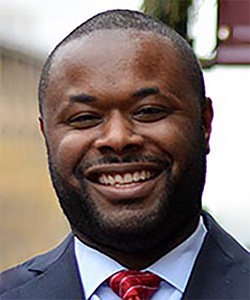
Cory McCray
Senate · District 45
|
D |
Strong +
|
89% | 97 |
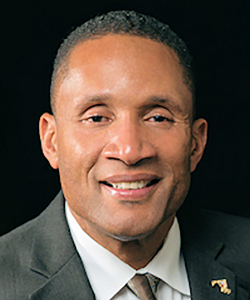
Arthur Ellis
Senate · District 28
|
D |
Strong +
|
88% | 60 |
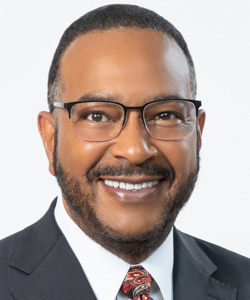
Anthony Muse
Senate · District 26
|
D |
Strong +
|
88% | 65 |

Alonzo Washington
Senate · District 22
|
D |
Strong +
|
87% | 90 |

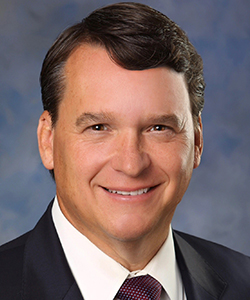
Jason Gallion
Senate · District 35
|
R |
Oppose
|
27% | 103 |
Steve Hershey
Senate · District 36
|
R |
Oppose
|
30% | 96 |

Kathy Szeliga
House · District 7A
|
R |
Oppose
|
30% | 220 |
Matt Morgan
House · District 29A
|
R |
Oppose
|
30% | 218 |

Lauren Arikan
House · District 7B
|
R |
Oppose
|
30% | 214 |
Showing 111–120 of 413
bills
All budget & taxes bills
HB 987: Public Safety - Maryland Violence Intervention and Prevention Program Fund - Alterations (Community Safety and Intervention Funding Act)
SB 925: Sales and Use Tax – Distribution of Cannabis Sales Tax Revenue – Maryland Veterans Trust Fund
Topics
✓ Budget & TaxesSupports Budget & TaxesDirects 3% cannabis tax revenue to veterans fund, increasing dedicated funding for essential veteran assistance programs.
✓ VeteransSupports VeteransDirects 3% cannabis tax revenue to Maryland Veterans Trust Fund, providing monetary/non-monetary assistance to veterans per bill summary
HB 1430: Maryland Public Charter School Program - School Facilities - Funding
Topics
✓ Budget & TaxesSupports Budget & TaxesBill mandates $1,600/student state funding for charter school facilities, directly increasing public school infrastructure spending through state appropriations.
✓ EducationSupports EducationMandates direct state funding for charter school facilities at $1,600/student annually starting 2028, directly increasing infrastructure support for K-12 public charter schools.
SB 934: Education - Public School Construction - Funding
Topics
✓ Budget & TaxesSupports Budget & TaxesIncreases annual state funding for public school construction from $450M to $550M, directly advancing public service funding within budget allocation.
✓ EducationSupports EducationIncreases public school construction funding from $450M to $550M annually, directly advancing school infrastructure investment per bill summary.
SB 587: Maryland Patient Safety Center Fund - Funding
Topics
✓ Budget & TaxesSupports Budget & TaxesMandates $1M annual appropriation for patient safety center, increasing state budget funding for public health initiatives.
✓ HealthcareSupports HealthcareMandates $1M annual funding for patient safety initiatives to reduce harm and improve equitable healthcare access.
HB 1510: Unemployment Insurance - Fraud Prevention, Detection, and Enforcement
Topics
✓ Budget & TaxesSupports Budget & TaxesPrevents fraud in unemployment benefits by recovering overpayments via tax refund withholdings, strengthening fiscal management and protecting state budget resources.
✓ Labor & EmploymentSupports Labor & EmploymentPrevents fraud in unemployment claims, ensuring legitimate beneficiaries receive benefits and protecting the integrity of the unemployment insurance system.
✓ TechnologySupports TechnologyMandates two-step verification and fraud pattern analysis for cybersecurity, directly enhancing digital security in unemployment systems per bill text.
SB 467: Maryland Child Care Credential Program - Extension of Funding
Topics
✓ Budget & TaxesSupports Budget & TaxesMandates $4M FY2021 funding with 10% annual increases through 2024, creating a fixed funding floor from 2028 for child care credential program, directly increasing state budget allocation.
✓ Labor & EmploymentSupports Labor & EmploymentFunds credential program for child care workers, enhancing career development and employment standards through guaranteed annual funding increases.
HB 1148: Property Taxes - Tax Sales, Legacy Protection Program, and Tax Credits
Topics
✓ Budget & TaxesSupports Budget & TaxesProvides property tax relief for heirs through state/county-funded program, aligning with tax relief and program funding indicators per bill summary.
✓ HousingSupports HousingPrevents tax sales of inherited homes, provides property tax relief, and funds Heirs Protection Program to protect homeowners from displacement
HB 753: Tax Sales - Homeowner Protections - Revisions
Topics
✓ Budget & TaxesSupports Budget & TaxesBill provides tax relief by preventing forced home sales for vulnerable homeowners with terminal illness, aligning with support indicators for fiscal protection.
✓ HousingSupports HousingPrevents forced tax sales for homeowners with terminal illness/medical hardship, expands Homeowner Protection Program eligibility, and prioritizes vulnerable homeowners - directly strengthening housing stability protections.