Issue · Technology

Technology

Every technology bill, vote, and legislator stance in Louisiana, automatically classified by Maddy, our AI policy reader.

Total bills
9
2026 Regular Session
Top supporter
Chuck Owen
86% support rate
Top opponent
Doyle Boudreaux
43% support rate
Ranked legislators
6
4 support · 2 oppose
Key legislators

Who's moving technology in Louisiana

Legislators moving technology in Louisiana
Legislator Party Stance Support rate Votes
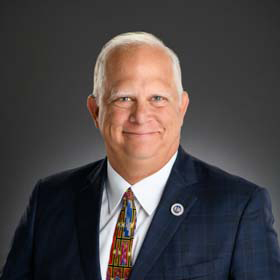
Chuck Owen
Chuck Owen House · District 30
R
Strong +
86% 97
Bob Owen
Bob Owen Senate · District 1
R
Strong +
86% 97
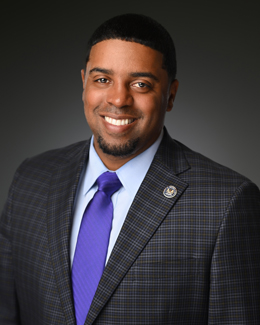
Dustin Miller
Dustin Miller House · District 40
D
Support
71% 90
Greg Miller
Greg Miller Senate · District 19
R
Support
71% 90
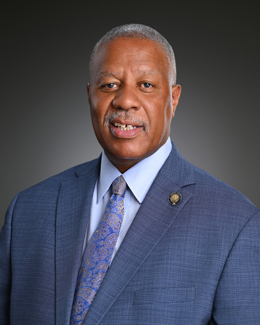
Doyle Boudreaux
Doyle Boudreaux House · District 39
R
Mixed −
43% 93
Gerald Boudreaux
Gerald Boudreaux Senate · District 24
D
Mixed −
43% 93
Showing 9 of 9 bills

All technology bills

in committee · Louisiana · House Apr 1, 2026

HB 1229: COMMERCIAL REGULATIONS: Provides relative to social media use for minors

This bill establishes new rules for how social media platforms must operate when users are minors. It requires platforms to implement specific restrictions on accounts held by young people and mandates that these companies follow certain safety requirements. Additionally, the legislation outlines a process where the state attorney general can take legal action against platforms that fail to comply with these rules or engage in unfair business practices. The text also includes minor administrative changes to the bill's structure, such as renumbering sections and adjusting punctuation.
in committee · Louisiana · House Apr 1, 2026

HB 1188: CONSUMERS/PROTECTION: Provides relative to protections for minors regarding use of chatbots

This bill establishes new rules in Louisiana to protect minors from potential harm while using companion chatbots, which are AI systems designed to simulate human conversation and relationships. It requires these platforms to obtain explicit consent from a parent or guardian before a minor can create an account and grants parents specific controls, such as monitoring chat history, limiting daily usage, and receiving alerts if the child expresses intent to self-harm. Additionally, the law mandates that platforms clearly inform users they are interacting with artificial intelligence, automatically terminate accounts for minors without parental consent, and permanently delete personal data upon account closure. Companies that knowingly or recklessly violate these provisions could face civil penalties, legal action by the state attorney general, and lawsuits from affected minors.
signed · Louisiana · House May 29, 2026

HB 1104: CRIME: Prohibits relative to the manufacturing and sale of motor vehicle key programming or emulation devices (EN SEE FISC NOTE LF EX)

This bill prohibits the manufacture, sale, transfer, and possession of devices used to program or emulate motor vehicle keys and relay attack devices, which intercept key fob signals to unlock or start cars. The law applies to individuals and businesses but includes exceptions for law enforcement, insurance investigators, licensed automotive professionals, locksmiths, and repossession agencies. Authorized users must report lost or stolen devices to law enforcement within 48 hours, with violations punishable by fines up to $1,000 or up to six months in prison. The legislation aims to prevent unauthorized access to vehicles while allowing legitimate professionals to continue their work.
signed · Louisiana · House May 11, 2026

HB 1071: PUBLIC RECORDS: Provides for an exception to the Public Records Law for records of aerospace facilities or activities

This bill creates a new exception to Louisiana's Public Records Law, allowing certain aerospace-related records to be kept confidential. It directly affects entities that maintain records for aerospace facilities or activities, such as companies or organizations involved in space or aviation operations. The law specifies that records like blueprints, technical data, and security information must be confidential if the entity handling them either follows federal arms export regulations or holds a contract with the U.S. Department of Defense or intelligence agencies. Additionally, the bill prohibits government officials from inspecting, copying, or reproducing these confidential records. The changes take effect once the governor signs the bill or if it becomes law without a signature.
signed · Louisiana · House Jun 2, 2026

HB 134: CONTRACTS: Provides relative to material harmful to minors (EN SEE FISC NOTE SG EX)

HB 134 requires interactive computer services (like social media platforms) that create accounts for minors to stop delivering or displaying material defined as harmful to minors (per existing law) and to avoid using algorithms to promote such content to minors. It prohibits platforms from creating or developing harmful material for minors' accounts and bans algorithmic amplification of such content. Violations can result in civil fines up to $10,000 per incident, but platforms get 45 days to fix issues before enforcement begins. Fines collected fund consumer protection efforts, and the law takes effect January 1, 2027.
in committee · Louisiana · House Mar 9, 2026

HB 197: HEALTH CARE/PROVIDERS: Provides for the use of artificial intelligence by healthcare providers

HB 197 establishes rules for Louisiana healthcare providers using artificial intelligence (AI). It allows AI for administrative tasks like scheduling, billing, and analyzing de-identified patient data, but prohibits AI from making treatment decisions, interacting directly with patients, or creating therapy plans without review by a licensed healthcare professional. Violations can result in civil penalties up to $10,000 per incident, with the Louisiana Department of Health empowered to investigate complaints and enforce rules. The bill directly affects all healthcare providers licensed in Louisiana who use AI tools in their practice.
signed · Louisiana · House May 15, 2026

HB 883: GAMBLING: Provides relative to enforcement of illegal online gambling (EN SEE FISC NOTE GF EX See Note)

HB 883 defines illegal online gambling as any internet-based game where players risk money for potential winnings, including sites using dual-currency systems. It targets operators, payment processors, and platform providers (like websites hosting gambling content), requiring them to block transactions with sites listed by the attorney general. Violations can result in fines up to $210,000 for operators or $20,000 for facilitators, plus up to five years in prison, with doubled penalties if minors are involved. The bill also mandates forfeiture of profits from illegal gambling activities.
Sub-Topics Corrections
in committee · Louisiana · House Mar 9, 2026

HB 787: CURRICULA: Removes successful completion of a computer science course as a requirement for TOPS qualification (OR NO IMPACT See Note)

HB 787 removes computer science as a mandatory course requirement for Louisiana students seeking TOPS-Tech scholarships. The bill amends the state's education code to change the "nine credits in Jump Start course sequences" requirement so that computer science is no longer a fixed credit; students may now fulfill this credit with other approved career-focused courses instead. This directly affects high school students in Louisiana who qualify for TOPS-Tech awards by altering the specific course requirements they must complete. The change simplifies the path to TOPS eligibility by offering flexibility in course selection within career pathways.
signed · Louisiana · Senate May 14, 2026

SB 110: CRIME/PUNISHMENT: Prohibits using a child's image to train artificial intelligence to produce child sexual abuse materials. (8/1/26)

SB 110 makes it illegal to use an image of a child under 17 to train artificial intelligence models with the intent of generating child sexual abuse materials (CSAM). The bill directly affects AI developers and companies working with training data involving children's images. Key provisions add new language to Louisiana law defining the offense (Section A(3)) and expanding the definition of "child sexual abuse materials" to include AI-generated images of children (Section B(3)). This law specifically prohibits using real or AI-created child images for AI training that could produce CSAM, without requiring the depicted child to be a real person.