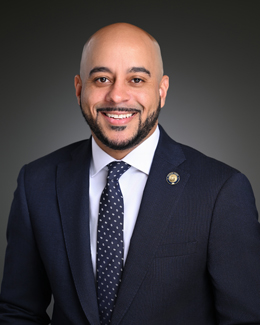
HB 271 creates the Louisiana Commission on Foundational Education to evaluate and recommend improvements for K-8 foundational literacy and numeracy programs, replacing the dissolved Louisiana Literacy Advisory Commission. The new commission, composed of diverse stakeholders including educators, parents, state officials, and experts, will research education policies, analyze data, and develop evidence-based recommendations for early education practices. It must submit annual reports to the governor, legislature, and education boards, with the state Department of Education providing staff support and transferring the old commission's records. The bill directly affects Louisiana's K-8 education system by establishing a permanent advisory body focused on early skill development.
This concurrent resolution asks the Louisiana Department of Transportation and Development to review safety conditions in school zones located on state highways. The bill specifically requests an evaluation of barriers that prevent the implementation of improved safety measures and lower speed limits in these areas. It was introduced following a fatal accident involving a crossing guard, highlighting concerns about speeding vehicles and unsafe driving near schools. The measure does not mandate any immediate changes but serves as a formal request for the state agency to investigate and address potential hazards.
This bill establishes a task force to examine Louisiana's Minimum Foundation Program formula, which determines how state and local funds are distributed to public schools. The group will study ways to create a stable, permanent funding source for teacher and support staff pay raises, ensuring these increases are not dependent on temporary or one-time money. The bill directly affects school systems, educators, and taxpayers by aiming to replace uncertain, short-term funding with a predictable long-term solution. By analyzing the current complex funding structure, the task force will provide recommendations to improve clarity and sustainability for school budgets and employee compensation.
This bill requires Louisiana school districts to create policies for identifying and addressing overcapacity, where too many schools exist relative to student enrollment and facility needs. It mandates that superintendents annually report on overcapacity status and recommend specific actions, such as closing schools or terminating charter contracts, to reduce the number of operating schools. The law allows school boards to end charter agreements early if overcapacity exists and prohibits new schools from opening in areas already facing excess capacity. Additionally, the bill clarifies that school districts can lease or sell vacant properties to charter schools without being subject to certain state requirements when these actions are taken to resolve overcapacity.
This bill requires Louisiana's Board of Regents to create a data system for collecting consistent information on all state financial aid programs. It directly affects postsecondary institutions that accept students receiving Taylor Opportunity Program for Students awards, as they must submit the required data. The system will track financial aid trends, effectiveness, and student outcomes to help evaluate how well these programs work. Institutions must follow the specific data format determined by the administering agency to ensure uniform reporting across the state.
This bill allows charter schools in Louisiana to prioritize enrollment for kindergarten students who attended specific early learning centers. It directly affects charter schools and the families of young children by creating a formal preference system for certain preschool experiences. Under the new rule, schools can give preference to students who attended a center run by the charter school itself or a separate licensed center where the student spent at least 75 days and an enrollment agreement exists between the two organizations. The legislation adds this option to existing charter school requirements without mandating that schools use the preference, leaving the decision to individual charter schools.
HB 196 amends Louisiana law (R.S. 17:1208) to establish that public school teachers (excluding those with annual leave) may use up to eight personal leave days per school year without pay loss. Teachers must provide 24 hours' notice to their principal, and this leave is deducted from their current year's sick leave balance. The bill specifies that personal leave cannot be carried over to future years or paid out upon retirement or death. It directly affects Louisiana public school teachers by clarifying their personal leave entitlements and integration with existing sick leave policies.
SB 488 establishes a pilot program to use drones as part of school safety and crisis response plans. The bill directly affects school districts by allowing them to incorporate drone technology into their existing emergency management strategies. It requires the state to fund this pilot program to test how drones can assist during school emergencies. The legislation amends the title to refer to 'Education' instead of 'Schools' to broaden the scope of the program.
This bill requires that children enrolled in certain early childhood education programs receive unique identification numbers assigned by the state Department of Education. The key provision mandates that local public school boards link these early childhood education identification numbers to students' regular student identification numbers by December 31, 2027, specifically for research and analysis purposes. The legislation applies to prekindergarten programs at public schools and aims to improve data tracking across early childhood education systems.
SB 174 authorizes Louisiana Tech University and the state commissioner of administration to transfer a specific parcel of state-owned property (Lot 1, Shreve Park Industrial Campus) in Caddo Parish to the Caddo Parish School Board, excluding mineral rights. The bill requires the parties to agree on terms proportional to the property's appraised value and execute necessary documents for the transfer. This legislation directly affects the Caddo Parish School Board, which would gain ownership of the described parcel for potential educational or community use, while the state retains mineral rights to the land.