

Maddy summaryThe Access Technology Affordability Act of 2023 creates a new federal tax credit for individuals who purchase qualifying access technology for blind family members. It allows taxpayers to claim a credit of up to $2,000 per year (adjusted for inflation after 2024) for hardware, software, or IT that converts visual information into formats usable by blind individuals, such as screen readers or braille displays. The credit applies to the taxpayer, their spouse, or dependent blind family members, with a lifetime limit of $2,000 over any three consecutive years. The credit expires after 2028 and cannot be claimed for expenses already covered by other tax benefits.
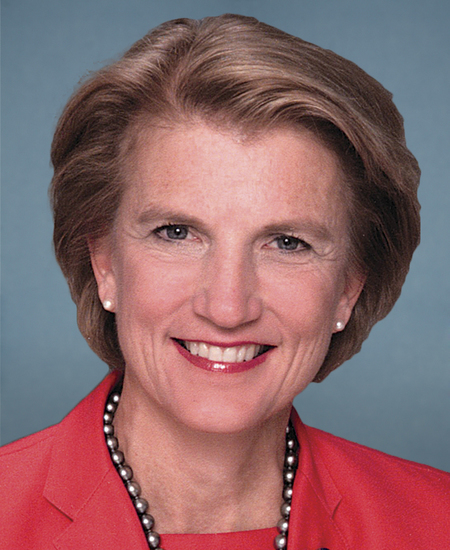
Sen. Shelley Moore Capito
Sponsored bills
Maddy summaryS 1473 would require immigration officers to immediately expel individuals entering the U.S. at the Mexico border without valid documents or by fraud, without a hearing or review, for a two-year period starting when the bill becomes law. Expulsion would typically occur to Mexico, but could be directed to the individual’s home country or another willing nation if Mexico refuses or expulsion to Mexico isn’t in U.S. national interest. The bill prohibits expulsion to countries where the individual would face persecution or torture, except for those convicted of serious crimes, involved in persecution, or posing national security threats. It also allows case-by-case exceptions for humanitarian reasons and mandates referrals to asylum officers if an individual fears harm in the destination country.
Maddy summaryThe SPUR Act (S 1456) streamlines oil, gas, and mineral development on federal lands by requiring quarterly onshore oil and gas lease sales, allowing states to assume permitting authority for these activities, and limiting environmental review delays for energy projects. The bill reduces royalty rates for oil and gas leases to a minimum of 12.5 percent during its 5-year implementation period, prohibits the President from delaying energy leasing without congressional approval, and expedites LNG export approvals with a 45-day decision deadline. It directly affects oil and gas companies seeking permits, state governments that may take over permitting authority, and federal agencies like the Bureau of Land Management. The legislation aims to increase domestic energy production by making federal leasing and permitting processes faster and more predictable.
Maddy summaryThis Senate resolution designates April 2023 as "Financial Literacy Month" to raise public awareness about the importance of personal financial education and the consequences of financial illiteracy. It cites statistics showing widespread challenges, including 4.5% of U.S. households being unbanked, high credit card debt (47% of adults), and limited school-based financial education (only 23 states require personal finance courses). The resolution calls on federal, state, local, schools, nonprofits, and businesses to observe the month with educational programs. It does not create new laws or funding but aims to highlight existing financial literacy gaps affecting all Americans.
Maddy summaryThis bill amends the tax code to allow charitable organizations to provide grants for college housing improvements without losing their tax-exempt status. Specifically, it clarifies that grants for capital improvements to dormitories or residential facilities (like building, repairing, or maintaining student housing) qualify as charitable under IRS rules, as long as the property is primarily for full-time students. It excludes grants for fitness facilities from this provision. The bill directly affects tax-exempt charities making such grants and the colleges or universities operating student housing properties.
Maddy summaryThe RISE from Trauma Act creates federal grants to establish local coordinating bodies that address community trauma and build resilience by bringing together representatives from schools, healthcare, child welfare, criminal justice, and community organizations. Each grant can provide up to $6 million for 4 years to support community-wide efforts, with priority given to communities facing high rates of drug overdoses, violence, and involvement in child welfare or juvenile justice systems. The bill also includes provisions for hospital-based trauma interventions, reauthorizes the National Child Traumatic Stress Network, and supports workforce development for trauma-informed care. These coordinated efforts aim to prevent trauma's impact and promote resilience through community-based action.
Maddy summaryThis bill (S 1424) improves access to dental and vision care by requiring health plans to allow doctors of optometry, dental surgery, or dental medicine to charge enrollees up to their standard fees for services not covered by the plan (with exceptions for dental cleanings). It prohibits plans from restricting providers' choices of laboratories or suppliers for materials used in care. The bill also mandates annual state enforcement notifications and clarifies that state laws governing dental/vision plans take precedence over federal provisions. It directly affects health insurance plans offering limited dental/vision coverage, enrollees using these services, and dental/optometry providers.
Maddy summarySRES 188 is a symbolic Senate resolution celebrating the 75th anniversary of Israel's founding on May 14, 2023. It formally recognizes Israel's establishment, reaffirms the U.S.-Israel partnership, and highlights shared democratic values, security cooperation, and diplomatic achievements like the Abraham Accords. The resolution has no policy impact or direct effect on individuals or legislation - it serves solely as a ceremonial expression of support. It was introduced by a bipartisan group of senators and passed without implementing new laws or funding.
Maddy summaryThe Federal Prison Oversight Act creates new oversight mechanisms for federal prisons operated by the Bureau of Prisons. It requires regular inspections by the Justice Department's Inspector General to assess conditions of confinement, medical care, staffing levels, and other key areas, with reports made public. The bill also establishes an Ombudsman position to receive and address complaints from incarcerated people, their families, and staff about health, safety, and rights issues. Facilities must develop and publicly share corrective action plans for identified problems, with protections against retaliation for those filing complaints. This law directly affects federal prison facilities, incarcerated individuals, staff, and their families by increasing transparency and accountability in correctional operations.
Maddy summaryThe Educational Opportunity and Success Act of 2023 amends the Higher Education Act to strengthen TRIO programs that support low-income and first-generation college students. It increases minimum grant amounts for TRIO programs ($200,000 to $220,000 and $170,000 to $190,000), changes grant award criteria to focus on "prior success" rather than "prior experience," and adds new documentation requirements for low-income status. The bill also establishes new procedures for correcting technical errors in grant applications and requires programs to track completion of financial aid applications. These changes directly affect TRIO program grantees, low-income students, and first-generation college students by making federal funding more accessible and predictable. The legislation aims to improve educational access and outcomes through concrete policy changes to TRIO program administration.