

Maddy summaryThis joint resolution proposes a constitutional amendment to permanently set the number of justices on the Supreme Court at nine. It would require the Supreme Court to always consist of exactly nine justices, directly affecting the Court's composition. The amendment would become part of the Constitution only if ratified by three-fourths of state legislatures within seven years. This is a procedural change to the Constitution's structure, not a policy affecting other areas.
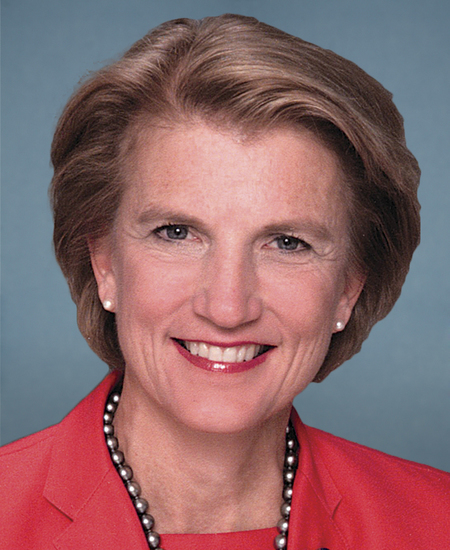
Sen. Shelley Moore Capito
Sponsored bills
This resolution supports the designation of Career and Technical Education Month to celebrate career and technical education across the United States.
Maddy summaryThis bill permanently extends the New Markets Tax Credit (NMTC) program, which incentivizes private investment in low-income communities. It modifies the tax code to keep the credit available beyond 2025 (replacing "2020 through 2025" with "2020 and each calendar year thereafter") and adds automatic annual inflation adjustments to the credit amount starting in 2026. The bill also provides tax relief by allowing NMTC credits to offset the alternative minimum tax, specifically for investments made after December 2024. This directly affects community development financial institutions (CDFIs) and investors who fund projects in designated low-income areas.
Maddy summaryS 475, the Alternatives to PAIN Act, changes Medicare Part D coverage to make non-opioid pain management drugs more accessible and affordable for beneficiaries. It requires Medicare plans to cover qualifying non-opioid pain drugs without deductibles and place them on the lowest cost-sharing tier (meaning patients pay the least out-of-pocket) starting in 2026. The bill also prohibits plans from requiring step therapy (forcing patients to try opioids first) or prior authorization for these specific drugs. Qualifying drugs must treat acute pain (like post-surgery), not work on opioid receptors, have no equivalent alternatives, and meet cost thresholds. This directly affects Medicare Part D beneficiaries needing pain management and the plans that cover them.
Maddy summarySRES 59 is a procedural resolution authorizing the Senate Committee on Environment and Public Works to spend funds from the Senate's contingent fund for its operations. It sets annual spending limits: $4.1 million (March 2025-Sept 2025), $7.0 million (Oct 2025-Sept 2026), and $2.9 million (Oct 2026-Feb 2027), covering personnel, consultant services, and staff training. The resolution specifies that certain routine expenses (like salaries, stationery, and copying costs) do not require formal vouchers for payment. This bill affects only the committee itself and its internal budgeting, with no external policy changes.
Maddy summaryThe Rural Health Focus Act (S 403) creates a new Office of Rural Health within the CDC, headed by a director appointed by the CDC Director. This office will directly serve rural communities by coordinating CDC research on rural health challenges, developing policies to improve care (including telehealth), and awarding grants to support rural health initiatives. Key mechanisms include acting as the CDC’s main contact for rural health issues, identifying healthcare disparities in rural areas, and collaborating with other federal health offices to avoid duplication. The bill aims to address specific health access and outcomes gaps faced by people living in rural populations through targeted federal coordination and support.
Maddy summaryS 405, the "Protection of Women in Olympic and Amateur Sports Act," establishes new definitions for biological sex and prohibits males from participating in female-designated amateur sports competitions. The bill defines "female" as someone with a reproductive system producing eggs and "male" as someone with a system producing sperm, explicitly stating "sex" means biological sex. It amends federal law to add a requirement that prohibits individuals designated male at birth from competing in events "designated for females, women, or girls." This policy directly affects amateur sports organizations and competitions with gender-specific categories under federal oversight.
Maddy summaryThe Brownfields Reauthorization Act of 2025 reauthorizes and updates the federal program for cleaning up contaminated properties (brownfields), directly affecting small communities, disadvantaged areas, and Alaska Native tribes. Key provisions include increasing grant funding to $1 million per site (up from $500,000), requiring applicants to demonstrate community engagement plans, and extending the program through 2030 with annual funding increases for state programs (from $50 million to $75 million by 2030). The bill also mandates an EPA report to simplify applications and expands eligibility for Alaska Native Regional/Village Corporations to access funding. These changes aim to make cleanup grants more accessible while ensuring community involvement in revitalization projects.
Maddy summaryS 383 (the JOBS Act of 2025) expands Federal Pell Grant eligibility to students enrolled in certain short-term job training programs at eligible institutions of higher education. The bill creates a "job training Federal Pell Grant" for programs meeting specific criteria: 150-600 clock hours over 8-15 weeks, aligned with high-demand industry sectors, and leading to recognized postsecondary credentials that meet employer hiring requirements or licensure prerequisites. It also lowers the minimum Pell Grant award from 10% to 5% of the full annual amount. This directly affects students seeking career-focused training and institutions offering qualifying programs that validate industry partnerships.
Maddy summaryThe Fair Access to Banking Act (S 401) prohibits large financial institutions ($10 billion+ in assets) and payment networks from denying services to lawful businesses based on political or reputational factors, such as the type of legal business they operate. It requires banks to justify denials using objective, risk-based standards instead of category-based decisions, and mandates written explanations for denials. The law enables lawsuits against violators with treble damages and civil penalties up to 10% of service value (capped at $10,000 per violation). It directly affects major banks, payment processors, and credit unions that serve large-scale customers, ensuring fair access for businesses operating within federal law.