

Maddy summaryS 2615, the VET Artificial Intelligence Act, requires the National Institute of Standards and Technology (NIST) to develop voluntary technical guidelines for testing, validating, and verifying AI systems. These guidelines, updated every two years, will help developers and deployers assess AI safety, privacy, and transparency based on each system's risk level and intended use. The bill focuses on creating consensus-driven standards for both internal evaluations (conducted by the developer/deployer) and external evaluations (by independent third parties), without mandating specific tools or solutions. It also establishes an advisory committee to recommend qualifications for assurance providers and study the market for AI evaluation services. The guidelines aim to supplement existing NIST AI frameworks and support trust in AI systems through evidence-based practices.
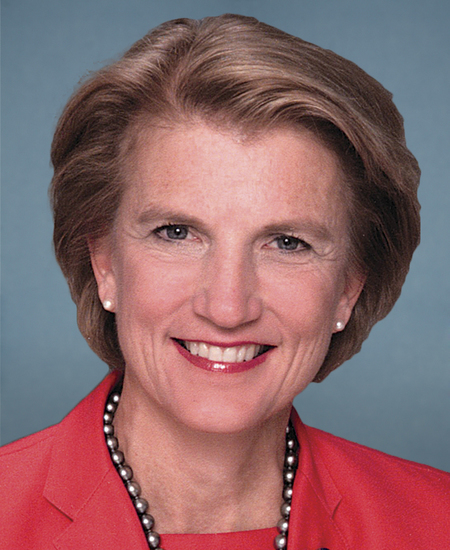
Sen. Shelley Moore Capito
Sponsored bills
She Develops Regulations In Vehicle Equality and Safety Act or the She DRIVES Act This bill directs the Department of Transportation (DOT) to revise motor vehicle safety standards to require the use of certain anthropomorphic test devices (i.e., crash test dummies) and testing on female crash test dummies. Specifically, DOT must issue final rules to revise the current testing regulations to include specific adult male and adult female frontal impact and side impact crash test dummies. The final rules must establish or update the testing injury criteria based on real-world injuries and the greatest potential to increase safety. The injury criteria must include head, neck, chest, abdomen, pelvis, upper leg, and lower leg criteria for the crash test dummies. The final rules must also establish crashworthiness frontal and side impact tests for adult female occupants in all front seating positions that are currently tested for adult male occupants (as of the date of the bill's enactment). Further, DOT must promulgate a final decision notice to update the testing procedures for the New Car Assessment Program of the National Highway Traffic Safety Administration to require the use of these crash test dummies for frontal and side impact crashworthiness testing. Finally, DOT must submit reports to Congress that, among other things, identify timelines for DOT to incorporate additional types of crash test dummies into the regulations and identify testing devices used in other countries for similar crashworthiness standards.
Maddy summaryThis bill amends U.S. immigration law to make certain DUI convictions automatically lead to immigration consequences. Non-citizens convicted of driving while intoxicated or impaired (including DUI under state law) would be barred from entering the U.S. (inadmissible) or face deportation, regardless of whether their offense was classified as a misdemeanor or felony locally. The key mechanism adds new grounds for inadmissibility and deportability under the Immigration and Nationality Act, treating DUI offenses as serious immigration violations. It directly affects non-citizens with such convictions, expanding immigration enforcement to include these offenses. The bill does not change state DUI laws but links them to federal immigration outcomes.
Maddy summaryThis bill extends temporary protections for qualified anti-terrorism technologies under the 2002 Act through fiscal year 2029. It directly affects technology providers seeking to maintain existing protections for their anti-terrorism systems. The key mechanism requires the Secretary of Homeland Security to temporarily extend protections if renewal applications are submitted by a 165-day deadline and are complete upon submission. This extension does not prevent the Secretary from ultimately approving or denying the renewal application. The bill modifies the existing risk management system without altering the final decision-making authority.
Maddy summaryThe Safe Response Act (S 2532) amends the Public Health Service Act to update first responder training requirements for overdose response. It broadens training to cover "opioid, heroin, and other drug" overdoses (replacing previous opioid-specific language) and updates product terminology to include "approved, cleared, or otherwise legally marketed" medical devices. The bill also adjusts funding, increasing annual support for the program from $36 million (2019-2023) to $57 million (2026-2030). These changes directly affect first responders and tribal programs receiving federal training funds, ensuring training aligns with current drug use patterns and medical product standards.
Veterans' Assuring Critical Care Expansions to Support Servicemembers (ACCESS) Act of 2025 This bill addresses the administration of the Veterans Community Care Program (VCCP) and other Department of Veterans Affairs (VA) health care matters. Among other provisions regarding the VCCP, the bill establishes in statute access standards that determine when a veteran is eligible to receive non-VA care through the VCCP, requires the VA to notify veterans regarding their eligibility for care within two business days after the VA is aware the veteran is seeking care, and extends the deadline for the submittal of claims under the VCCP by health care entities and providers. The VA must address its mental health treatment programs by establishing a standardized screening process to determine whether a veteran satisfies criteria for priority or routine admission to a mental health residential rehabilitation treatment program or a program for residential care for mental health and substance abuse disorders, tracking the performance of medical facilities and Veterans Integrated Service Networks in meeting the requirements for mental health treatment screenings and timely admission to treatment programs under such screenings, and establishing an appeal process for when a veteran is denied admission to a covered treatment program or is accepted into a program but not offered bed placement in a timely manner. Additionally, the VA must establish an online self-service module for veterans to request and manage appointments, track referrals, and appeal and track decisions related to requests for care.
Maddy summaryThis resolution (SRES 342) is a symbolic gesture honoring small firearm manufacturers in the U.S., recognizing their economic contributions and role in recreational shooting traditions. It specifically designates August 2025 as "National Shooting Sports Month" and commends these businesses for supporting 380,000 jobs and $91 billion in annual economic output. The resolution does not create new laws or funding but formally acknowledges small manufacturers’ role in preserving Second Amendment-related activities and outdoor culture. It is a commemorative statement with no binding policy impact.
Protecting Air Ambulance Services for Americans Act of 2025 This bill authorizes payment changes under Medicare for air ambulance services based on certain collected data and requires additional reporting from providers of these services. Current law requires providers of air ambulance services to report certain information regarding general costs and utilization to the Department of Health and Human Services; private health insurers are also required to report information relating to coverage of these services. The bill authorizes the Centers for Medicare & Medicaid Services to revise payment rates under Medicare for air ambulance services based on this data, and it requires providers of air ambulance services to specifically report information relating to costs and utilization under Medicare. The bill also requires the Government Accountability Office to report on the data that is collected under current law requirements and to recommend changes to Medicare payment rates accordingly.
Maddy summaryThe Resident Physician Shortage Reduction Act of 2025 adds 14,000 new residency training positions over seven years (2027-2033), distributing 2,000 annually through a structured application process. It directly affects hospitals applying for these positions, requiring them to commit to filling the new spots and prioritizing rural hospitals, those serving health shortage areas, and hospitals affiliated with historically Black medical schools. Key mechanisms include seven annual application rounds, rules for carrying over unused positions, and minimum distribution quotas (e.g., 10% to rural hospitals). The bill also mandates a study on increasing diversity in the health workforce, with a report due to Congress within two years.
Maddy summaryThis bill expands Medicare Part B coverage to include specific pharmacist services, directly affecting Medicare beneficiaries and pharmacists who provide these services. It defines "pharmacist services" as evaluations and treatments for illnesses like COVID-19, flu, RSV, or strep throat, or services addressing public health emergencies, requiring collaboration with physicians as state law permits. Medicare would pay 80% of the lower of the actual charge or 85% of the physician payment rate (100% for public health emergencies), and prohibits balance billing for these services. The changes take effect January 1, 2026.