

Maddy summaryThe Safe at Home Act requires federal agencies and courts to accept a designated address from state address confidentiality programs instead of an individual's actual home address. It directly affects participants in these programs - such as victims of domestic violence, witnesses, or others needing safety protections - who use the designated address for all federal interactions. Key provisions include prohibiting federal penalties for using the designated address, mandating agencies to update regulations within one year, and establishing strict procedures for disclosing physical addresses only in limited circumstances (e.g., court-ordered disclosure for criminal investigations). The law ensures physical addresses acquired through these procedures remain confidential under the Freedom of Information Act, with specific safeguards for how they can be used.
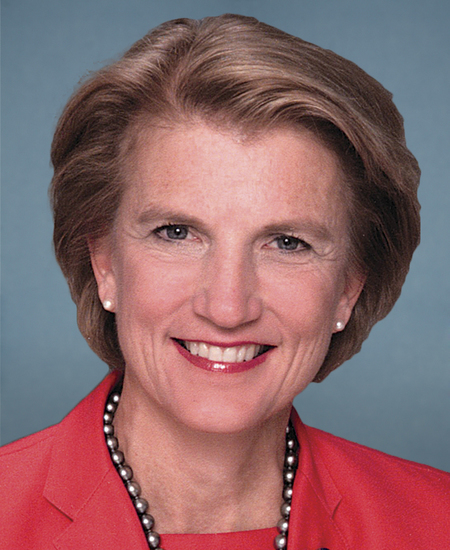
Sen. Shelley Moore Capito
Sponsored bills
Maddy summaryThe Telehealth Modernization Act extends Medicare telehealth flexibilities through 2027, allowing more patients to access care remotely without geographic restrictions. It expands who can provide telehealth services (including audio-only visits), extends telehealth use for hospice recertification, and updates coverage for in-home cardiopulmonary rehabilitation. The bill also extends "acute hospital care at home" program flexibilities through 2030 and requires a study on this program's effectiveness. Additionally, it includes provisions to improve telehealth access for patients with limited English proficiency and enhances Medicare coverage for virtual diabetes prevention programs. These changes primarily affect Medicare beneficiaries, healthcare providers, and telehealth service companies.
STOP Act 2.0 This bill revises requirements related to advance electronic data (AED) on international mail shipments. (The STOP Act of 2018 requires international mail shipments coming into the United States to have AED to address the threat of synthetic opioids and other dangerous items.) Specifically, the bill establishes a new criminal penalty for knowingly misrepresenting the country of origin of an international mail shipment in order to avoid AED requirements. Additionally, five years after enactment, the bill terminates U.S. Customs and Border Protection's (CBP's) authority to exclude countries from AED requirements. The bill establishes additional reporting requirements related to AED, including a requirement for the Department of Homeland Security (DHS) to report the results of randomized tests of packages entering the United States. Further, the bill authorizes DHS, the Department of Justice, and the U.S. Postal Service to enter into partnerships with private parcel services or other private information technology entities to develop technology and processes for identifying the origin of fentanyl, other synthetic opioids, and other narcotics and psychoactive substances. The bill also authorizes DHS to share with and receive information from foreign governments regarding (1) shippers with a history of transporting illegal substances, and (2) best practices for detecting the substances. CBP must train its officers in detecting illicit fentanyl and other synthetic opioids. Finally, the bill directs the Government Accountability Office to evaluate the implementation of the STOP Act of 2018.
Maddy summaryS 1038, the TRACE Act, requires the Attorney General to add a data field to the National Missing and Unidentified Persons System (NMIPS) indicating whether a missing person’s last known location was confirmed or suspected to be on federal land (like national parks or military bases). It also mandates annual reports to Congress starting in 2025, detailing the number of cases in NMIPS where federal land was involved. This directly affects law enforcement agencies using NMIPS by standardizing how they track missing persons on federal property. The bill creates no new funding or penalties but improves data collection for cases involving federal lands.
Maddy summaryThe Safer Truckers Act of 2025 amends federal law to require commercial motor vehicle drivers to be U.S. citizens, lawful permanent residents, or authorized by U.S. Citizenship and Immigration Services to work in the U.S. (specifically for driving commercial vehicles) in order to obtain or renew a commercial driver's license (CDL). This directly affects individuals seeking CDLs by adding a new residency and work authorization requirement under Section 31308 of Title 49, U.S. Code. States must verify this eligibility before issuing CDLs and submit annual reports to the Secretary of Transportation detailing their enforcement of English proficiency requirements for commercial drivers, as specified in Section 31311. The bill focuses on verifying driver eligibility and improving safety through standardized documentation and reporting.
Maddy summaryThe International Trafficking Victims Protection Reauthorization Act of 2025 reauthorizes U.S. efforts to combat human trafficking globally. It requires U.S. representatives at multilateral development banks to ensure anti-trafficking strategies are included in projects in countries identified as having significant trafficking problems (Tier 2 Watch List, Tier 3, or Special Cases in the annual Trafficking in Persons Report). The bill clarifies which foreign assistance can be withheld from countries not meeting anti-trafficking standards and expands protections for domestic workers employed by diplomatic personnel (A-3 and G-5 visa holders), including requiring wage reporting and providing information about workers' rights. It also extends funding for programs to end modern slavery and mandates regular congressional briefings on trafficking reports and waiver decisions.
Maddy summaryThis bill prohibits the Small Business Administration (SBA) from denying financial assistance - such as loans or guarantees - to firearm-related businesses solely based on their industry. It directly affects firearm entities (manufacturers, sellers, and distributors), firearm entity affiliates (like shooting ranges), and firearm trade associations by requiring the SBA to treat them equally under existing programs. The key provision bans SBA policies that discriminate against these applicants, ensuring they can access standard SBA support without industry-based barriers. The bill does not create new funding but mandates equal treatment for eligible applicants already covered by SBA law.
Maddy summary# Summary of the Departments of Labor, Health and Human Services, and Education, and Related Agencies Appropriations Act, 2026 This comprehensive appropriations bill allocates funding for the fiscal year 2026 to the Department of Labor, Department of Health and Human Services (HHS), Department of Education, and several related agencies. The bill contains numerous specific funding allocations, restrictions, and procedural requirements. Key elements include: 1. **Major Funding Areas**: - HHS receives significant funding for programs including Medicaid, CHIP, Social Security, and public health initiatives - Education receives substantial funding for student financial assistance, career and technical education, and research - Related agencies receive funding for programs like the Corporation for National and Community Service and the Social Security Administration 2. **Key Restrictions**: - Prohibits using funds for abortions except in cases of rape, incest, or to save a woman's life (Section 506-507) - Bans funding for embryonic research or creation of human embryos for research (Section 508) - Prohibits funding for advocacy of drug legalization (Section 509) - Requires transparency in reporting how federal funds are used (Section 505) - Prohibits using funds for propaganda or political activities (Section 503) 3. **Specific Provisions**: - Requires detailed reporting to Congress about fund usage (Sections 516-517) - Mandates notification to Congress before reprogramming funds (Section 514) - Includes numerous rescission provisions that cancel previously appropriated funds - Contains specific requirements for managing federal contracts and grants - Establishes restrictions on using funds for certain types of research or activities 4. **Notable Funding Amounts**: - $24.6 billion for Student Financial Assistance - $49.4 billion for the Supplemental Security Income Program - $14.7 billion for Social Security Administration administrative expenses - $3.2 billion for Higher Education programs - $2.1 billion for Career, Technical, and Adult Education The bill represents a comprehensive funding package with specific constraints on how funds may be used, reflecting ongoing policy debates about government spending priorities in health, education, and social services.
Maddy summaryThis bill reauthorizes funding for state-level maternal mortality review committees, which analyze pregnancy-related deaths to identify preventable causes. It requires the Health and Human Services Secretary to share annual best practices for preventing maternal mortality with hospitals, medical societies, and maternity care groups. The bill increases annual funding for these programs from $58 million to $100 million, extending support through fiscal years 2026-2030. These changes directly affect state health agencies, hospitals, and medical professionals working on maternal health. The focus is on improving death record accuracy and implementing proven prevention strategies.
Stopping Addiction and Falls for the Elderly Act or the SAFE Act This bill incorporates risk assessments and prevention services for falls into annual wellness visits and initial preventive physical exams under Medicare, as well as associated services provided by physical therapists and occupational therapists.