

Maddy summaryThis resolution designates February 21-28, 2026, as "National FFA Week" to honor the National FFA Organization’s work in agricultural education. It recognizes FFA’s role in developing leadership and career skills for students (with over 1 million members nationally) and celebrates the 50th anniversary of Alaska’s State FFA Association, which has 19 chapters and 493 members. As a symbolic resolution, it has no legal effect but formally expresses Senate support for FFA’s mission.
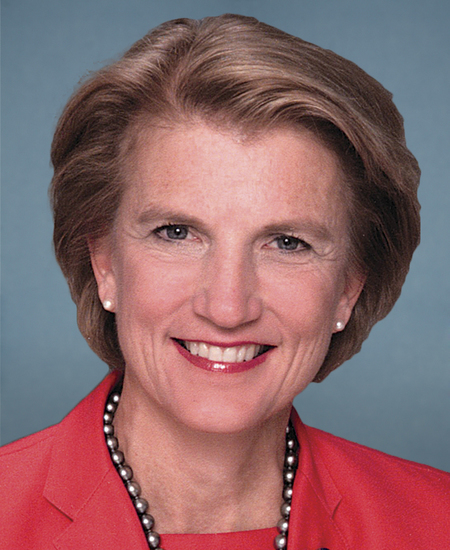
Sen. Shelley Moore Capito
Sponsored bills
Maddy summarySRES 618 is a Senate resolution recognizing the vital role of career and technical education (CTE) educators and work-based learning coordinators in preparing students for careers, classrooms, and life. It highlights that these professionals deliver hands-on skills training, support workforce pipelines in critical economic sectors, and address persistent shortages in CTE staffing (reported in 25 states for the 2025-2026 school year). The resolution formally commends CTE educators and coordinators for their contributions and emphasizes that improving their wages, benefits, and working conditions would help reduce staffing gaps. It does not create new programs or funding but serves as a symbolic endorsement of CTE’s importance to U.S. economic competitiveness.
Maddy summaryThis bill, known as the TAP Promotion Act, would allow representatives from recognized veterans service organizations to join presentations that inform service members about benefits they can access after leaving the military. These presentations are part of the Transition Assistance Program, which helps veterans prepare for civilian life, and the law requires that they be standardized and approved by the Department of Veterans Affairs before being used. The bill also mandates that the presentations include information on how veterans service organizations can help with filing benefit claims, while prohibiting any effort to encourage members to join a specific organization. Additionally, the Department of Veterans Affairs must submit an annual report to Congress detailing which organizations participated in these sessions and how many service members attended.
Maddy summarySRES 602 is a symbolic Senate resolution expressing support for the U.S. Olympic and Paralympic Teams (Team USA) competing in the 2026 Winter Games in Milano Cortina, Italy. It formally applauds Team USA athletes, coaches, and their supporters, commends Italy for hosting the event, and commits to ensuring safety for future U.S. host events (2028 Los Angeles Summer Games and 2034 Utah Winter Games). The resolution does not create new policies, funding, or obligations - it is purely a statement of congressional support. It directly affects Team USA athletes and organizers by acknowledging their efforts and achievements. This is a procedural resolution with no binding effect on government actions.
Maddy summaryS 3917, "The Dalilah Law," prohibits states from issuing or renewing commercial driver's licenses (CDLs) to individuals who are not U.S. citizens, lawful permanent residents, or certain nonimmigrant visa holders (like H-2B workers). It requires all current CDL holders to recertify within 180 days of enactment, verifying citizenship/residency status, English proficiency, and passing English-language tests. States that fail to enforce these requirements face withholding of federal transportation funding. The law directly affects commercial drivers and state licensing agencies, with specific rules for visa holders and English language requirements for CDL operations.
Rotorcraft Operations Transparency and Oversight Reform Act or the ROTOR Act This bill addresses aviation safety by increasing requirements for aircraft tracking and communication using Automatic Dependent Surveillance-Broadcast (ADS-B) technology and expanding oversight. As background, ADS-B for broadcasting (Out) and receiving (In) transmits information (e.g., location and weather information) between aircraft and air traffic control. Under the bill, aircraft must generally operate with ADS-B In equipment to provide the aircraft with location information of other aircraft and traffic advisories. Current law does not require this equipment. Current Federal Aviation Administration (FAA) regulations allow aircraft performing a sensitive government mission to be excepted from requirements for using ADS-B Out equipment. This bill limits which flights may be considered sensitive government missions (e.g., not training flights) and requires additional reporting and notifications for the exception. The Government Accountability Office must review the use of the ADS-B Out exception and the Office of the Inspector General (OIG) of the Department of Transportation must annually audit FAA oversight of operations that use the exception. Further, the bill repeals a 2025 law that exempts certain military helicopters from the ADS-B Out requirements for the Washington, DC, metropolitan area. The bill also requires the OIG of the Army to audit the Army’s coordination with the FAA, the FAA to establish an office to coordinate airspace usage of military aircraft and review the safety of flight operations and routes around airports, and the FAA to enter into memoranda of understanding with military agencies for safety information sharing.
Maddy summaryThe SAVES Act of 2025 establishes a five-year pilot program at the Department of Veterans Affairs (VA) to fund nonprofit organizations that provide service dogs to eligible veterans with specific disabilities, such as blindness, mobility issues, PTSD, or traumatic brain injury. Nonprofits must apply competitively, meet training and animal welfare standards (including ADA compliance), and provide service dogs at no cost to veterans, with the VA covering all program expenses. The VA will also provide ongoing veterinary insurance for the dogs, which continues even after the pilot ends. This program is funded with $10 million annually for five years, targeting veterans as defined by VA medical criteria.
Maddy summaryS 233, the "Restoring Confidence in the World Anti-Doping Agency Act of 2025," requires the U.S. Office of National Drug Control Policy to ensure the World Anti-Doping Agency (WADA) has fair U.S. representation and governance reforms. It mandates a 90-day review to assess WADA’s governance model, conflict-of-interest policies, and inclusion of independent athletes (defined as those not affiliated with major sports bodies) in decision-making roles. If reforms are lacking, the U.S. may withhold full membership dues and issue a report detailing barriers to U.S. representation on WADA’s Executive Committee, Foundation Board, and committees. The bill directly affects U.S. participation in WADA governance and aims to strengthen U.S. influence in anti-doping standards.
Maddy summarySRES 606 is a U.S. Senate resolution condemning the Iranian government for violently suppressing peaceful protests and the right to assemble, which has resulted in at least 6,126 reported deaths and 41,800 arrests since December 2025. It highlights Iran's use of internet blackouts, extrajudicial killings, arbitrary detentions, and censorship to crush nationwide demonstrations sparked by economic hardship. The resolution calls on Iran to hold free elections, allow citizens to determine their future, and hold human rights violators accountable, while commending protesters' courage. As a symbolic resolution (not a law), it expresses the Senate's stance without imposing new legal requirements.
Safeguard American Voter Eligibility Act or the SAVE America Act This bill requires individuals to provide documentary proof of U.S. citizenship when registering to vote, and requires photo identification to vote, in federal elections. Specifically, the bill prohibits states from accepting and processing an application to register to vote in a federal election unless the applicant presents documentary proof of U.S. citizenship. The bill specifies what documents are considered acceptable proof of U.S. citizenship, such as identification that complies with the REAL ID Act of 2005 that indicates U.S. citizenship. Further, the bill (1) prohibits states from registering an individual to vote in a federal election unless, at the time the individual applies to register to vote, the individual provides documentary proof of U.S. citizenship; and (2) requires states to establish an alternative process to demonstrate U.S. citizenship. Each state must take affirmative steps on an ongoing basis to ensure that only U.S. citizens are registered to vote, which shall include establishing a program to identify individuals who are not U.S. citizens using information supplied by certain sources. Additionally, states must remove noncitizens from their official lists of eligible voters. The bill (1) provides for a private right of action for certain violations, and (2) establishes criminal penalties for certain offenses. Individuals voting in federal elections must present an eligible photo identification document. An individual who votes by absentee ballot must submit a copy of their identification document with both the request for, and the submission of, the absentee ballot.