

Maddy summaryThe Veteran Families Health Services Act of 2025 would provide fertility treatment and counseling to active duty military members and their spouses, partners, and gestational surrogates without regard to sex, gender identity, sexual orientation, or marital status. It requires the Department of Defense to establish procedures for preserving reproductive genetic material before deployment or hazardous assignments and to coordinate with the Department of Veterans Affairs for seamless care transitions. The bill also extends similar fertility services to veterans through the Department of Veterans Affairs, including adoption assistance with a limit of three covered adoptions. It would amend existing law to include fertility treatment under the definition of medical services for veterans.
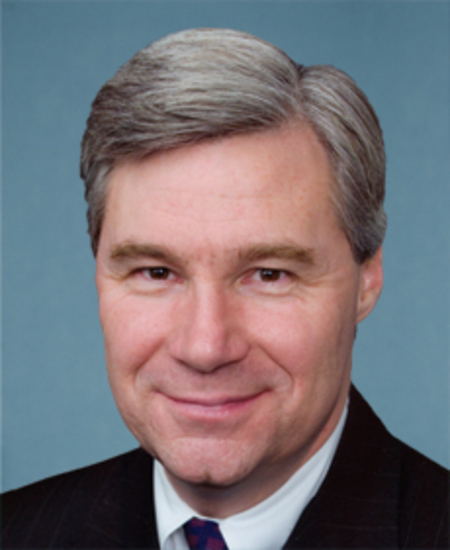
Sen. Sheldon Whitehouse
Sponsored bills
Maddy summaryThis bill requires the fictional "United States DOGE Service" (referencing Executive Order 14158) to report all instances where its teams accessed federal agency systems within 30 days of enactment. It mandates a Comptroller General audit of federal systems accessed by the DOGE Service, prioritizing Social Security, health, and tax agencies for initial review within one year. The audit must identify security vulnerabilities and recommend fixes, with agencies required to address issues within 90 days of receiving audit reports. The bill creates procedural requirements for oversight of the fictional entity's system access, with no substantive policy changes beyond these reporting and audit obligations.
Maddy summaryS 2549, the Time Off to Vote Act, requires employers with 25 or more employees to provide workers with 2 hours of paid leave during open voting hours for federal elections. This covers voting in person, returning mail ballots, or other voting activities, with employers allowed to set the specific 2-hour window (excluding lunch breaks) but not denying the leave. The law prohibits retaliation against employees who take this leave and authorizes the Department of Labor to enforce it, imposing civil penalties of up to $10,000 per violation for noncompliance. It does not override stricter state voting leave laws but takes effect before the next federal election after enactment.
Maddy summaryThis bill permanently extends the enhanced premium tax credit for Affordable Care Act marketplace insurance plans, directly affecting millions of lower-income households (earning 150%-400% of the federal poverty level) who purchase coverage through state or federal marketplaces. It establishes a sliding-scale percentage system where the tax credit reduces monthly premiums based on income, starting at 0% for households earning up to 150% of poverty and increasing to 8.5% for those earning 300%-400% of poverty. The bill replaces temporary provisions with permanent rules, ensuring consistent cost-sharing support for eligible buyers. The changes apply to tax years beginning after December 31, 2025.
Maddy summaryThe Comprehensive Addiction and Recovery Justice Grant Reauthorization Act (S 2540) extends federal funding for state and local programs that provide addiction treatment and recovery services to individuals involved in the justice system, such as those in courts or correctional facilities. It updates the authorization period from 2019-2023 to 2026-2030, ensuring continued support through 2030 without altering annual funding amounts. This reauthorization directly affects state and local agencies administering these grants, which help connect people with substance use disorders to treatment while navigating legal processes. The bill does not specify new funding levels but secures program continuity by extending the timeframe for grant distribution.
Maddy summaryThe Servicemembers and Veterans Empowerment and Support Act of 2025 improves support for veterans who experienced military sexual trauma by reforming how disability claims are processed and expanding access to care. It establishes specialized teams to review claims, changes evidence standards to include non-military sources like counseling records, and requires VA communications to include trauma resources. The bill expands eligibility for counseling and treatment to all former reserve members, ensures veterans get connected to health care services when submitting claims, and provides care options for those who withdraw from service academies. It also mandates annual accuracy reviews of claim processing and requires improved training for VA staff handling these cases.
Maddy summaryThis resolution (SRES 343) is a non-binding Senate recognition of the U.S. Preventive Services Task Force (USPSTF), which develops evidence-based recommendations for preventive health services. It specifically calls on the Department of Health and Human Services to reconvene the Task Force after a scheduled meeting was canceled, emphasizing that its work - covering preventive services like cancer screenings and chronic disease prevention - must continue without interruption or funding disruption. The resolution affirms the Task Force’s role in guiding insurance coverage of recommended preventive care under the Affordable Care Act. As a procedural resolution, it does not create new laws or alter policies.
Maddy summaryThis bill requires gas pipeline operators to immediately implement a federal safety rule mandating regular leak detection and prompt repair of gas leaks. The rule, finalized by the Pipeline and Hazardous Materials Safety Administration in January 2025, sets specific standards for identifying and fixing leaks in gas pipelines. By making this rule effective upon enactment, the bill removes any delays in its implementation. Pipeline companies operating under federal jurisdiction will be directly affected by these requirements.
Maddy summaryThe John R. Lewis Voting Rights Advancement Act of 2025 strengthens voting rights protections by requiring preclearance for certain voting changes in jurisdictions with a history of discrimination. It establishes new preclearance requirements for changes to election methods, district boundaries, voter ID rules, and polling locations. The bill updates standards for determining when voting practices deny or abridge rights, particularly for racial, ethnic, and language minority groups. It also requires transparency about voting changes through public notices and strengthens enforcement mechanisms for voting rights violations. The bill directly affects states and localities with documented histories of voting discrimination, aiming to protect minority voters' rights.
Maddy summaryS 2500, the Research for Healthy Soils Act, authorizes federal research grants to study microplastics (plastic particles under 5mm) in biosolids applied to farmland. It directs the USDA to fund specific research on microplastic concentrations in agricultural soil, wastewater treatment methods to remove microplastics, impacts on crops and soil health, and microplastic movement in farmland. The bill does not regulate microplastic use but supports scientific understanding of potential agricultural effects. It affects agricultural researchers and institutions receiving these grants, extending related research funding through 2031. The focus is strictly on gathering data and developing solutions, not on policy changes for farmers or regulators.