

Maddy summaryThe Richard L. Trumka Protecting the Right to Organize Act of 2023 strengthens workers' rights to organize and bargain collectively by amending key labor laws. It clarifies that multiple employers can be held accountable for labor practices (joint employer definition), makes it harder for employers to misclassify workers as independent contractors, and prohibits employers from permanently replacing workers who strike. The bill requires employers to provide detailed voter lists for union elections, strengthens protections against anti-union discrimination, and increases penalties for unfair labor practices (up to $100,000 for repeat violations). It directly affects workers seeking union representation, employers who must comply with new requirements, and labor organizations conducting organizing campaigns. The bill aims to make it easier for workers to form unions and negotiate better wages and working conditions.
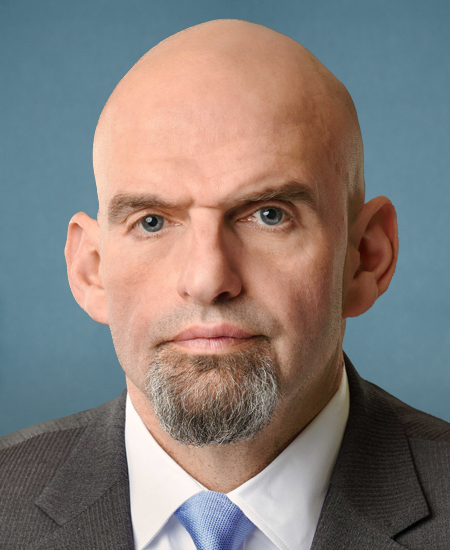
Sen. John Fetterman
Sponsored bills
Maddy summaryThe VET PFAS Act provides healthcare benefits to veterans and their family members exposed to PFAS chemicals at military installations. Veterans who served at installations with PFAS contamination (including through contaminated water wells) become eligible for treatment of specific health conditions like testicular cancer, kidney cancer, and thyroid disease without needing to prove direct service connection. Family members who resided at these contaminated installations or were in utero during such residence also gain eligibility for covered treatments. The bill creates a presumption of service connection for these conditions, meaning the VA must treat them as related to military service. Annual reports will track how many veterans and family members receive care under this law.
Maddy summaryThe Organic Science and Research Investment Act of 2023 establishes a new federal initiative to coordinate and expand research on organic agriculture across USDA agencies. The initiative will conduct regular surveys of organic research, develop strategic plans, and submit recommendations to the Secretary of Agriculture every five years on expanding research related to organic farming practices, climate change adaptation, and transitioning to organic production. The bill includes specific funding increases for organic research programs, requiring $60 million in fiscal year 2024 and growing to $100 million annually by 2028. It also mandates an economic impact analysis of organic farming and requires reports on maintaining organic research acreage proportional to market share. This legislation directly affects organic farmers, agricultural researchers, and USDA agencies conducting agricultural research.
Maddy summaryThis bill amends the Food and Nutrition Act of 2008 to allow Supplemental Nutrition Assistance Program (SNAP) benefits to be used for hot foods or hot food products ready for immediate consumption. It directly affects SNAP recipients who previously could not purchase such items (like hot meals from food trucks or delis) with their benefits. The key change removes the prior exclusion of "hot foods" from the list of permitted purchases under SNAP, while still excluding alcohol and tobacco. Vendors selling hot foods must now ensure that no more than 50% of their total gross sales come from hot food items to maintain SNAP eligibility.
Maddy summaryThe Susan Muffley Act requires the Pension Benefit Guaranty Corporation (PBGC) to recalculate monthly pension benefits for participants and beneficiaries of six specific Delphi pension plans (including the Delphi Hourly-Rate Employees Pension Plan) to the full vested amount, removing prior limits that previously reduced payments. It mandates lump-sum payments for past underpayments, including 6% interest, within 180 days of enactment, covering individuals currently receiving benefits or eligible for future payments under these plans. The law establishes a Treasury-funded trust to cover these increased payments and applies retroactively to past benefit calculations. This change directly affects Delphi plan participants who were underpaid due to previous benefit caps, without altering existing asset allocation rules.
Maddy summaryS 1954, the *Improving Whole Health for Veterans with Chronic Conditions Act*, establishes a 4-year pilot program to provide comprehensive dental care to veterans diagnosed with type 1 or type 2 diabetes or ischemic heart disease who are enrolled in VA health care but currently ineligible for dental services. The program will operate at VA medical centers, community clinics, and test mobile/home-based dental units in rural areas, while also evaluating dental therapists and tele-dentistry. It includes a student loan repayment program for dentists, hygienists, and oral surgeons to support staffing, with reimbursement caps of $100,000 for dentists and $25,000 for hygienists. The VA must report on costs, outcomes, and the effectiveness of different service models, including impacts on veterans' health care access and chronic disease management.
Maddy summaryS 928, the "Not Just a Number Act," requires the Department of Veterans Affairs (VA) to publish an annual report on veteran suicide rates starting 18 months after enactment. The report must include detailed data broken down by age, gender, and race/ethnicity, plus comparisons between veterans who used VA health services (like Vet Centers or mental health care) versus those who did not, and veterans engaged with VA benefits programs (such as education assistance, disability compensation, or housing loans). The bill also mandates a toolkit for state/local coroners to better identify and report veteran suicides, and a study on creating a dedicated VA suicide prevention office. These requirements aim to improve data collection, analysis, and reporting on veteran suicide trends to inform prevention strategies.
Maddy summaryThis bill establishes a federal compensation program for poultry farmers whose operations are restricted in "control areas" designated by the Animal and Plant Health Inspection Service (APHIS) due to animal health threats. It requires the Secretary of Agriculture to pay affected farmers an amount calculated as their average income from the five most recent flocks multiplied by the number of flocks they were prohibited from raising during the control period. Compensation is capped to avoid double payments - covering only the difference between the calculated amount and any existing state or other compensation received. Payments must be issued within 60 days of a farmer’s request, and farmers who already received compensation for destroyed animals under existing law are excluded.
Maddy summaryThis bill creates a new renewable fuel credit program under the Clean Air Act to help obligated entities (like refiners and importers) meet their renewable fuel requirements. It sets a fixed price of $0.20 per credit (adjusted for inflation), which can only be used for compliance in the year purchased and cannot be resold or used for other biofuel mandates. Revenue from credit sales is split equally: one-third funds advanced biofuels investments, one-third supports farmers' crop diversification, and one-third goes to the Habitat and Wildlife Restoration Fund. The fund directs money to restore grasslands, wetlands, and other habitats impacted by expanded corn and soy production since 2007, managed through a partnership with the National Fish and Wildlife Foundation.
Maddy summaryS 2217, the IDEA Full Funding Act, mandates specific annual federal funding levels for the Individuals with Disabilities Education Act (IDEA) to support public education services for students with disabilities. It requires the federal government to appropriate increasing percentages of the total estimated cost - starting at 14.2% for FY 2024 and rising to 40% by FY 2033 - based on the number of eligible students and national average per-pupil spending. This directly affects public schools and state education agencies that receive IDEA funding, guaranteeing phased increases in federal support over a decade. The bill sets concrete, legally binding funding targets without altering eligibility or service requirements for students.