

Maddy summaryThe Bridging the SNAP Gap Act of 2023 raises the age for excluding income from SNAP eligibility calculations from 17 to 21, potentially expanding access for young adults aged 18-21. It revises the standard medical expense deduction to base the amount on the Medicare Part B premium rate (set annually by the Social Security Act), removing the previous requirement that deductions only applied to households with elderly or disabled members. The deduction amount for each fiscal year will align with the Medicare Part B premium effective October 1 of that year. States may establish a higher deduction if it meets cost neutrality standards without increasing federal costs.
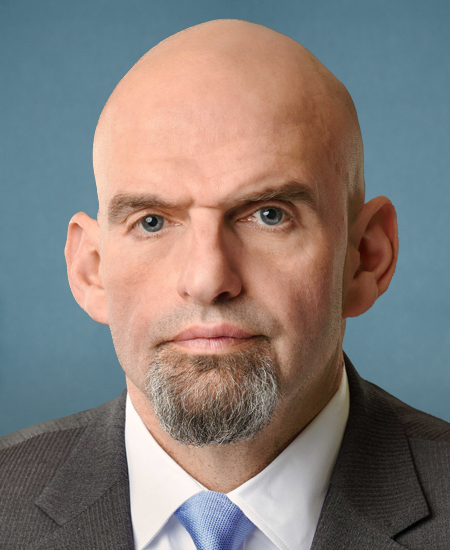
Sen. John Fetterman
Sponsored bills
Maddy summaryThe No Robot Bosses Act (S 2419) prevents employers from using computer systems to make employment decisions without proper oversight. It prohibits employers from relying exclusively on automated decision systems for hiring, firing, or other employment decisions, and requires detailed disclosures to employees about how such systems were used. The bill creates a new Technology and Worker Protection Division within the Department of Labor to enforce these rules, and mandates that employers conduct annual tests for discrimination in these systems. The law applies to employers with 11 or more employees, including government contractors, and provides employees with the right to dispute automated decisions through human review.
Maddy summaryS 2382, the Farmland Security Act of 2023, amends the Agricultural Foreign Investment Disclosure Act to strengthen oversight of foreign ownership of U.S. farmland. It directly affects foreign-owned shell corporations (entities with no real operations) by imposing a civil penalty equal to 100% of the land's fair market value for failing to disclose purchases, with a 60-day remedy window. Key provisions include requiring annual audits of 10% of disclosure reports, mandating annual reports to Congress on foreign agricultural leasing trends and land ownership patterns, and authorizing $2 million annually for implementation through fiscal year 2028. The bill focuses on improving transparency and data collection, not on restricting foreign investment.
Maddy summaryThe WATCH Act requires foreign laboratories receiving U.S. federal funds for animal research to undergo quarterly inspections to ensure compliance with U.S. animal welfare standards. It directly affects overseas labs conducting NIH-funded studies involving animals, mandating regular checks of their animal care committees, treatment reviews, and record-keeping. Labs must maintain certification of compliance, with public access to these certificates, and face potential suspension of funding if they fail to correct violations after a warning. The bill establishes a process for U.S. authorities to coordinate inspections with foreign governments while upholding U.S. research standards.
Maddy summaryS 2372, the Accelerating Kids’ Access to Care Act, streamlines enrollment for out-of-state healthcare providers who treat Medicaid-eligible children under 21 with medically complex conditions. It requires states to adopt a process allowing these providers to join state Medicaid/CHIP programs without extra state-level screening, provided they already meet federal Medicare or home-state program requirements and pose low fraud risk. The bill establishes a 5-year enrollment period for eligible providers, directly affecting children needing specialized care across state lines and the providers serving them. Key provisions remove barriers to interstate care coordination while maintaining federal oversight standards.
Maddy summaryThe Smoke and Heat Ready Communities Act of 2023 establishes a new federal grant program to help communities prepare for wildfire smoke and extreme heat. It provides funding for air pollution control agencies to support activities like monitoring air quality, deploying monitoring equipment, equipping public buildings with air filtration, and distributing protective masks. The bill also creates four research centers at higher education institutions to study health impacts and develop community response strategies, and funds competitive grants for states, tribes, and local governments to develop collaborative community plans. These provisions directly affect communities vulnerable to poor air quality from wildfire smoke and extreme heat events, focusing on concrete preparedness measures rather than regulatory changes.
Maddy summaryS 2340 establishes the Increasing Land, Capital, and Market Access Program within the USDA to help historically underserved farmers, ranchers, and forest owners - including Tribal communities, young farmers, and those in high-poverty areas - access land and resources. The program provides grants and direct assistance for land acquisition, down payment support, clearing heirs' property titles, technical training, and infrastructure improvements to strengthen farm viability. Funded at $100 million annually for 2024-2028, it prioritizes projects that prevent land loss, connect underserved groups to land, and support long-term agricultural sustainability through mechanisms like deed restrictions and language-accessible services. The program requires projects to directly serve eligible beneficiaries and includes strict evaluation criteria for funding distribution.
Maddy summary# Summary of Comprehensive Election Reform Bill This document is a comprehensive voting rights and election reform bill containing multiple titles with various provisions designed to: 1. **Restore voting rights** for citizens with criminal convictions (Democracy Restoration Act) - Restores voting rights for citizens not serving felony sentences in correctional institutions - Requires states to notify individuals of restored voting rights upon release or probation - Establishes enforcement mechanisms through civil actions 2. **Strengthen voter identification requirements** - Establishes a broad list of acceptable identification documents - Requires states to provide government-issued identification at no cost - Allows for provisional ballots with sworn statements for those without ID - Includes provisions for electronic documents and copies 3. **Prohibit voter caging and improper voter list maintenance** - Bans the use of "voter caging" documents or lists as evidence for challenging voter eligibility - Establishes strict conditions for removing voters from registration lists - Requires objective and reliable evidence for removals - Mandates notification procedures for voters removed from lists 4. **Enhance election integrity protections** - Prohibits interference with voter registration (including hindering, interfering with, or preventing registration) - Restricts removal of local election administrators to cases of inefficiency, neglect, or malfeasance - Protects election workers from intimidation and harassment - Bans deceptive practices regarding election information within 60 days of an election - Establishes criminal penalties for deceptive election practices 5. **Provides enforcement mechanisms** - Establishes private rights of action for violations - Includes civil and criminal penalties for violations - Requires reports to the Department of Justice for removals of election administrators - Sets specific timeframes for notification and corrective actions The bill aims to expand voting access while maintaining election integrity, with provisions designed to protect voting rights, prevent discrimination, and ensure fair administration of elections for Federal office.
Maddy summaryThe Healthy Families Act requires most employers (with 15 or more employees) to provide workers with up to 56 hours of paid sick leave annually, earned at a rate of 1 hour for every 30 hours worked. Employees can use this leave for their own illness, medical care, caring for family members with health conditions, or addressing domestic violence, sexual assault, or stalking situations. The law prohibits employers from retaliating against workers who use this leave and mandates that employers post notices about the policy. Smaller employers (with fewer than 15 employees) may provide up to 56 hours of unpaid sick leave instead of paid leave. The Act includes enforcement mechanisms allowing employees to file complaints with the Department of Labor and seek damages for violations.
Maddy summaryThe Paycheck Fairness Act aims to reduce gender-based pay disparities by strengthening protections against wage discrimination. It modifies the "bona fide factor" defense to require employers to prove pay differences are based on job-related factors rather than sex, prohibits reliance on salary history when making hiring decisions, and requires employers with 100+ employees to collect and report pay data disaggregated by sex, race, and ethnicity. The bill enhances penalties for violations, including compensatory and punitive damages, and strengthens non-retaliation protections for employees discussing wages. These changes directly affect employers, employees, and prospective employees, with particular focus on addressing pay gaps that disproportionately impact women and women of color. The act also creates a National Award for Pay Equity in the Workplace to recognize employers making progress in eliminating pay discrimination.