

Maddy summary# Summary of Workplace Discrimination and Harassment Legislation This comprehensive bill expands protections against workplace discrimination and harassment while strengthening enforcement mechanisms for workers. Key provisions include: 1. **Expanded Protections (Section 301)**: - Extends anti-discrimination protections to independent contractors, interns, fellows, volunteers, and trainees under major civil rights laws - Creates "covered establishment" definition for entities engaging these workers 2. **Nondisclosure/Nondisparagement Clause Ban (Section 302)**: - Prohibits employers from requiring workers to sign nondisclosure or nondisparagement clauses covering harassment or discrimination - Establishes strict requirements for settlement agreements (including 21-day consideration period, 7-day revocation period, and clear written disclosure) - Protects workers' right to report harassment to the EEOC without penalty 3. **Arbitration Restrictions (Section 303)**: - Bans mandatory pre-dispute arbitration agreements that prevent class or collective actions - Establishes new requirements for post-dispute arbitration agreements - Allows workers to sue employers who violate these provisions 4. **Federal Contractor Compliance (Section 304)**: - Requires federal contractors to disclose past violations of labor and civil rights laws - Establishes Labor Compliance Advisors at executive agencies - Creates a system for monitoring contractor compliance with labor laws 5. **Grant Programs (Sections 401-436)**: - Creates national grants to prevent and address employment discrimination - Establishes grants for legal assistance for low-income workers facing discrimination - Creates a system of state advocacy for workers' rights through state-level systems The bill aims to strengthen worker protections against discrimination and harassment while expanding access to legal remedies and creating new mechanisms for enforcement and prevention. It also includes provisions to ensure federal contractors comply with labor and civil rights laws and establishes new reporting requirements for contractors with past violations.
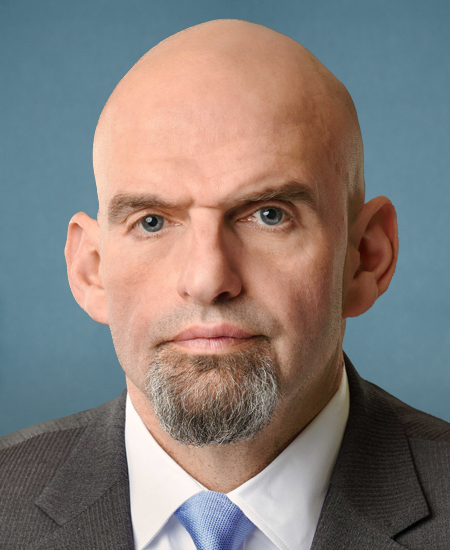
Sen. John Fetterman
Sponsored bills
Maddy summaryThe FUTURES Act (S 3855) establishes a formal U.S.-Israel Defense Technology Cooperation Initiative to accelerate joint development and integration of defense technologies. It directs the U.S. Secretary of Defense to identify Israeli-origin technologies for rapid adoption into American military systems, focusing on areas like counter-drone systems, missile defense, AI, cyber security, and directed energy. The bill authorizes $150 million annually (2027-2029) for this initiative, requiring regular reports to Congress on progress, technology transitions, and industry partnerships. This policy directly affects U.S. defense contractors, Israeli defense firms, and military acquisition programs by creating new pathways to incorporate Israeli innovations into U.S. systems.
Fighting Trade Cheats Act of 2026 This bill increases penalties for, and establishes additional enforcement mechanisms related to, fraudulent and grossly negligent violations of U.S. customs laws. Specifically, the bill increases the maximum civil penalty for a fraudulent violation to three times the domestic value of the merchandise. (Currently, the maximum penalty is the domestic value of the merchandise.) It prohibits a person who commits a fraudulent violation from importing merchandise into the United States for a five-year period. Additionally, the bill increases the maximum civil penalty for a grossly negligent violation to the lesser of (1) 3 times the domestic value of the merchandise; or (2) 10 times the lawful duties, taxes, and fees. (Currently, the maximum penalty is the lesser of the domestic value of the merchandise or four times the lawful duties, taxes, and fees.) It prohibits a person who commits a grossly negligent violation from importing merchandise into the United States for a two-year period. Further, the bill applies these importation bans to an affiliated person (e.g., a family member or employee) of the person who committed the fraudulent or grossly negligent violation. The bill establishes a private right of action for an interested party (e.g., a manufacturer) affected by customs fraud or grossly negligent violations. The bill prohibits any person (or an affiliated person) who commits a fraudulent or grossly negligent violation from participating in the U.S. Customs and Border Protection's Importer of Record program, and further requires revocation of their importer of record numbers.
Maddy summaryThe Predatory Lending Elimination Act applies military lending protections to all consumers, not just military members, by setting strict interest rate limits on personal loans and credit cards. It prohibits lenders from charging excessive rates on most consumer credit (except residential mortgages, auto loans for vehicle purchases, and federal credit union loans) and bans exemptions that would weaken these caps. The law preserves stronger state consumer protections and allows state attorneys general to enforce violations within three years. It requires the Consumer Financial Protection Bureau to issue rules within one year to implement these rate limits and ensure consistency with existing military lending standards.
Maddy summaryThis bill establishes the Ohio River Basin Restoration Program within the Environmental Protection Agency (EPA) to improve water quality, restore ecosystems, and enhance resilience across the Ohio River Basin. It directly affects the 14 states in the basin (including Ohio, Kentucky, and Pennsylvania) and Tribal Governments within the region, authorizing $350 million annually from 2027-2031 for projects. Key mechanisms include creating an EPA Program Office led by a Director, requiring measurable goals for water quality and habitat restoration, and mandating public reporting on progress, projects, and funding. The program prioritizes natural infrastructure solutions, such as restoring wetlands and floodplains, and requires collaboration with states, tribes, and existing regional bodies like the Ohio River Valley Water Sanitation Commission.
Maddy summaryThe Rebuild America's Schools Act of 2026 would provide $20 billion annually (2027-2031) to improve public school facilities across the United States. The bill directs funds to states based on previous Title I funding allocations, requiring states to contribute 10% of the funds (with some exceptions) and develop plans for equitable distribution to school districts. Local educational agencies must prioritize schools with high numbers of students eligible for free or reduced-price lunch, and funds can be used for construction, renovation, energy efficiency upgrades, removal of toxic substances, and making facilities accessible. The bill also establishes school infrastructure bonds to leverage private investment and includes specific provisions to repair foundations damaged by pyrrhotite.
This resolution supports the designation of 2026 as the International Year of the Woman Farmer and recognizes the critical role of women in agriculture. The resolution also encourages citizens to celebrate the impact these women have on the food systems and agricultural workforce of the United States by encouraging and empowering women to pursue careers in agriculture and cultivate leadership opportunities.
Maddy summaryThis bill amends Medicare reimbursement rules to expand coverage for ambulance services. It allows ambulance providers to receive payment for on-scene medical care (like treatment at the location) even if they do not transport the patient, effective January 1, 2027. The change directly affects ambulance providers who currently only receive reimbursement for transport services. This policy update ensures Medicare covers non-transport emergency care provided by these providers.
Maddy summaryS 3717 establishes the Opportunities in Organic program to assist farmers and handlers with organic certification costs and transition to organic practices. It covers up to $1,500 annually in certification fees (with higher payments for socially disadvantaged farmers or regions with disproportionately high costs), provides technical assistance for soil health and organic management, and funds supply chain development like processing facilities. The program allocates $50 million annually for 2027-2028, increasing to $100 million by 2030, targeting socially disadvantaged farmers, farms near schools/residential areas, and under-resourced agricultural regions.
Maddy summarySRES 585 is a commemorative resolution honoring Ben Nighthorse Campbell, a former U.S. Senator from Colorado and the first Native American to chair the Senate Committee on Indian Affairs. It recognizes his military service, Olympic judo career, legislative work (including authoring the National Museum of the American Indian Act), and advocacy for tribal communities. The resolution has no policy impact - it formally expresses the Senate’s respect for his legacy, requests transmission to his family, and directs a moment of silence. It directly affects Campbell’s legacy and family, not any current policy or population. (Note: This is a procedural resolution, not a bill with legislative provisions.)