

Maddy summaryThis bill, known as the DISCLOSE Act of 2026, strengthens campaign finance transparency by requiring corporations, labor organizations, Super PACs, and other entities to disclose more information about their spending and funding sources. It closes loopholes that allow foreign nationals to contribute to U.S. elections by expanding disclosure requirements and prohibiting foreign money in ballot initiatives and referenda. The legislation also mandates that certain advertisements include lists of top funders and requires reporting of spending related to federal judicial nominations. Additionally, it streamlines administrative processes for challenging campaign finance laws and ensures coordination between the Federal Election Commission and financial authorities to enforce these rules.
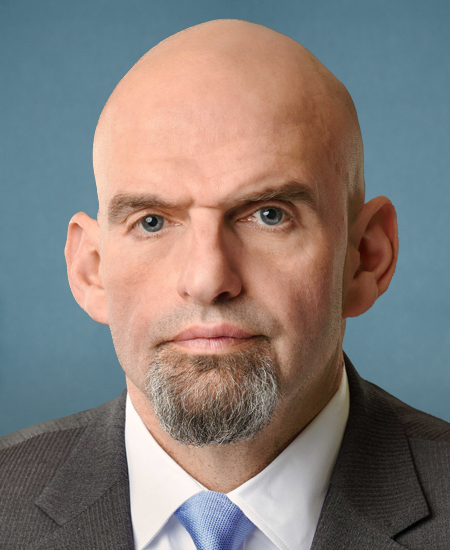
Sen. John Fetterman
Sponsored bills
Maddy summaryThis bill requires the Assistant Secretary of Commerce for Economic Development to create simplified application forms for rural communities seeking federal economic development grants. It defines rural communities as incorporated municipalities, Tribal areas, or territories with populations of 10,000 or fewer people or those outside metropolitan statistical areas. The legislation mandates that the Assistant Secretary gather input from rural stakeholders on reducing application length, minimizing required documentation, standardizing forms across programs, and eliminating repetitive information requests. Additionally, the bill requires the agency to publicly share sample successful applications, decision-making criteria, and standardized guidance to help rural applicants navigate the grant process.
Maddy summaryThis bill would transition Puerto Rico from its current nutrition assistance block grant system to the federal Supplemental Nutrition Assistance Program (SNAP), aligning it with how other U.S. states receive food aid. The legislation requires Puerto Rico to submit an operational plan within 180 days, with the Department of Agriculture providing technical assistance and approval or feedback on the plan. During a five-year transition period, Puerto Rico would continue receiving consolidated block grant funds while gradually shifting to SNAP, with annual reports tracking funding adjustments needed for the change. Once the transition is complete, Puerto Rico would be formally recognized as a state for SNAP purposes and would receive funding based on the same cost-of-living adjustments applied to other states.
Maddy summaryThis resolution designates February 21-28, 2026, as "National FFA Week" to honor the National FFA Organization’s work in agricultural education. It recognizes FFA’s role in developing leadership and career skills for students (with over 1 million members nationally) and celebrates the 50th anniversary of Alaska’s State FFA Association, which has 19 chapters and 493 members. As a symbolic resolution, it has no legal effect but formally expresses Senate support for FFA’s mission.
Maddy summaryThis bill, titled the Enhanced Cybersecurity for SNAP Act of 2026, requires the U.S. Department of Agriculture to update cybersecurity and digital service regulations for Electronic Benefit Transfer (EBT) cards used in the Supplemental Nutrition Assistance Program. The law mandates that states issue chip-enabled EBT cards within four years, ban magnetic stripe cards on new cards, and eliminate replacement fees for cards lost, stolen, or damaged due to fraud. It also requires online transaction security measures, provides funding for retailers to upgrade payment terminals, and establishes reporting requirements to track fraud and system performance.
Maddy summaryThis bill, known as the TAP Promotion Act, would allow representatives from recognized veterans service organizations to join presentations that inform service members about benefits they can access after leaving the military. These presentations are part of the Transition Assistance Program, which helps veterans prepare for civilian life, and the law requires that they be standardized and approved by the Department of Veterans Affairs before being used. The bill also mandates that the presentations include information on how veterans service organizations can help with filing benefit claims, while prohibiting any effort to encourage members to join a specific organization. Additionally, the Department of Veterans Affairs must submit an annual report to Congress detailing which organizations participated in these sessions and how many service members attended.
Maddy summaryThis bill, known as the Direct File Act of 2026, would establish a government-run online platform for taxpayers to prepare and file their individual income tax returns for free. It requires the Treasury Department to create a user-friendly system that uses IRS data to simplify the process, offers customer support, and is available in multiple languages and on mobile devices. The legislation also prohibits the Treasury from entering into agreements that would limit its ability to provide these tax preparation and filing services. Additionally, the bill allows eligible states to integrate their state tax filing with the federal system and provides funding to states that meet certain standards for doing so.
Maddy summaryThis bill, titled the Railway Safety Act of 2026, establishes new safety requirements for trains carrying hazardous materials and strengthens emergency response capabilities. It directly affects Class I railroads, emergency response agencies, and communities near rail lines by mandating stricter tank car standards, limiting train speeds in urban areas, and requiring railroads to provide real-time information about hazardous materials shipments to first responders. Key provisions include phasing out older tank cars for flammable liquids by 2027, requiring two-person crews on freight trains, increasing penalties for safety violations, and creating a new emergency response assistance fund to help communities respond to hazardous materials incidents.
Maddy summaryThis concurrent resolution (SCONRES 25) commemorates the 15th anniversary of the January 8, 2011, Tucson shooting that killed six people and injured 13, including former Congresswoman Gabby Giffords. It honors the victims (such as Judge John Roll, Gabriel Zimmerman, and 9-year-old Christina-Taylor Green), survivors like Giffords and Ron Barber (who later became a U.S. Representative), and the community's response. The resolution expresses support for survivors, recognizes Giffords’ advocacy against gun violence, and reaffirms commitment to respectful dialogue and opposing political violence. As a symbolic gesture, it does not enact new laws or policy changes.
Maddy summaryThe Healthy Families Act would require most private employers and certain government entities to provide employees with earned paid sick time, allowing workers to take up to 56 hours per year for their own health needs, caring for family members, or addressing domestic violence, sexual assault, or stalking. Employees would earn 1 hour of paid sick time for every 30 hours worked, with the ability to use it for medical appointments, caring for family members with health needs, or seeking safety from violence. The bill prohibits employers from retaliating against workers who use this time and requires employers to post clear notices about the policy. It applies to most private employers, with specific provisions for government entities like the Library of Congress and Government Accountability Office.