

Maddy summaryThis is a ceremonial Senate resolution (SRES 110) honoring the late James George Abourezk, the first Arab American to serve in the U.S. Senate (1973-1979) from South Dakota. It commemorates his legacy, including his work re-establishing the Senate Committee on Indian Affairs and co-authoring key Native American rights legislation like the Indian Child Welfare Act. The resolution directs the Senate to adjourn in his memory and send a copy to his family, acknowledging his service as a representative and advocate for Native American communities. As a procedural resolution, it has no legislative effect beyond commemoration.
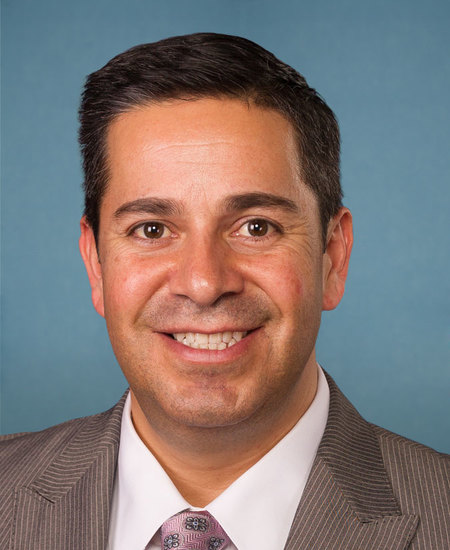
Sen. Ben Ray Luján
Sponsored bills
Maddy summaryThis bill revises a federal regulation to allow small meat processors to own local market agencies. It directly affects small-scale meat packers with annual slaughter volumes below specific limits: fewer than 700,000 cattle/sheep or 3 million hogs per year. The key change requires the Agriculture Secretary to exempt qualifying packers from existing ownership restrictions in federal regulations. This would enable smaller processors to more easily operate or own local meat marketing facilities without violating current rules. The policy change is purely procedural, modifying an existing regulation rather than creating new programs or funding.
Maddy summaryS 802, the Plant Biostimulant Act of 2023, removes plant biostimulants from regulation under the Federal Insecticide, Fungicide, and Rodenticide Act (FIFRA). It defines plant biostimulants as substances or microorganisms that improve plant growth and nutrient efficiency without relying on their nutrient content, excluding them from FIFRA oversight. The bill requires the EPA to revise regulations within 120 days to reflect this exclusion and mandates a soil health study by the Secretary of Agriculture. This study will evaluate how biostimulants affect soil health metrics like organic matter, nutrient runoff, and carbon sequestration, with a public report due within one year. The bill directly affects producers and users of biostimulant products in agriculture.
Maddy summaryThe Healthy H2O Act (S.806) provides federal grants to help rural households, renters, multi-unit property owners, and child-care facilities with contaminated drinking water. It funds certified point-of-use or point-of-entry water filtration systems, including installation, maintenance, and water testing, for those with health contaminants like lead or arsenic. Grants cover costs up to reasonable limits but exclude households earning over 150% of the median rural income in their state. The program requires third-party certification for filters, installers, and testing labs to ensure effectiveness and safety.
Maddy summaryS 817, the SVB Act, repeals Title IV of the 2018 Economic Growth, Regulatory Relief, and Consumer Protection Act (Public Law 115-174). This bill restores the banking regulations that existed before Title IV was enacted, effectively undoing the 2018 changes to financial oversight. It directly affects banking regulations governing financial institutions by reverting to the prior regulatory framework. The key mechanism is the explicit repeal of Title IV and the restoration of pre-2018 provisions as if the 2018 law had never applied.
Maddy summaryThis bill modernizes Medicare coverage for chiropractic care by removing the outdated limit that restricted beneficiaries to one annual chiropractic clinic visit. It expands coverage to include all chiropractic services within a provider's state license, specifically manual spinal adjustments to correct subluxations, aligning Medicare with VA, military, and private insurance standards. Chiropractors must complete a brief online training verification once to bill Medicare for these services. The change directly affects Medicare beneficiaries seeking ongoing chiropractic treatment and chiropractors participating in Medicare.
Maddy summaryThis bill authorizes the minting of commemorative coins to mark the 100th anniversary of the U.S. Foreign Service. It specifies three coin types: up to 50,000 $5 gold coins (90% gold), 400,000 $1 silver coins (90% silver), and 750,000 half-dollar clad coins, all to be issued in 2025. A surcharge ($35 for gold, $10 for silver, $5 for half-dollars) will be added to each coin's sale price, with all funds going directly to the Association for Diplomatic Studies and Training to support its diplomatic history preservation work. The bill ensures no net cost to the government by requiring all design, production, and marketing expenses to be recovered through coin sales.
Maddy summaryThis bill allows physical therapists to use temporary replacement providers (locum tenens) under Medicare, aligning their coverage rules with those already available to physicians. It directly affects physical therapists and Medicare beneficiaries by enabling uninterrupted access to physical therapy services during provider shortages. The key change amends Medicare rules to treat outpatient physical therapy services the same as physician services for temporary staffing purposes. This policy shift takes effect after the bill's enactment, ensuring physical therapy care can continue without disruption during staffing gaps.
Maddy summarySRES 104 is a symbolic Senate resolution recognizing the heritage, culture, and contributions of Latinas in the United States. It highlights that nearly 30 million Latinas live in the U.S. (1 in 6 women), emphasizing their roles across diverse fields like business (over 2 million Latina-owned businesses), military service (45,710 active-duty Latinas), arts (Selena, Rita Moreno), and essential work during the pandemic. The resolution notes ongoing challenges, including Latinas earning only 57 cents for every dollar earned by White, non-Hispanic men. It formally celebrates Latinas' achievements while acknowledging the need for further progress toward equality. As a non-binding resolution, it does not create new laws or allocate funds.
Maddy summaryThe Pay Teachers Act requires states to ensure public elementary and secondary school teachers earn a starting annual base salary of at least $60,000 that increases throughout their career. The bill mandates federal funding increases for education programs, including Title I funding, rural education, and Bureau of Indian Education programs, with annual adjustments for inflation. States must submit detailed plans showing how they'll meet salary requirements and address resource inequities, with a special pathway for states needing extended timelines to comply. The legislation directly affects teachers, school staff, and students across all 50 states, aiming to improve teacher retention and address shortages in underserved schools.