

Maddy summarySRES 602 is a symbolic Senate resolution expressing support for the U.S. Olympic and Paralympic Teams (Team USA) competing in the 2026 Winter Games in Milano Cortina, Italy. It formally applauds Team USA athletes, coaches, and their supporters, commends Italy for hosting the event, and commits to ensuring safety for future U.S. host events (2028 Los Angeles Summer Games and 2034 Utah Winter Games). The resolution does not create new policies, funding, or obligations - it is purely a statement of congressional support. It directly affects Team USA athletes and organizers by acknowledging their efforts and achievements. This is a procedural resolution with no binding effect on government actions.
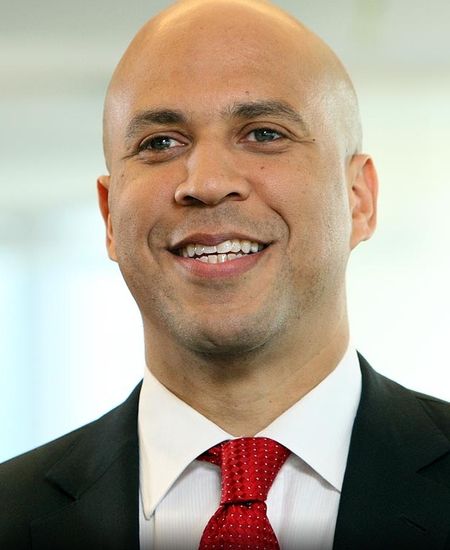
Sen. Cory A. Booker
Sponsored bills
Maddy summaryS 3914 establishes two new offices within the Supreme Court: an Office of Ethics Counsel to advise justices and their spouses on ethics matters (like financial disclosures, gifts, and conflicts of interest), and an Office of Investigative Counsel to review formal ethics complaints filed by top congressional leaders. The Ethics Counsel provides mandatory biannual training to justices and submits annual reports to Congress on ethics advice given. The Investigative Counsel handles complaints, conducts investigations within 60 days of filing, and submits findings to the Chief Justice (or senior associate justice if the Chief is the subject), with reports also shared with relevant congressional committees. This bill directly affects Supreme Court justices, their spouses, and dependents by creating formal processes for ethics guidance and oversight.
Maddy summaryThe Government Surveillance Transparency Act of 2026 requires federal, state, and tribal courts to publicly disclose criminal surveillance orders, applications, and inventories after a maximum 180-day sealing period, with strict requirements for extensions. The bill mandates courts to publish detailed public reports about surveillance requests, including the nature of investigations and the agencies involved, and requires electronic filing of all surveillance documents. It creates a unique case numbering system for surveillance orders and requires automatic unsealing of documents after the sealing period expires. The law applies to all courts conducting surveillance, with implementation phased to allow time for system upgrades, and aims to increase transparency around government surveillance activities while balancing legitimate law enforcement needs.
Maddy summarySRES 612 is a non-binding Senate resolution acknowledging the fourth anniversary of Russia’s February 2022 invasion of Ukraine. It reaffirms U.S. support for Ukraine’s sovereignty and territorial integrity within its 1991 borders, condemns Russia’s attacks on civilians and infrastructure, and emphasizes the need for sustained U.S. and transatlantic security guarantees. The resolution does not create new laws or funding but expresses congressional support for Ukraine’s defense and calls for continued international cooperation. It specifically highlights Russia’s targeting of Ukrainian children and U.S. companies as part of its aggression. As a symbolic gesture, it has no legal effect on policy or funding.
Maddy summaryThe American Homeownership Act restricts tax deductions for interest and depreciation on residential properties owned by institutional investment entities or "large owners" (defined as those holding 50+ single-family units). It creates exceptions for new construction, rehabilitation of uninhabitable properties, sales to individuals for primary residence, and properties serving affordable housing through tax credit programs. The bill also prohibits federal housing agencies from selling properties or providing mortgage loans to these large investors and allocates savings from these tax changes to fund affordable housing programs. These provisions aim to encourage homeownership by limiting tax benefits for large-scale rental property ownership while directing resources toward affordable housing development.
Maddy summaryThe SAVES Act of 2025 establishes a five-year pilot program at the Department of Veterans Affairs (VA) to fund nonprofit organizations that provide service dogs to eligible veterans with specific disabilities, such as blindness, mobility issues, PTSD, or traumatic brain injury. Nonprofits must apply competitively, meet training and animal welfare standards (including ADA compliance), and provide service dogs at no cost to veterans, with the VA covering all program expenses. The VA will also provide ongoing veterinary insurance for the dogs, which continues even after the pilot ends. This program is funded with $10 million annually for five years, targeting veterans as defined by VA medical criteria.
Maddy summaryThis bill, titled the Security and Freedom Enhancement Act of 2026, amends the Foreign Intelligence Surveillance Act to reform how intelligence agencies collect and use information about Americans. It directly affects the FBI, intelligence agencies, and the Foreign Intelligence Surveillance Court by requiring stricter rules on searching communications of U.S. persons and limiting access to data about Americans located in the United States. Key provisions include mandatory audits of FBI queries, new approval requirements for searching sensitive individuals like elected officials, expanded reporting to Congress, and restrictions on purchasing personal data from data brokers. The bill also strengthens oversight by requiring the Inspector General to conduct periodic audits and mandates greater transparency through public reporting of surveillance activities.
Maddy summaryThis concurrent resolution (SCONRES 25) commemorates the 15th anniversary of the January 8, 2011, Tucson shooting that killed six people and injured 13, including former Congresswoman Gabby Giffords. It honors the victims (such as Judge John Roll, Gabriel Zimmerman, and 9-year-old Christina-Taylor Green), survivors like Giffords and Ron Barber (who later became a U.S. Representative), and the community's response. The resolution expresses support for survivors, recognizes Giffords’ advocacy against gun violence, and reaffirms commitment to respectful dialogue and opposing political violence. As a symbolic gesture, it does not enact new laws or policy changes.
Maddy summaryThe SPARK Act establishes the Spark Program to support underserved small businesses by providing grants to eligible organizations like incubators, accelerators, and community development financial institutions. It directly affects minority-owned businesses (which face twice the denial rate for financing), women-owned businesses, rural businesses, and businesses in economically distressed areas by offering free mentorship, counseling, and access to capital. The program requires participating organizations to provide 5-year services with no fees for businesses and track metrics including jobs created, capital accessed, and business growth. It also creates a Spark Financing Program that provides grants up to $20,000 and low-interest loans to covered small businesses. Annual reports will track outcomes including demographic breakdowns of participants and business retention rates.
Maddy summaryThe Healthy Families Act would require most private employers and certain government entities to provide employees with earned paid sick time, allowing workers to take up to 56 hours per year for their own health needs, caring for family members, or addressing domestic violence, sexual assault, or stalking. Employees would earn 1 hour of paid sick time for every 30 hours worked, with the ability to use it for medical appointments, caring for family members with health needs, or seeking safety from violence. The bill prohibits employers from retaliating against workers who use this time and requires employers to post clear notices about the policy. It applies to most private employers, with specific provisions for government entities like the Library of Congress and Government Accountability Office.