

Improving Access to Retirement Savings Act This bill allows employers who establish a tax-exempt 403(b) pension plan to participate in a multiple employer plan (MEP) and to take the small employer pension plan start-up tax credit for their first three years of participation in a MEP. The bill also establishes a safe harbor to allow certain pension plans to correct errors in administering automatic enrollment and escalation features for plans enrolling in a MEP, if such errors are corrected within a specified time period in a manner favorable to plan participants. It also permits employers that amend a stock bonus, pension, profit sharing, or annuity plan for a previous plan year to increase benefits accruals to elect to treat such amendment as having been adopted at the end of the current plan year.
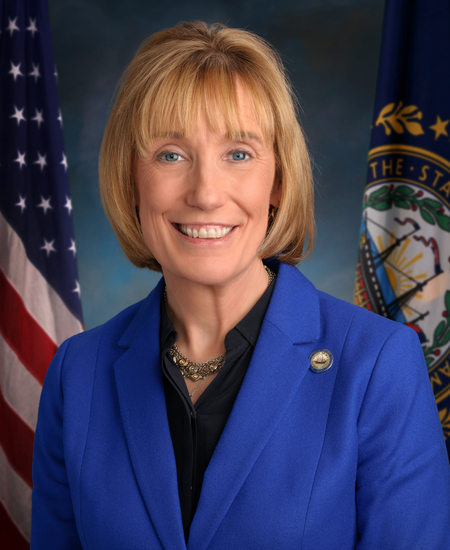
Sen. Margaret Wood Hassan
Sponsored bills
Fast Track To and Through College Act This bill requires the Department of Education to award grants to certain partnerships with state educational agencies to support statewide implementation of early college fast track pathways and early high school graduation fast track pathways. The bill defines e arly college fast track pathway s as programs of advanced coursework resulting in credit that (1) is equivalent to at least two semesters of full-time postsecondary enrollment, and (2) satisfies the requirements for a high school diploma. In addition, the bill defines e arly high school graduation fast track pathways as scholarships for students who graduate high school early, do not require remedial coursework in postsecondary education, and attend a public two- or four-year institution of higher education. The bill also makes certain high school students participating in an early college fast track pathway eligible to receive Pell Grants.
Helping American Victims Afflicted by Neurological Attacks Act of 2021 or the HAVANA Act of 2021 This bill specifically authorizes the Central Intelligence Agency, the Department of State, and other agencies to provide payments to agency personnel who incur brain injuries from hostilities while on assignment. Specifically, the bill allows agency personnel and their families to receive payments for brain injuries that are incurred (1) during a period of assignment to a foreign duty station; (2) in connection with war, insurgency, hostile acts, terrorist activity, or other agency-designated incidents; and (3) not as the result of willful misconduct. The bill's authority applies to injuries incurred before, on, or after the date of the bill's enactment. Agencies must submit classified reports on the bill's implementation, including the number of payments made and the amount of each payment. Since 2016, some intelligence, diplomatic, and other governmental personnel have reported experiencing unusual cognitive and neurological impairments while on assignment (particularly abroad), the source of which is currently under investigation. Symptoms were first reported by personnel stationed in Cuba and have since been collectively referred to as Havana Syndrome .
Postal Service Reform Act of 2021 This bill addresses the finances and operations of the U.S. Postal Service (USPS). The bill requires the Office of Personnel Management to establish, within the Federal Employees Health Benefits Program, the Postal Service Health Benefits Program for USPS employees and retirees and provides for coordinated enrollment of retirees under this program and Medicare. The bill repeals the requirement that the USPS annually prepay future retirement health benefits. Additionally, the USPS may establish a program to enter into agreements with an agency of any state government, local government, or tribal government, and with other government agencies, to provide certain nonpostal products and services that reasonably contribute to the costs of the USPS and meet other specified criteria. The USPS must develop and maintain a publicly available dashboard to track service performance and must report regularly on its operations and financial condition. The bill requires mail delivery to occur at least six days a week. The Postal Regulatory Commission must annually submit to the USPS a budget of its expenses. It must also conduct a study to identify the causes and effects of postal inefficiencies relating to flats (e.g., large envelopes). The USPS Office of Inspector General shall perform oversight of the Postal Regulatory Commission.
This resolution expresses support for the goals and ideals of National Sexual Assault Awareness and Prevention Month.
Rural Broadband Financing Flexibility Act This bill provides tax incentives for investment in broadband, particularly in rural areas. Specifically, the bill allows issuance of private activity bonds for financing qualified broadband projects, issuers of broadband infrastructure bonds a credit for interest payments under such bonds, and a 10% investment tax credit for qualified broadband projects. The bill defines qualified broadband project as any project that (1) is designed to provide broadband service solely to one or more areas that are rural areas and in which more than 50% of residential households do not have access to fixed, terrestrial broadband service that delivers at least 25 megabits per second downstream and at least 3 megabits service upstream, and (2) results in gigabit capable internet access to certain residential and commercial locations.
Credit for Caring Act of 2021 This bill allows an eligible caregiver a tax credit of up to $5,000 for 30% of the cost of long-term care expenses that exceed $2,000 in a taxable year. The bill defines eligible caregiver as an individual who has earned income for the taxable year in excess of $7,500 and pays or incurs expenses for providing care to a spouse or other dependent relative with long-term care needs.
Military Retiree Survivor Comfort Act This bill addresses the overpayment of retired or retainer pay to a joint account (bearing the name of the decedent and the decedent's designated beneficiary) during the month of the death of a retired member of the armed forces. Specifically, the bill authorizes the Department of Defense (DOD) to forgive or offset the overpayment if the decedent was enrolled in the Survivor Benefit Plan (SBP). In the case of an offset, each of the first 12 SBP annuity payments after the death of the retired service member must be reduced by one-twelfth of the overpayment. If the decedent was not enrolled in the SBP, DOD is authorized to forgive the overpayment.
This resolution expresses support for the designation of National Foster Care Month.
This resolution welcomes President Moon Jae-in of South Korea to the United States. It also reaffirms the importance of the U.S.-South Korea relationship to peace, security, and prosperity on the Korean Peninsula and in the Indo-Pacific region.