

Keeping All Students Safe Act This bill prohibits the use of seclusion and limits the use of physical restraint in schools and Head Start programs that receive federal funding. Specifically, the bill prohibits the use of seclusion, which is the involuntary confinement of a student alone in a room or area from which the student is physically prevented from leaving. The term does not include a time out, which may involve separating the student from others in a non-locked setting. The bill prohibits the use of mechanical or chemical restraints or physical restraints that restrict breathing or are life threatening. The bill outlines the requirements for the use of physical restraint, including that the student's behavior must pose an imminent danger of serious physical injury to the student or other individual. Each state must ensure that a sufficient number of program personnel are trained and certified by a state-approved crisis intervention training program. Additionally, each program must establish procedures to follow after an incident involving physical restraint. Further, the bill establishes enforcement provisions, including a private right of action for a student who has been subjected to unlawful seclusion or restraint. The Department of Education and the Department of Health and Human Services must withhold payments from a program for unlawful seclusion or restraint. Finally, the bill requires each state educational agency (SEA) to establish, implement, and enforce policies and procedures required by the bill. It also creates a grant program to assist SEAs with these activities.
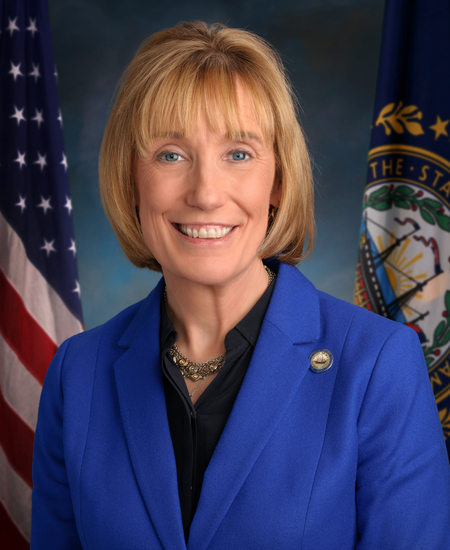
Sen. Margaret Wood Hassan
Sponsored bills
Rights for the Transportation Security Administration Workforce Act of 2021 or the Rights for the TSA Workforce Act of 2021 This bill modifies the workplace rights, protections, and benefits applicable to Transportation Security Administration (TSA) personnel. Specifically, the bill within 180 days, eliminates personnel authorities of the Department of Homeland Security (DHS) and the Department of Transportation governing the conditions of employment for TSA employees, thus making TSA employees subject to the personnel management system applicable to other federal employees; sets forth transition rules that protect the pay rates, leave rights, and other rights of TSA and Federal Air Marshal Service employees; and requires DHS to consult with the labor organization certified by the Federal Labor Relations Authority to carry out the conversion of such positions. The bill also directs the TSA to implement in-person or remote mental health programs at each field office of the Federal Air Marshal Service and consult with labor associations to address concerns regarding federal air marshals, including mental health and suicide rates; requires DHS to prioritize the hiring of veterans, including disabled veterans; and directs the TSA to ensure its employees are provided proper guidance regarding prevention and protections against the coronavirus.
Accelerating Access to Critical Therapies for ALS Act This bill establishes grant programs to address neurodegenerative diseases, such as amyotrophic lateral sclerosis (also known as ALS or Lou Gehrig's disease), and contains other related provisions. The Department of Health and Human Services (HHS) shall award grants to eligible entities to facilitate patients' access to investigational drugs that diagnose or treat ALS. The Food and Drug Administration (FDA) shall award grants to public and private entities to cover the costs of research and development of drugs that diagnose or treat ALS and other severely debilitating neurodegenerative diseases. HHS shall also establish the Public-Private Partnership for Neurodegenerative Diseases between the National Institutes of Health, the FDA, and at least one eligible entity (generally, an institution of higher education or a nonprofit organization). The partnership shall support the development and regulatory review of drugs that address ALS and other rare neurodegenerative diseases. The FDA shall publish on its website a five-year action plan for fostering the development of drugs that improve or extend the lives of people living with rare neurodegenerative diseases.
Extreme Risk Protection Order Act of 2021 This bill establishes grants to support the implementation of extreme risk protection order laws at the state and local levels, extends federal firearms restrictions to individuals who are subject to extreme risk protection orders, and expands related data collection. Extreme risk protection order laws, or red flag laws, generally allow certain individuals (e.g., law enforcement officers or family members) to petition a court for a temporary order that prohibits an at-risk individual from purchasing and possessing firearms. Among its provisions, the bill directs the Department of Justice to establish a grant program to help states, local governments, Indian tribes, and other entities implement extreme risk protection order laws; extends federal restrictions on the receipt, possession, shipment, and transportation of firearms and ammunition to individuals who are subject to extreme risk protection orders; and requires the Federal Bureau of Investigation to compile records from federal, tribal, and state courts and other agencies that identify individuals who are subject to extreme risk protection orders.
Upskilling and Retraining Assistance Act This bill increases to $12,000 in 2021-2022, the exclusion from employee gross income, for income tax purposes, of employer-paid educational assistance programs. The bill also expands the exclusion to include amounts paid for education-related tools and technology (e.g., hand tools, computers, software, licensure fees).
Dentist and Optometric Care Access Act of 2021 or the DOC Access Act of 20 21 This bill prohibits private health insurance plans from setting rates for items and services, except for dental cleanings, provided by a doctor of optometry, of dental surgery, or of dental medicine for which the plan does not pay a substantial amount. Additionally, an agreement between a plan and such a doctor for limited scope dental or vision benefits may last longer than two years only with the prior acceptance of the doctor for each term extension. Plans also may not restrict such a doctor's choice of laboratories or suppliers. Such doctors may elect to waive the application of the payment amount and choice of laboratories provisions of this bill. The bill establishes a private right of action for a person adversely affected by a violation of this bill. The bill does not supersede state laws regarding health insurers and dental or vision benefit plans.
Budgeting for Opioid Addiction Treatment Act This bill imposes an excise tax on the sale of any active opioid. The tax is equal to one cent per milligram so sold and it is imposed on the manufacturer, producer, or importer of the opioid. The term active opioid means any controlled substance that is opium, an opiate, or any derivative thereof. The bill provides block grants for substance abuse treatment programs. The Department of Health and Human Services must report on the impact of this bill on (1) the retail cost of active opioids; (2) patient access to such opioids, particularly cancer and hospice patients; and (3) the use of tax revenues to improve substance abuse treatment efforts. The report must also make suggestions for improving access to opioids for cancer and hospice patients and substance abuse treatment efforts.
Home Energy Savings Act This bill reinstates and extends through 2028 the tax credit for nonbusiness energy property. It increases the rate of such credit from 10% to 15% and raises the lifetime cap on such credit from $500 to $1,200. The bill increases credit amounts for the investment in energy efficient building property (e.g., electric heat pump water heater, electric heat pump, central air conditioner, or natural gas, propane, or oil water heater) and provides for increased caps on investment in doors and windows in a residence.
Retirement Security and Savings Act of 2021 This bill modifies various tax policies, credits, and requirements that apply to employer-provided retirement plans and Individual Retirement Accounts.
This resolution calls for the immediate cessation of hostilities in the Tigray region of Ethiopia and condemns all violence against civilians. Further, the resolution calls on Eritrea to withdraw its military forces from Ethiopia, and it urges all parties to the conflict to cease hostilities and work to protect human rights. The resolution also calls on relevant U.S. agencies to take specified actions that encourage an end to the conflict and provide humanitarian support.