

Veterans' Compensation Cost-of-Living Adjustment Act of 2021 This bill requires the Department of Veterans Affairs (VA) to increase the amounts payable for wartime disability compensation, additional compensation for dependents, the clothing allowance for certain disabled veterans, and dependency and indemnity compensation for surviving spouses and children. Specifically, the VA must increase the amounts by the same percentage as the cost-of-living increase in benefits for Social Security recipients that is effective on December 1, 2021. The bill requires the VA to publish the amounts payable, as increased, in the Federal Register. The VA is authorized to make a similar adjustment to the rates of disability compensation payable to persons who have not received compensation for service-connected disability or death.
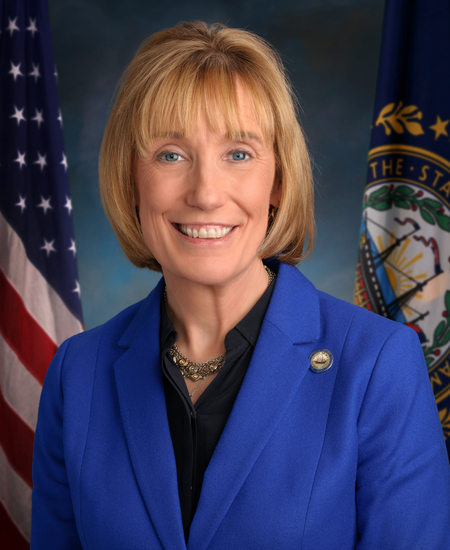
Sen. Margaret Wood Hassan
Sponsored bills
Maddy summarySRES 411 designates October 6, 2021, as "Energy Efficiency Day" to celebrate the economic and environmental benefits of energy efficiency policies and private sector innovation. The resolution calls on the American public to observe the day with programs and activities highlighting how these efforts have saved consumers billions annually in energy costs and reduced energy waste. It references decades of bipartisan support for energy efficiency, including federal policies that have driven significant energy savings and job growth in the sector. The bill does not create new regulations but serves as a symbolic recognition of existing achievements in energy conservation.
Maddy summarySRES 413 designates the week of October 3-9, 2021, as "National Community Policing Week" in the U.S. Senate. The resolution encourages all Americans, law enforcement agencies, and elected officials to support community policing efforts that build trust and improve public safety through collaboration. It does not create new laws, funding, or obligations but symbolically recognizes community policing as a tool for strengthening relationships between police and communities. The resolution was introduced by Senators Shaheen, Cornyn, Hassan, Van Hollen, and Peters and passed unanimously.
Global Malnutrition Prevention and Treatment Act of 2021 This bill sets out programs and otherwise directs the U.S. Agency for International Development (USAID) to carry out activities to prevent and treat malnutrition globally. In coordination with relevant federal agencies, bilateral and multilateral donors, partner countries, and other stakeholders, the USAID may scale up programs for preventing and treating malnutrition globally. This includes focusing on interventions for the populations most susceptible to severe malnutrition (e.g., pregnant and lactating women and children younger than five years of age). The USAID must select countries based on specified malnutrition-related indicators for purposes of targeting malnutrition prevention and treatment programs and update the selection within five years. To support these programs, the USAID must leverage additional private sector resources in priority countries, including by considering opportunities within the Development Finance Corporation's impact framework for supporting improved nutrition outcomes. The USAID must provide Congress with an implementation plan and annual reports concerning its programs for preventing and treating malnutrition. The bill also establishes the Nutrition Leadership Council, comprised of various USAID bureaus and offices, to coordinate agency activities to prevent and treat malnutrition. The bill's provisions terminate seven years after its enactment.
Arctic Diplomacy Act of 2021 This bill authorizes the position of Assistant Secretary of State for Arctic Affairs within the Department of State. The position shall maintain continuous observation and coordination of matters pertaining to foreign policy in the Arctic, including trade, the environment, and political-military affairs.
Bicameral Congressional Trade Authority Act of 2021 This bill requires congressional approval for a presidential import adjustment due to a national security threat from an import related to military equipment, energy resources, or critical infrastructure essential to national security. Specifically, the bill requires the President to submit a proposal to Congress, which Congress may approve by a joint resolution. Under current law, the President determines whether any adjustment of an import is necessary and must submit to Congress the reasons for any action taken or not taken. The Department of Defense (currently, the Department of Commerce) must investigate the effect of these imports on national security. The bill retroactively applies to any proposed action made four years before enactment of this bill. In general, any rate of duty modification occurring in the time period beginning four years before and ending the day before enactment of this bill must revert to the previous rate unless it receives congressional approval.
This resolution expresses support for the goals and ideals of National Retirement Security Month and acknowledges the need to raise public awareness of a variety of tax-preferred retirement vehicles.
This resolution designates September 2021 as National Kinship Care Month and encourages community stakeholders to work together to improve well-being for vulnerable children and families.
This resolution designates September 2021 as National Democracy Month.
University Cybersecurity Consortia Improvement Act of 2021 This bill provides that a consortium of universities, instead of one or more consortia, must be established by the Department of Defense (DOD) to advise DOD on specified cybersecurity matters.