

Military Forces Assuring that Treatment of Items by Gender are Uniform and Equal across the Services Act of 2021 or the Military FATIGUES Act of 2021 This bill requires the Office of the Under Secretary of Defense for Personnel and Readiness within the Department of Defense to establish consistent criteria for determining which uniform or clothing items across the military departments are considered uniquely military for purposes of calculating the standard cash clothing replacement allowance for members of the armed forces. The office must review the established criteria every five years and recommend adjustments to enlisted clothing allowances if they are insufficient to pay for uniquely military items. Additionally, the office must periodically review uniform clothing plans of the military departments to identify data and requirements necessary to facilitate cost discussions and recommend adjustments, items in the military departments' calculations of the enlisted standard cash clothing replacement allowances to develop a standard by which to identify significant cost differences that need addressing, plans of the military departments for changing uniform items to determine if the changes will result in significant out-of-pocket cost differences among the departments or among genders, and initial officer clothing allowances to identify requirements needed to facilitate cost discussions and adjustment recommendations.
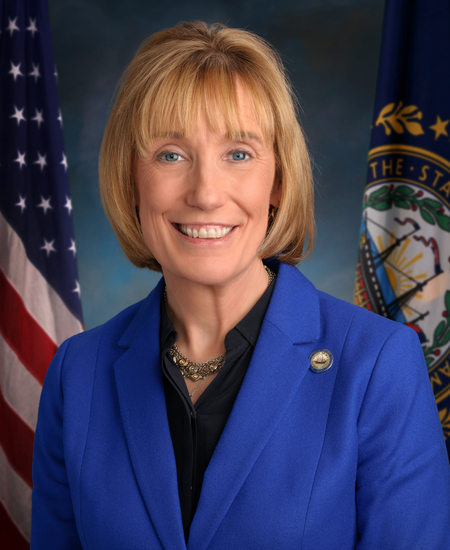
Sen. Margaret Wood Hassan
Sponsored bills
State, Local, Tribal, and Territorial Fiscal Recovery, Infrastructure, and Disaster Relief Flexibility Act This bill allows states, tribes, territories, and localities to use certain COVID-19 relief funds for new categories of spending, including for natural disasters and infrastructure projects. It also makes changes to expenditure deadlines and other aspects of this funding. Specifically, recipients may use funds for emergency relief from natural disasters and associated negative economic impacts of natural disasters. In addition, recipients may use a portion of their COVID-19 relief funds for designated infrastructure projects, such as nationally significant freight and highway projects. Furthermore, the bill allows recipients to expend COVID-19 relief funds on these types of infrastructure projects until September 30, 2026. Under current law, recipients must expend the funds by December 31, 2024. Other changes in the bill include (1) modifying eligibility and allocation requirements for funding set aside for counties and Indian tribes that are near public lands, (2) allowing Indian tribes an additional year to expend their COVID-19 relief funds, and (3) establishing a process for government entities to decline COVID-19 relief funds and requiring any declined funds to be used to reduce the federal deficit.
Vet Center Outreach Act of 2021 This bill requires the Department of Veterans Affairs (VA) to take specified actions to provide information on Vet Centers to service members who are transitioning to civilian life. Vet Centers are community-based counseling centers that provide social and psychological services to eligible veterans, active duty service members, and their families. Specifically, the VA must electronically transmit, within seven days after a service member separates from the Armed Forces, specified personnel information (e.g., contact information) to the Vet Center nearest to where that service member intends to permanently reside after their separation. The VA must ensure that the information is used to contact members and former members of the Armed Forces who are transitioning to civilian life within 14 days of receiving the information. As part of the Transition Assistance Program, the VA must provide members of the Armed Forces with information on how to locate Vet Centers and how to use services provided through Vet Centers (e.g., mental health services).
Freedom to Vote Act This bill addresses voter registration and voting access, election integrity and security, redistricting, and campaign finance. Specifically, the bill expands voter registration (e.g., automatic and same-day registration) and voting access (e.g., vote-by-mail and early voting). It also limits removing voters from voter rolls. Next, the bill establishes Election Day as a federal holiday. The bill declares that the right of a U.S. citizen to vote in any election for federal office shall not be denied or abridged because that individual has been convicted of a criminal offense unless, at the time of the election, such individual is serving a felony sentence. The bill establishes certain federal criminal offenses related to voting. In particular, the bill establishes a new criminal offense for conduct (or attempted conduct) to corruptly hinder, interfere with, or prevent another person from registering to vote or helping someone register to vote. Additionally, the bill sets forth provisions related to election security, including by requiring states to conduct post-election audits for federal elections. The bill outlines criteria for congressional redistricting and generally prohibits mid-decade redistricting. The bill addresses campaign finance, including by expanding the prohibition on campaign spending by foreign nationals, requiring additional disclosure of campaign-related fundraising and spending, requiring additional disclaimers regarding certain political advertising, and establishing an alternative campaign funding system for certain federal offices.
National Green Alert Act of 2021 This bill establishes the Green Alert System Advisory and Support Committee to develop best practices and provide technical assistance to states for the implementation of green alert systems, which would be activated when a veteran with a history of mental health issues goes missing.
This resolution supports the designation of October 3-October 9, 2021, as National 4-H Week. It also (1) recognizes the important role of 4-H in youth development and education, and (2) encourages all citizens to recognize 4-H for the significant impact the organization and members have made and continue to make by empowering young people with the skills needed to lead for a lifetime.
Prevent Release Of Toxics Emissions, Contamination, and Transfer Act of 2021 or the PROTECT Act of 2021 This bill adds specified perfluoroalkyl and polyfluoroalkyl substances, commonly referred to as PFAS, as hazardous air pollutants under the Clean Air Act. These substances are man-made and may have adverse human health effects.
This resolution recognizes (1) the celebration of Hispanic Heritage Month from September 15 - October 15, 2021; and (2) the integral role of Latinos and their manifold heritage in the economy, culture, and identity of the United States.
Helping American Victims Afflicted by Neurological Attacks Act of 2021 or the HAVANA Act of 2021 This bill specifically authorizes the Central Intelligence Agency, the Department of State, and other agencies to provide payments to agency personnel who incur brain injuries from hostilities while on assignment. Specifically, the bill allows agency personnel and their families to receive payments for brain injuries that are incurred (1) during a period of assignment to a foreign or domestic duty station; (2) in connection with war, insurgency, hostile acts, terrorist activity, or other agency-designated incidents; and (3) not as the result of willful misconduct. The bill's authority applies to injuries incurred before, on, or after the date of the bill's enactment. Agencies must submit classified reports on the bill's implementation, including the number of payments made and the amount of each payment. Since 2016, some intelligence, diplomatic, and other governmental personnel have reported experiencing unusual cognitive and neurological impairments while on assignment (particularly abroad), the source of which is currently under investigation. Symptoms were first reported by personnel stationed in Cuba and have since been collectively referred to as Havana Syndrome .
This bill requires the Department of Veterans Affairs (VA) to designate one week each year as Buddy Check Week for the purposes of organizing outreach events and educating veterans on how to conduct peer wellness checks. The VA shall ensure that the Veterans Crisis Line has a plan for handling the potential increase in calls that may occur during such week.