

Maddy summaryThis bill (S 1324) makes technical corrections to the Safe Drinking Water Act's eligibility rules for states seeking assistance under the State Response to Contaminants program. It clarifies who qualifies for federal grants, specifically allowing states to apply on behalf of: (1) disadvantaged communities meeting state affordability criteria, (2) small communities (under 10,000 people) lacking debt capacity, or (3) private drinking water well owners not connected to public systems. The changes streamline how states identify eligible communities and well owners for funding to address water contaminants. This is a procedural adjustment to existing program rules, not a new policy.
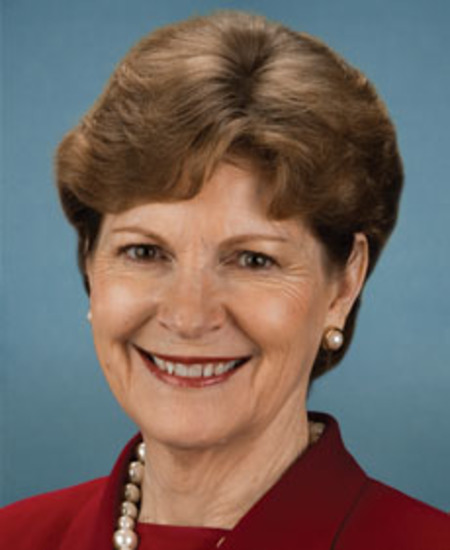
Sen. Jeanne Shaheen
Sponsored bills
Maddy summaryS 1336, the "Jobs in the Woods Act," creates a federal grant program to support forestry workforce training in underserved rural communities. It provides funding for eligible entities (like nonprofits, tribes, local governments, and colleges) to develop training programs in areas meeting specific criteria: nonmetropolitan, low-income, small-population communities with reliable broadband access. Grants range from $500,000 to $2 million per award for up to 4 years, with priority given to programs addressing aging forestry workforces and youth migration, and partnerships with schools. The program is authorized to receive $10 million annually from 2025 through 2029.
Maddy summaryThis bill creates a new $30 million annual Weatherization Readiness Fund (2026-2030) to help states fix structural defects in low-income homes before weatherization can be installed. It directly affects low-income households in states receiving Weatherization Assistance Program funds, by requiring states to use these funds to repair hazards that block weatherization work. The bill also raises the maximum per-unit cost limit for fully weatherized homes from $6,500 to $15,000 and adds flexibility for the Secretary to adjust costs based on market conditions. These changes aim to streamline the weatherization process and increase funding efficiency for eligible homes.
Maddy summaryThis bill increases tax incentives for residential and commercial biomass heating systems. It raises the energy efficient home improvement credit cap to $2,000 for certain biomass stoves/boilers and $10,000 for others, effective after 2025. It also creates a new 30% investment tax credit for qualifying "open-loop biomass heating property" (systems using biomass for space heating, hot water, or industrial heat) that meet specific efficiency (75% minimum), size (under 50 MMBtu), and emissions control requirements. These changes directly affect homeowners and businesses installing eligible biomass heating equipment by reducing their tax burden for qualifying purchases.
Maddy summaryThis bill requires the U.S. Treasury to submit annual reports to Congress on American financial investments in China, including investments routed through other countries. It specifically mandates assessments of U.S. investors (like state pension funds) and Chinese entities receiving over $100 million in such investments, particularly in sectors like housing. Reports must cover all investments since 2008 for the first report, then annually, with details on investment types, major investors, and entities subject to U.S. sanctions. The bill focuses on transparency, not new restrictions, and directly affects U.S. investment entities and Chinese businesses receiving significant foreign capital.
Maddy summaryThis resolution (SRES 159) is a ceremonial Senate measure honoring the late Senator John Bennett Johnston, Jr. (1932-2024), who represented Louisiana in the U.S. Senate from 1972 to 1997. It commemorates his career, including his work on energy policy, flood control, and Louisiana conservation efforts, and requests the Senate adjourn in his memory while sending condolences to his family. As a non-binding resolution, it has no policy impact or direct effect on any individuals or laws.
Maddy summaryThe IDEA Full Funding Act (S 1277) mandates specific annual funding levels for the Individuals with Disabilities Education Act (IDEA) starting in fiscal year 2026. It sets fixed dollar amounts or percentage-based funding (ranging from 11.6% to 40% of a calculated base) for states providing special education services to children with disabilities aged 3-21. Funding becomes available on July 1 each year and remains accessible through September 30 of the following year, with amounts increasing annually through 2035. This directly affects all states receiving IDEA grants by guaranteeing minimum federal funding tied to the number of eligible students and national per-pupil spending averages.
Restoring Industry Development in Entertainment Act or the RIDE Act This bill makes certain workers with a traveling carnival or circus eligible for P visas (nonimmigrant visas for athletes, artists, and entertainers). Such visas shall be available for workers who perform functions that are integral and essential to the carnival or circus, such as transporting and assembling relevant structures and equipment. Such visas shall only be available for a position if (1) there are not sufficient U.S. workers available, and (2) employing a non-U.S. national ( alien under federal law) will not adversely affect the wages and working conditions of similarly employed U.S. workers.
Maddy summaryThe Building Child Care for a Better Future Act authorizes $20 billion annually for child care programs starting in 2026, with automatic annual increases based on inflation, and creates a new $5 billion annual grant program to improve child care workforce, supply, quality, and access in underserved communities. It requires states, territories, and tribes to identify areas with particular child care needs and prioritize services for low-income families, children with disabilities, rural areas, dual-language learners, and providers serving high proportions of eligible children. The bill mandates detailed reporting on how funds are used, including annual assessments of child care supply and quality improvements, and ensures federal funds supplement rather than replace existing state child care funding. This legislation directly affects states, tribes, child care providers, and families seeking affordable, high-quality child care in communities with limited access.
Maddy summaryS 1289 authorizes the U.S. Mint to produce and sell commemorative $5 gold and $1 silver coins to mark the 25th anniversary of the September 11, 2001, terrorist attacks. The bill specifies coin specifications (e.g., 90% gold/silver content, design requirements including "Never Forget"), sets a one-year issuance window (January 1, 2027-2028), and requires surcharges of $35 per gold coin and $10 per silver coin. These surcharges will be paid directly to the National September 11 Memorial and Museum to support its operations and maintenance, with coins sold at a price covering face value, surcharge, and production costs. The legislation does not impose new regulations or affect public policy but focuses on commemoration and funding for the museum.